FAQ
Q1: What is an artificial plant wall made of, and how realistic does it look?
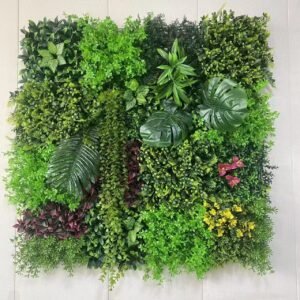
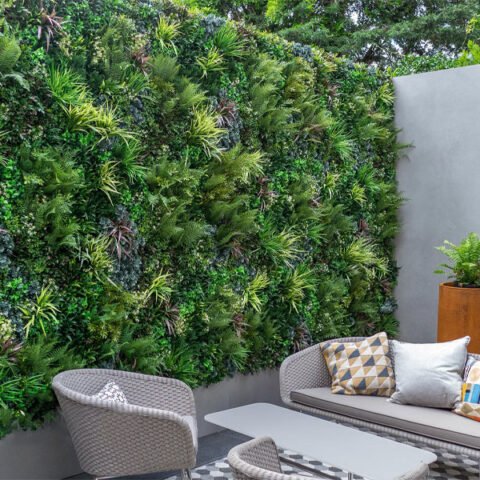
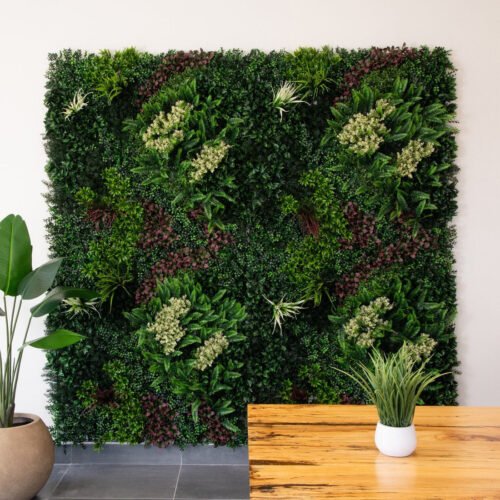
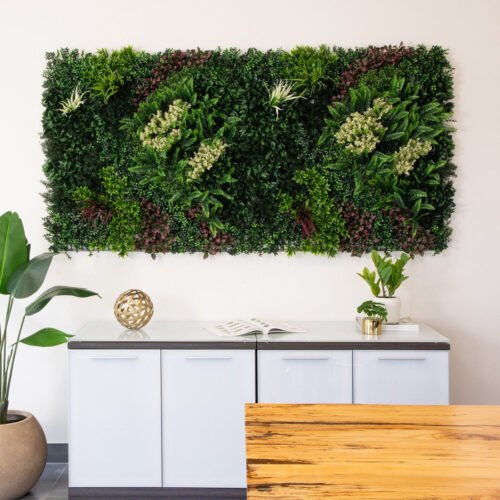
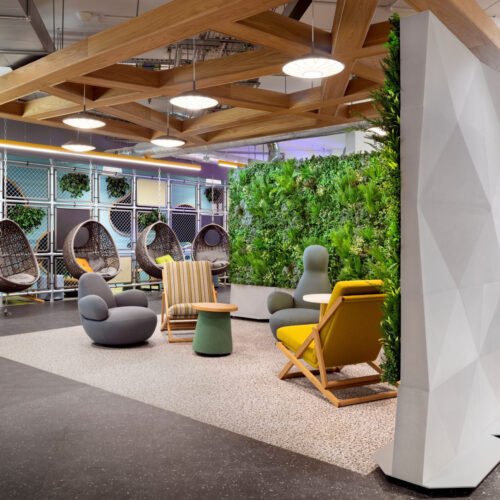
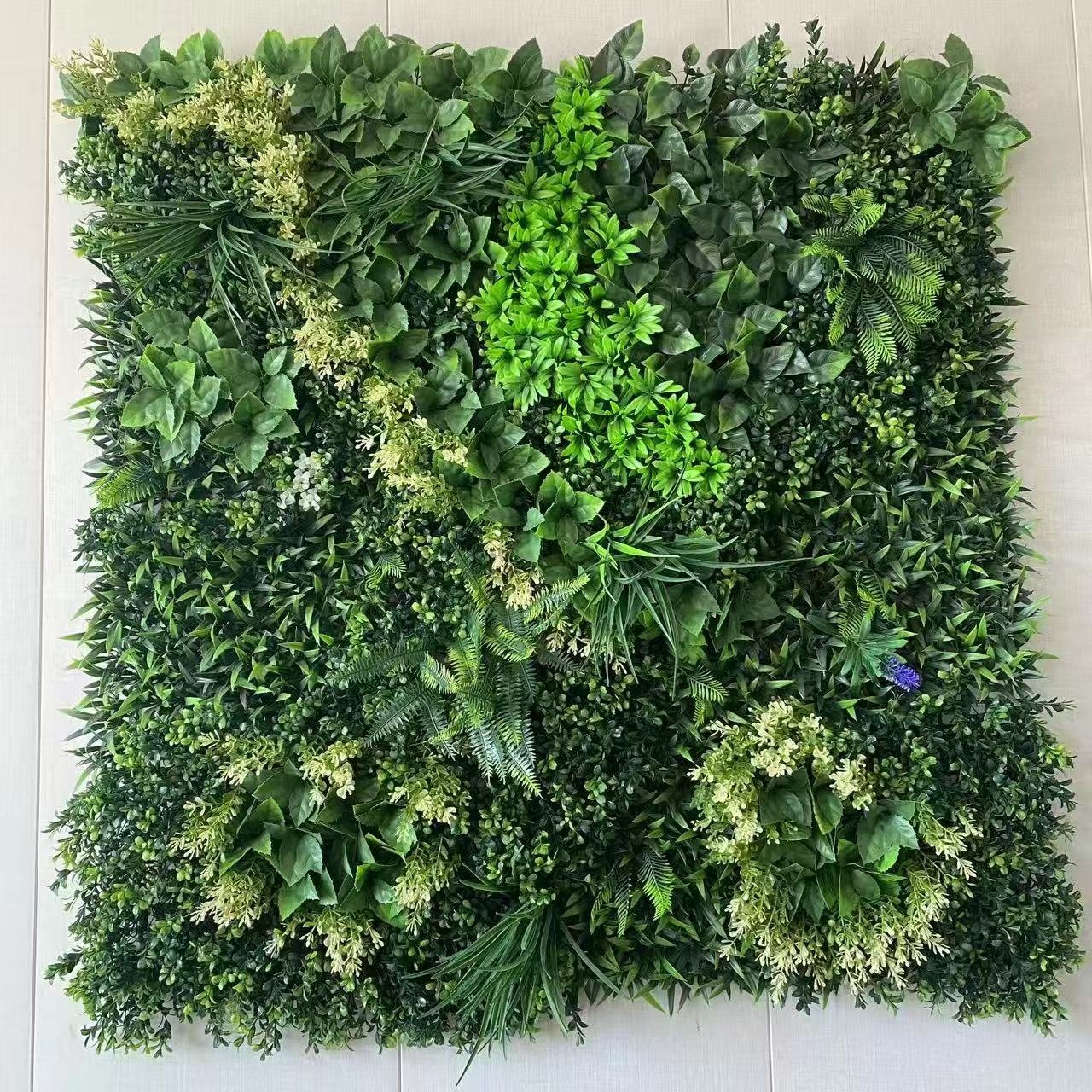
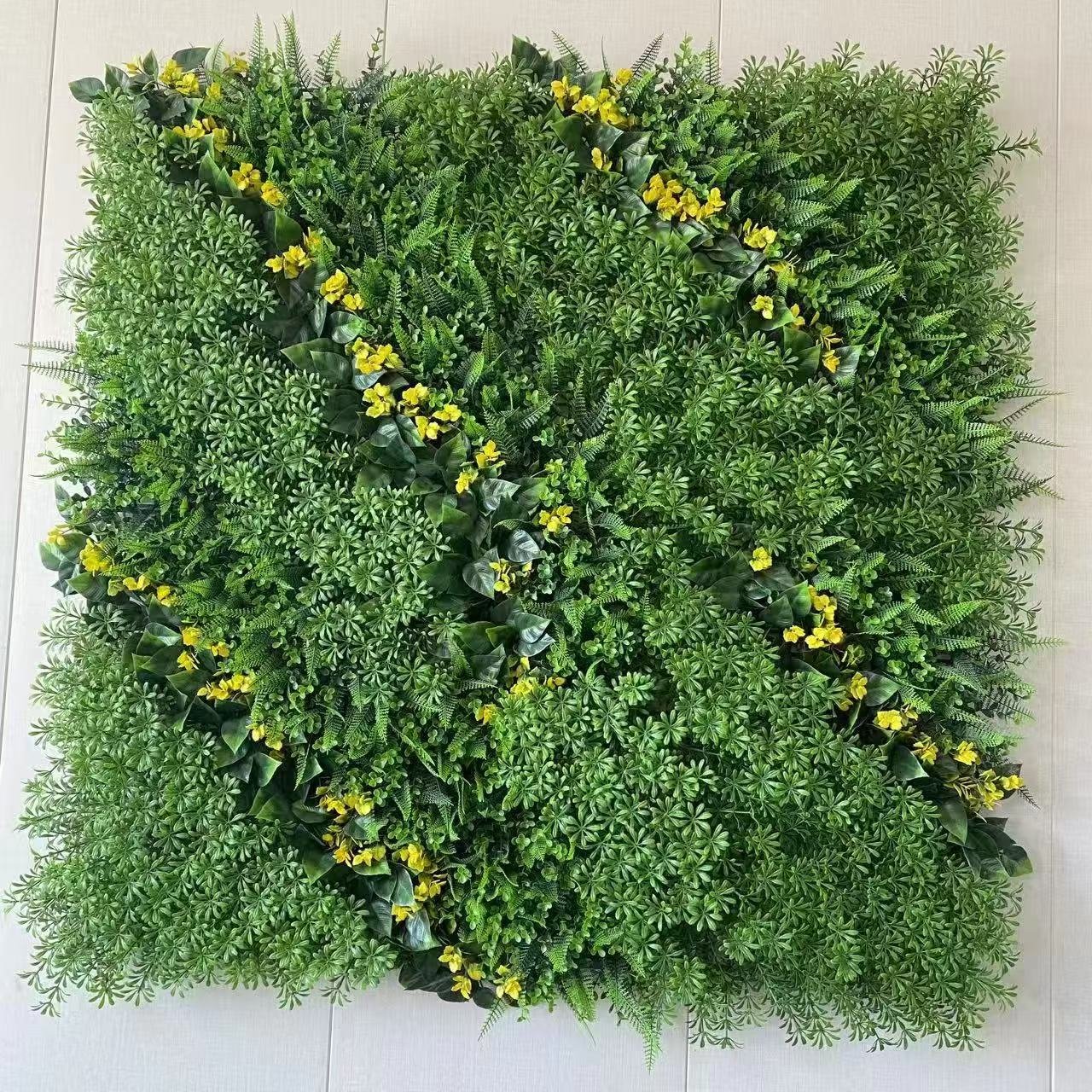
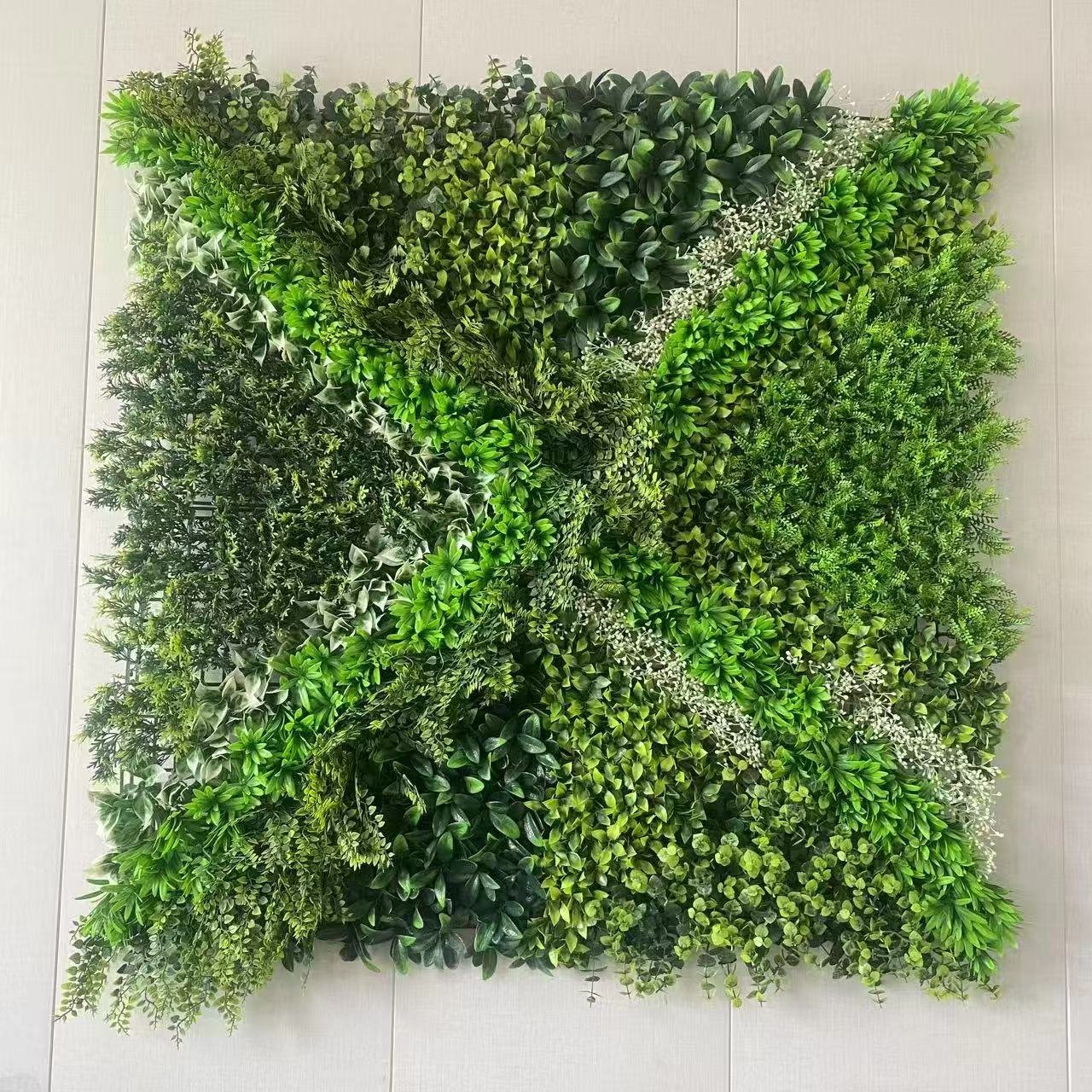
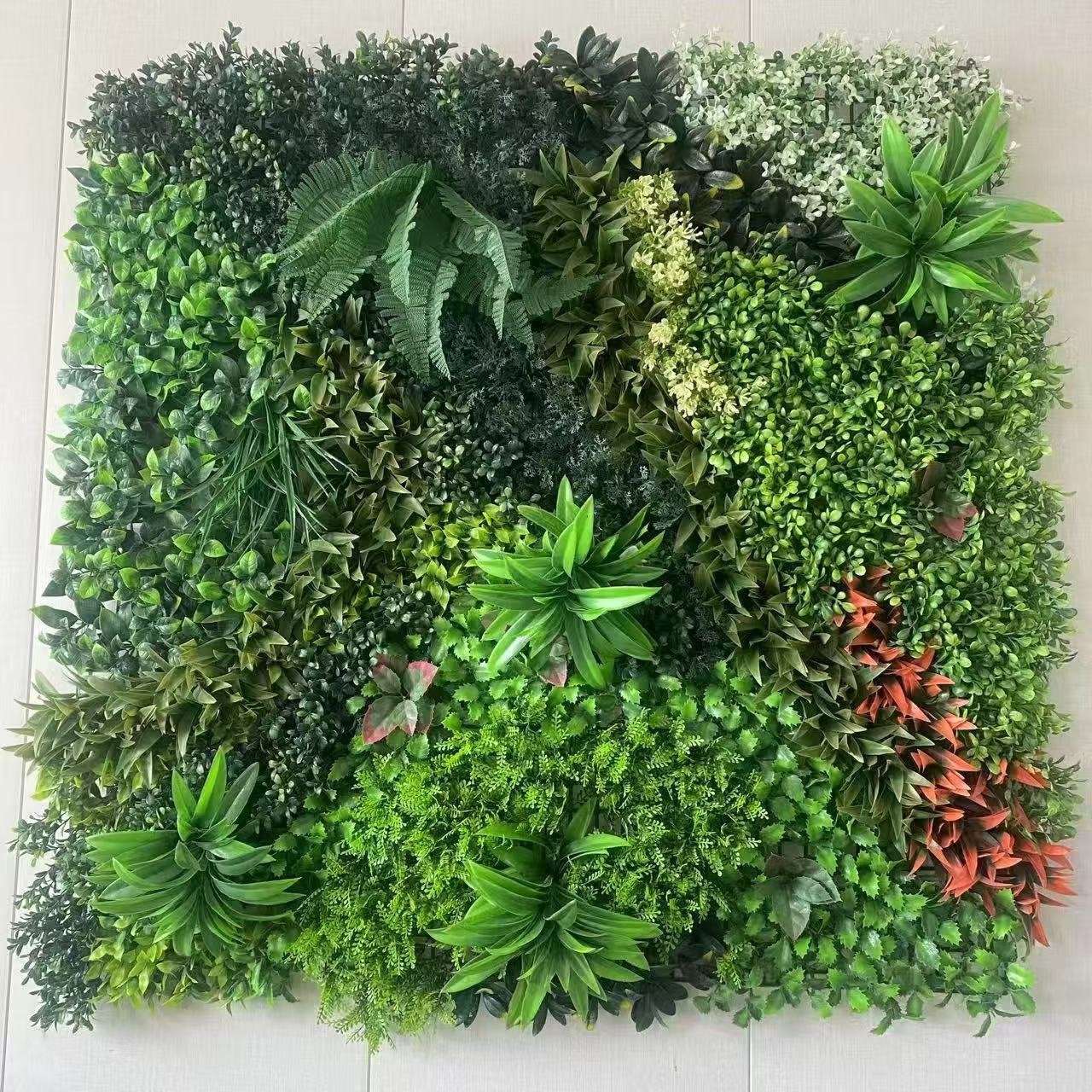
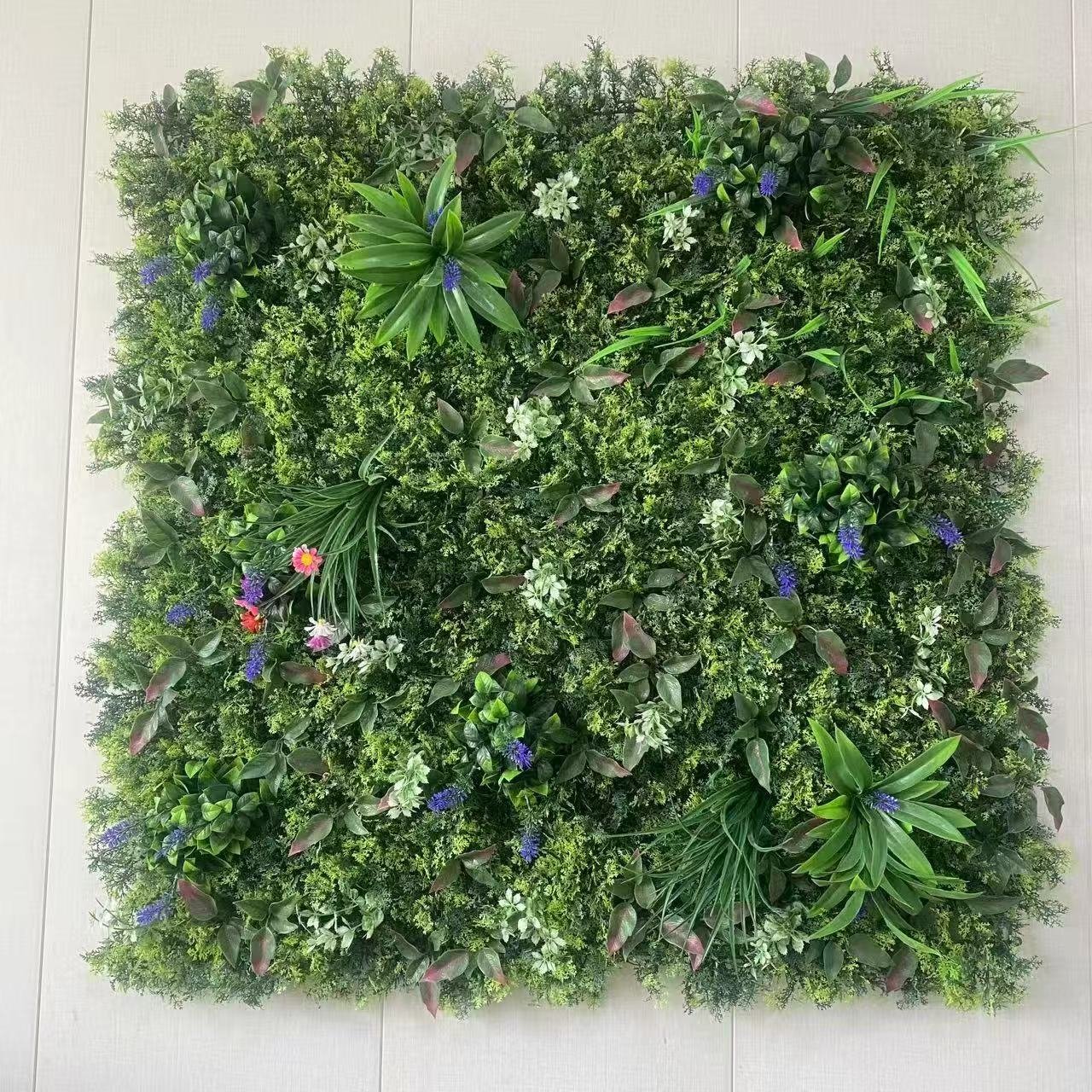
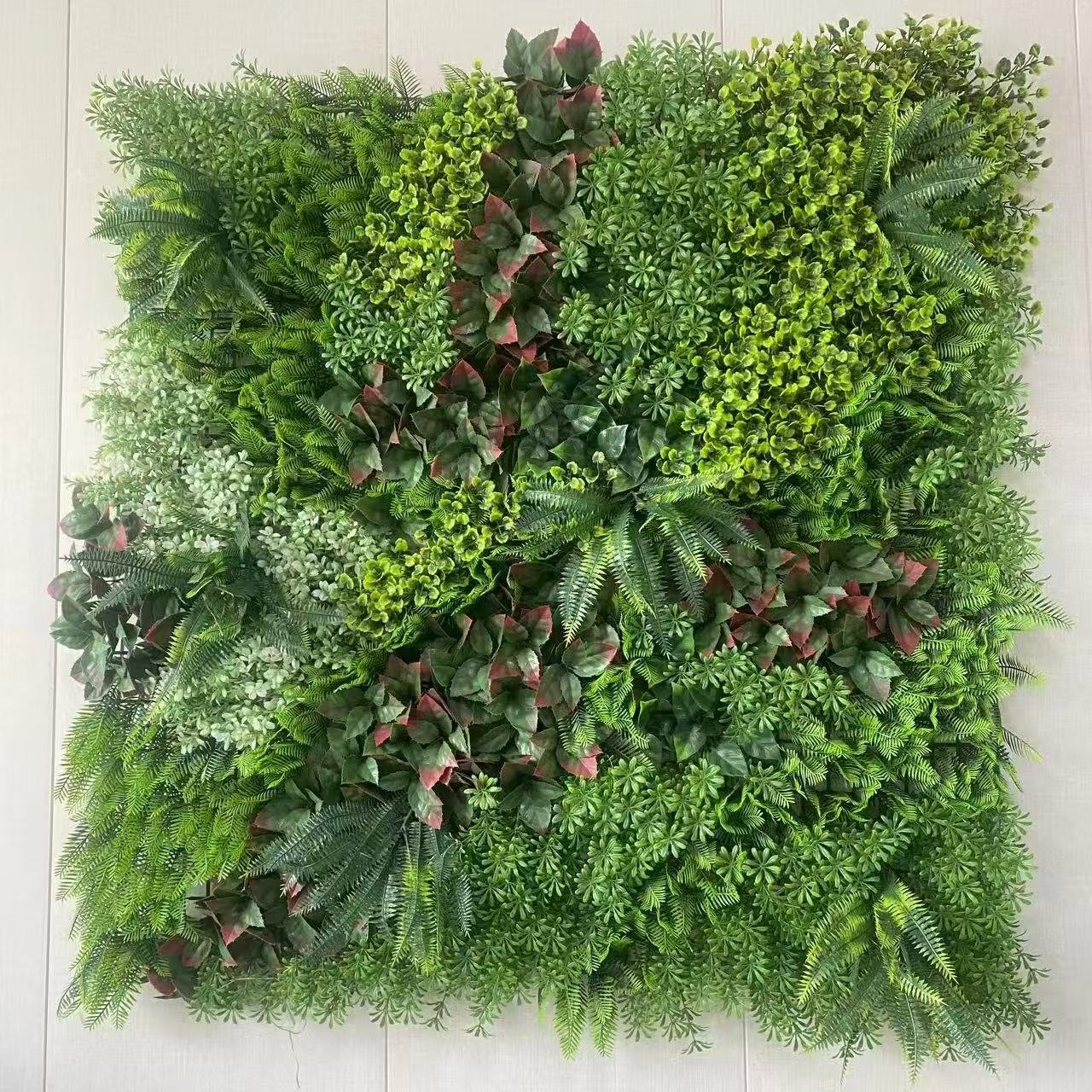
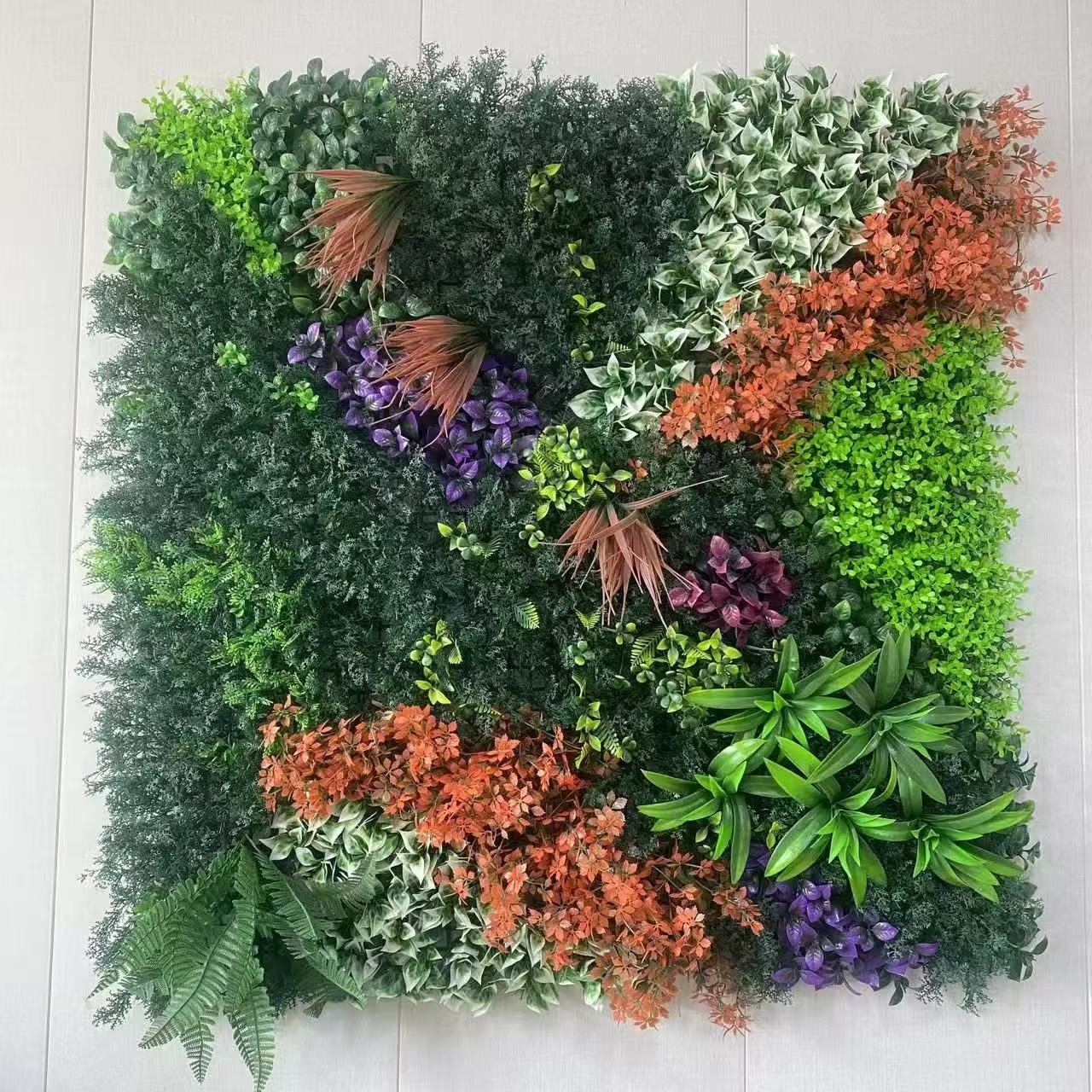
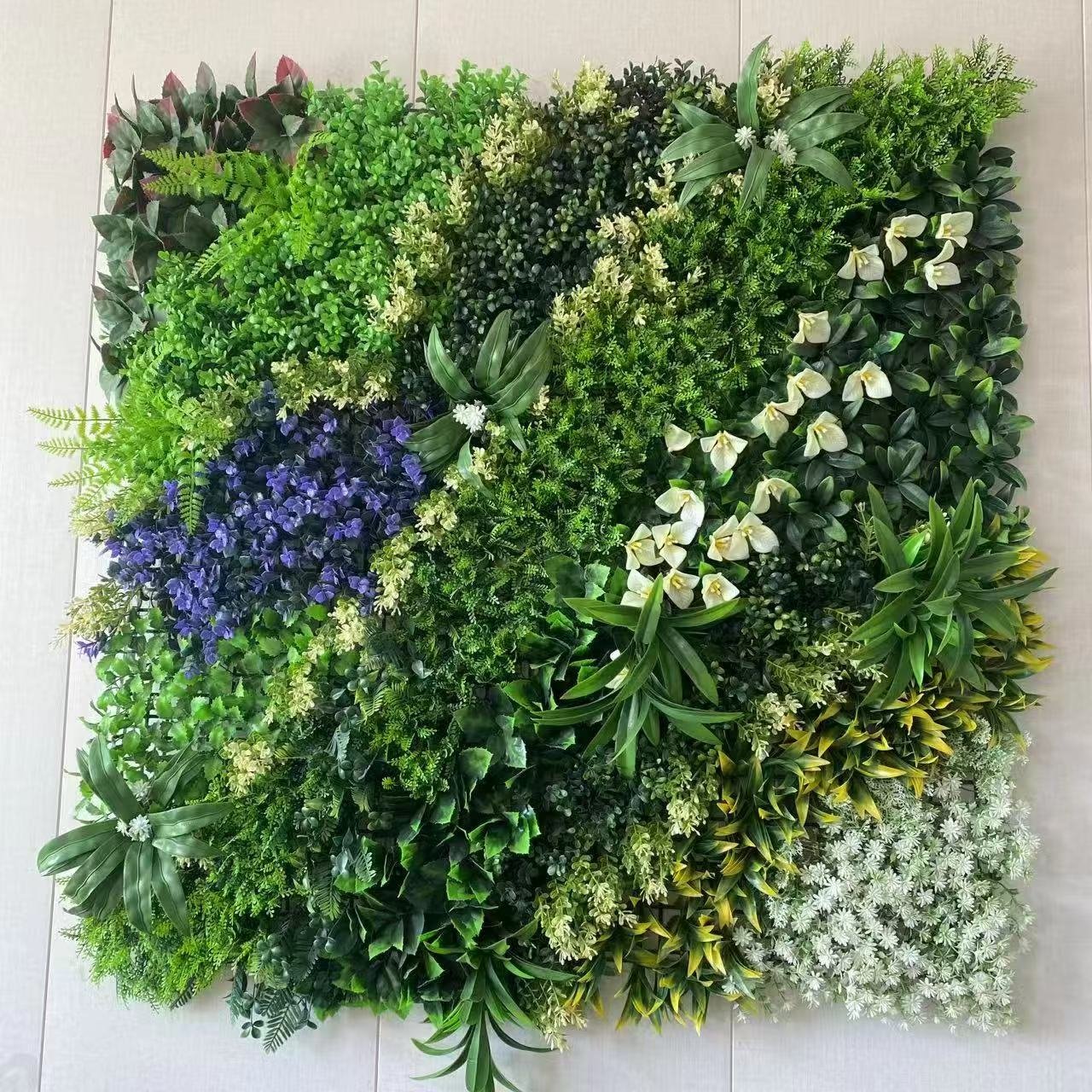
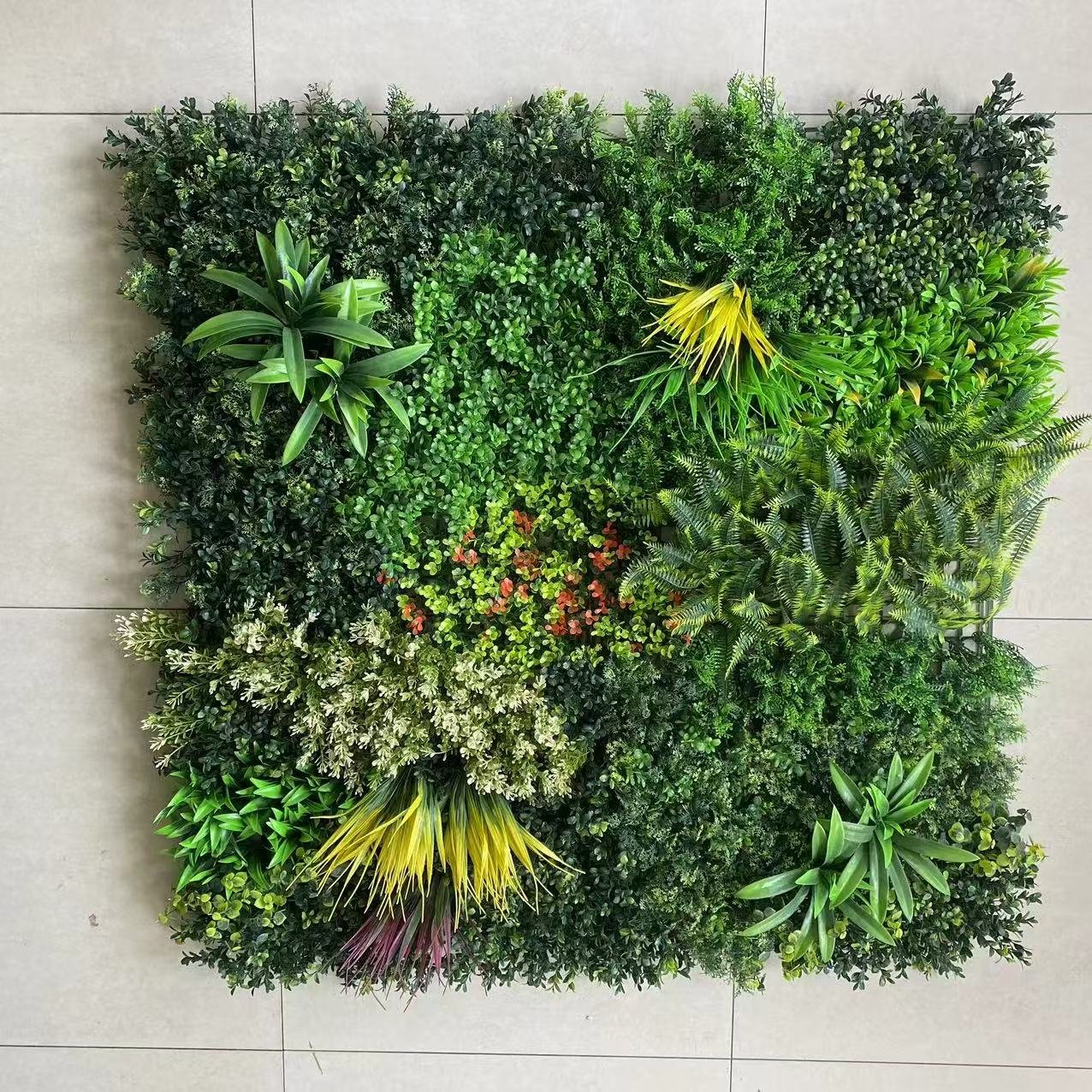
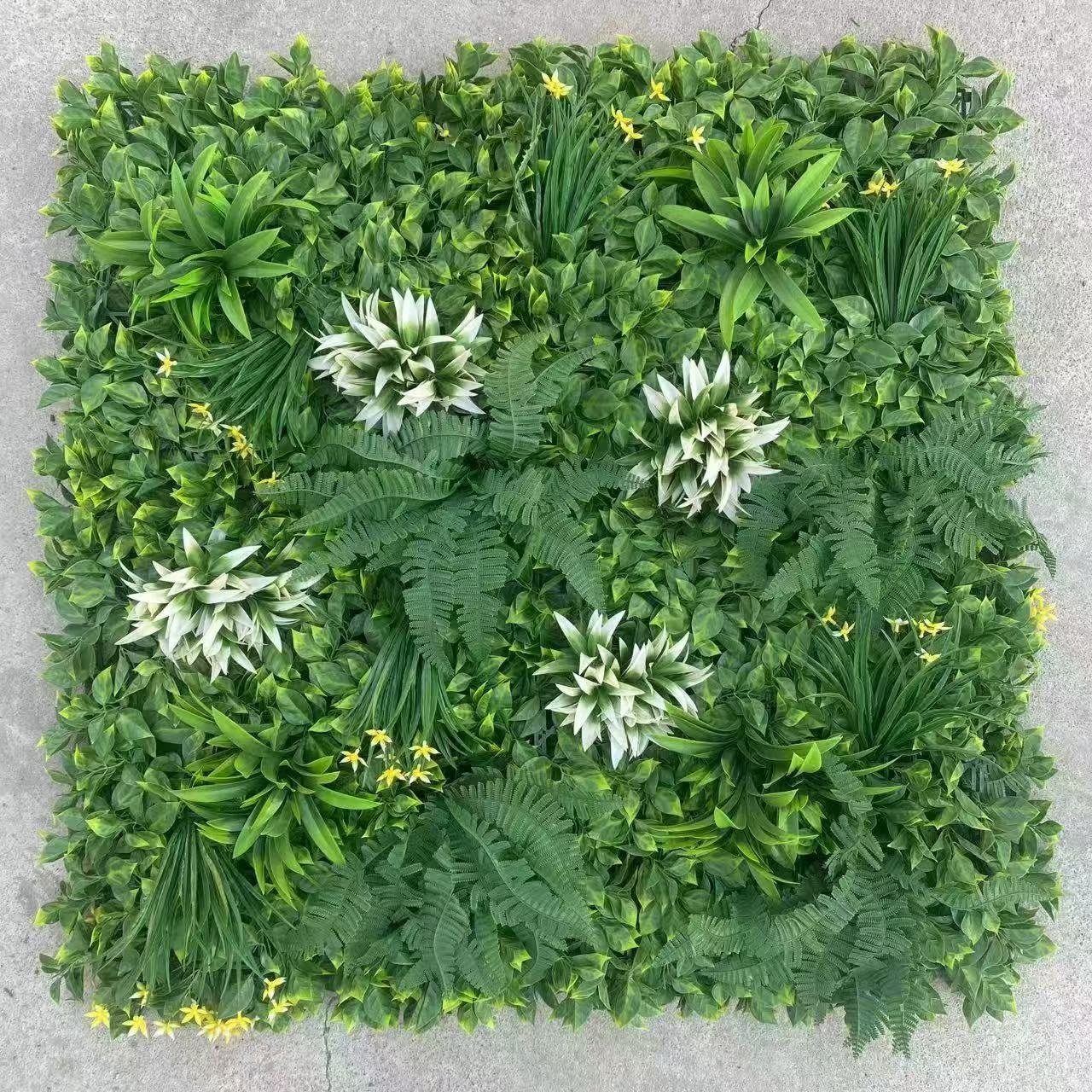
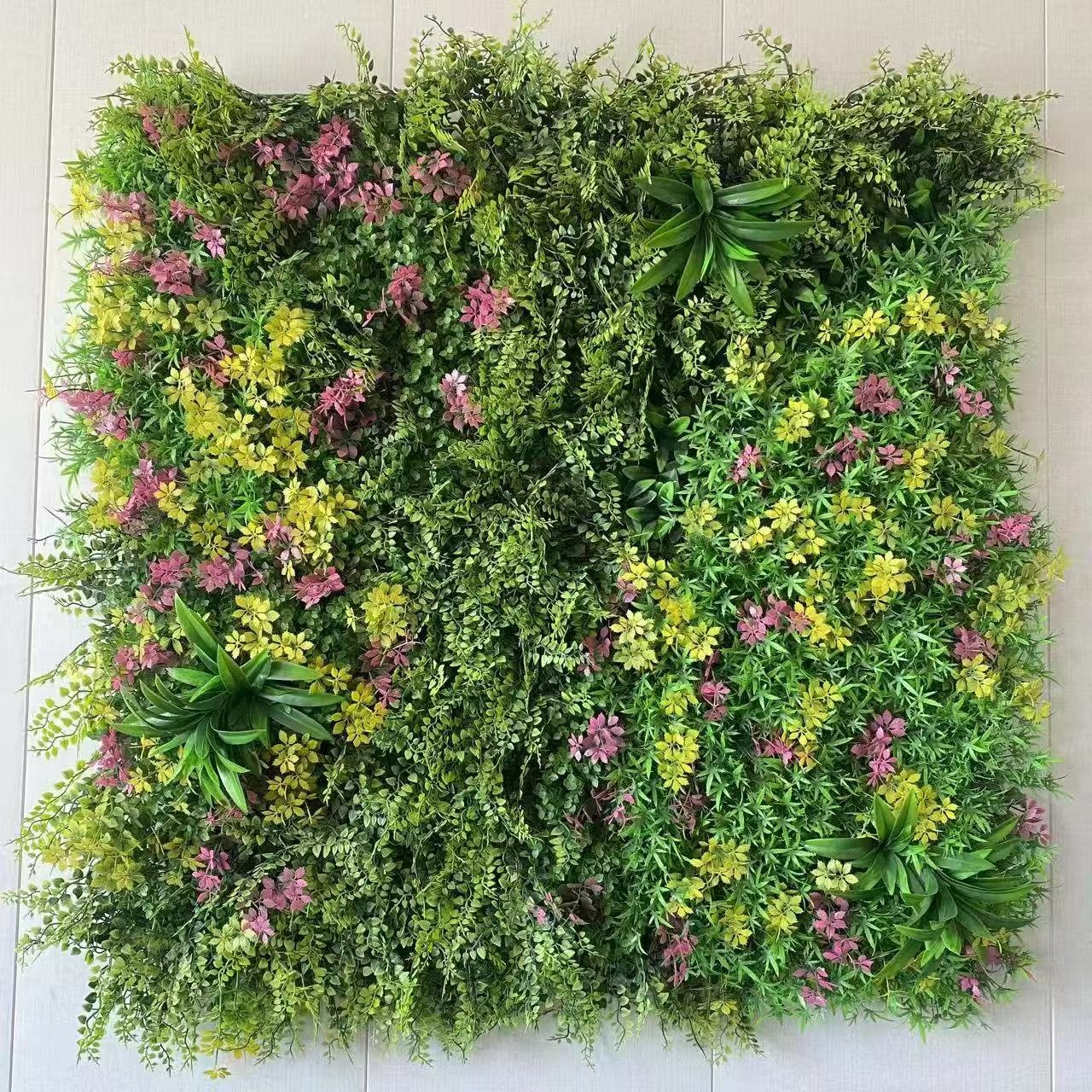
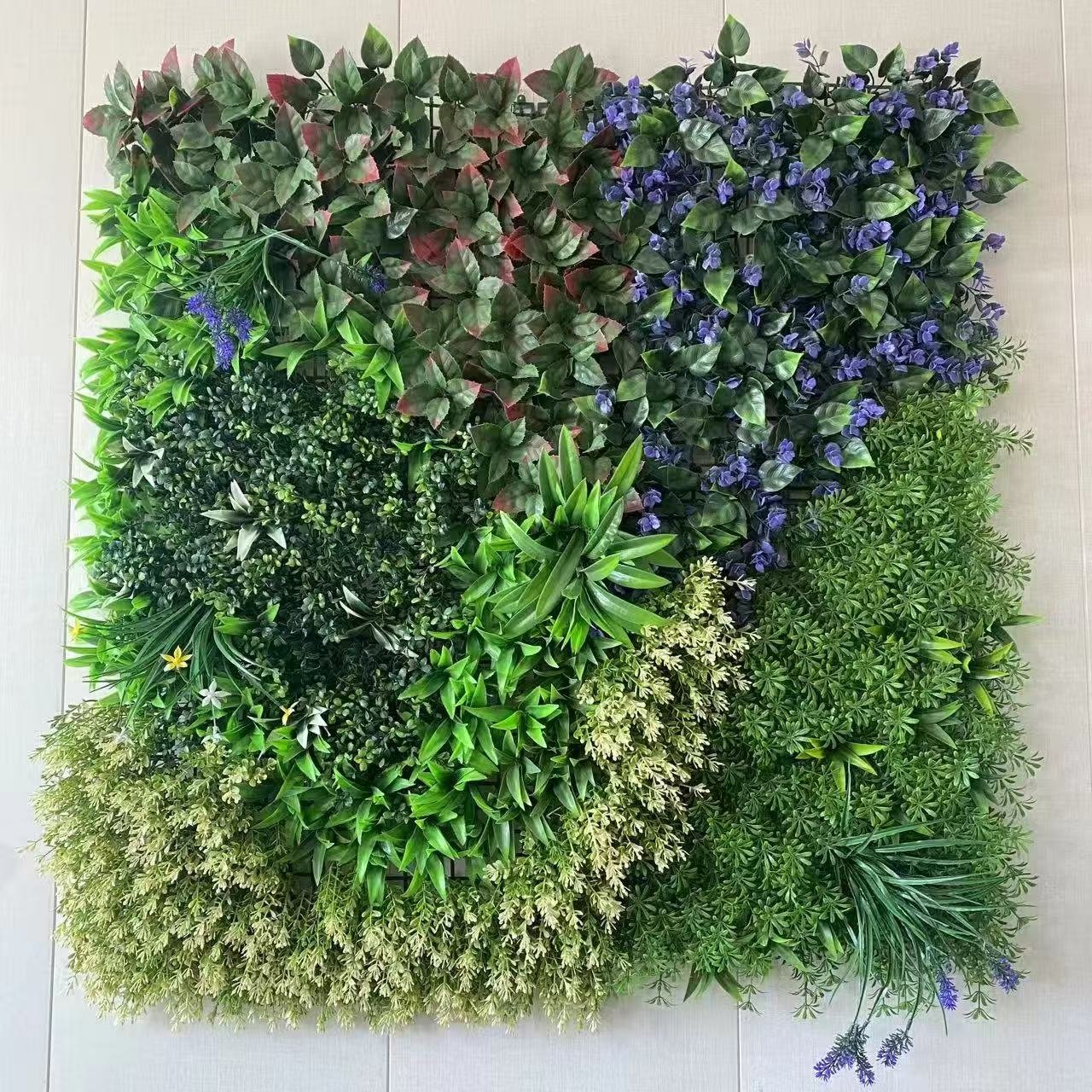
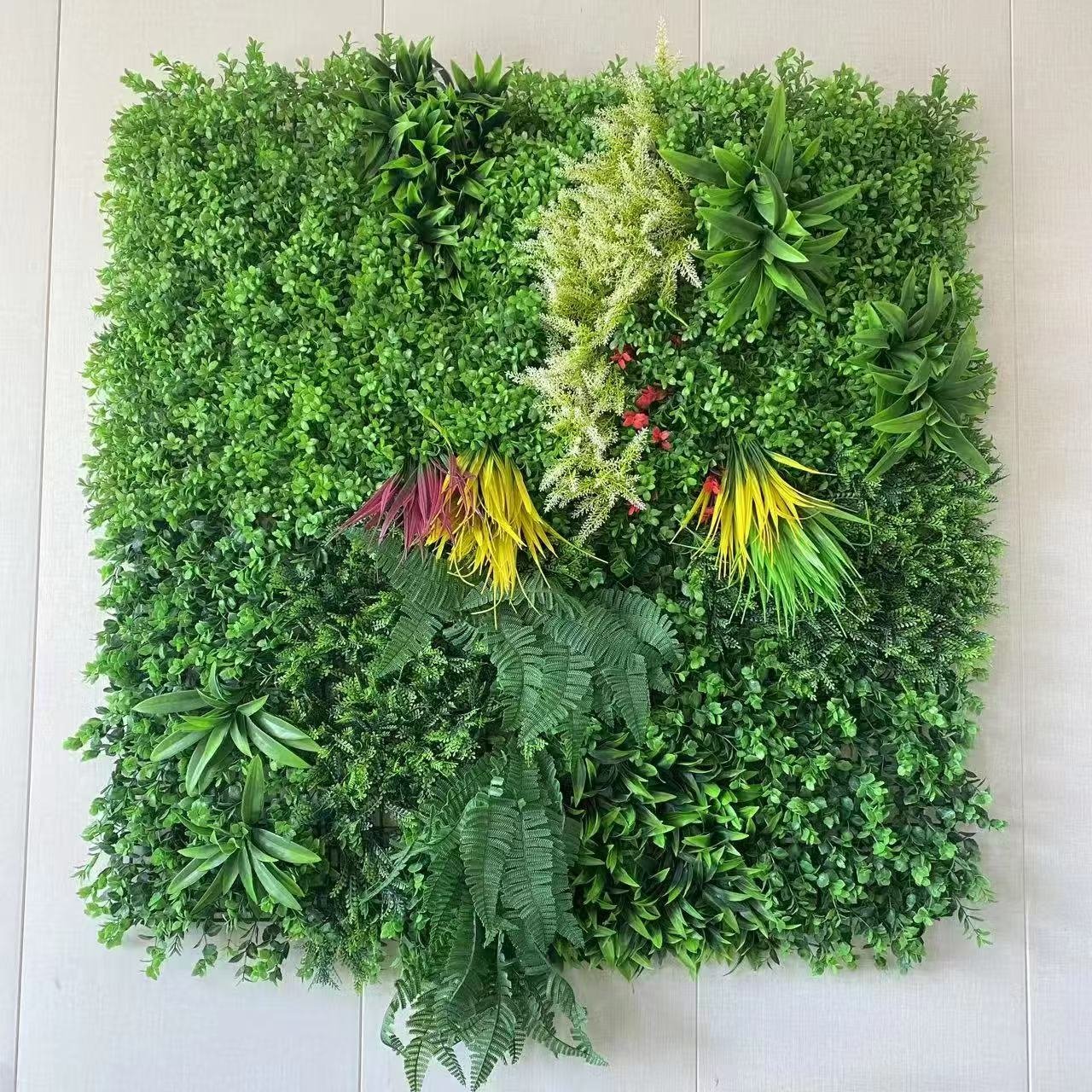
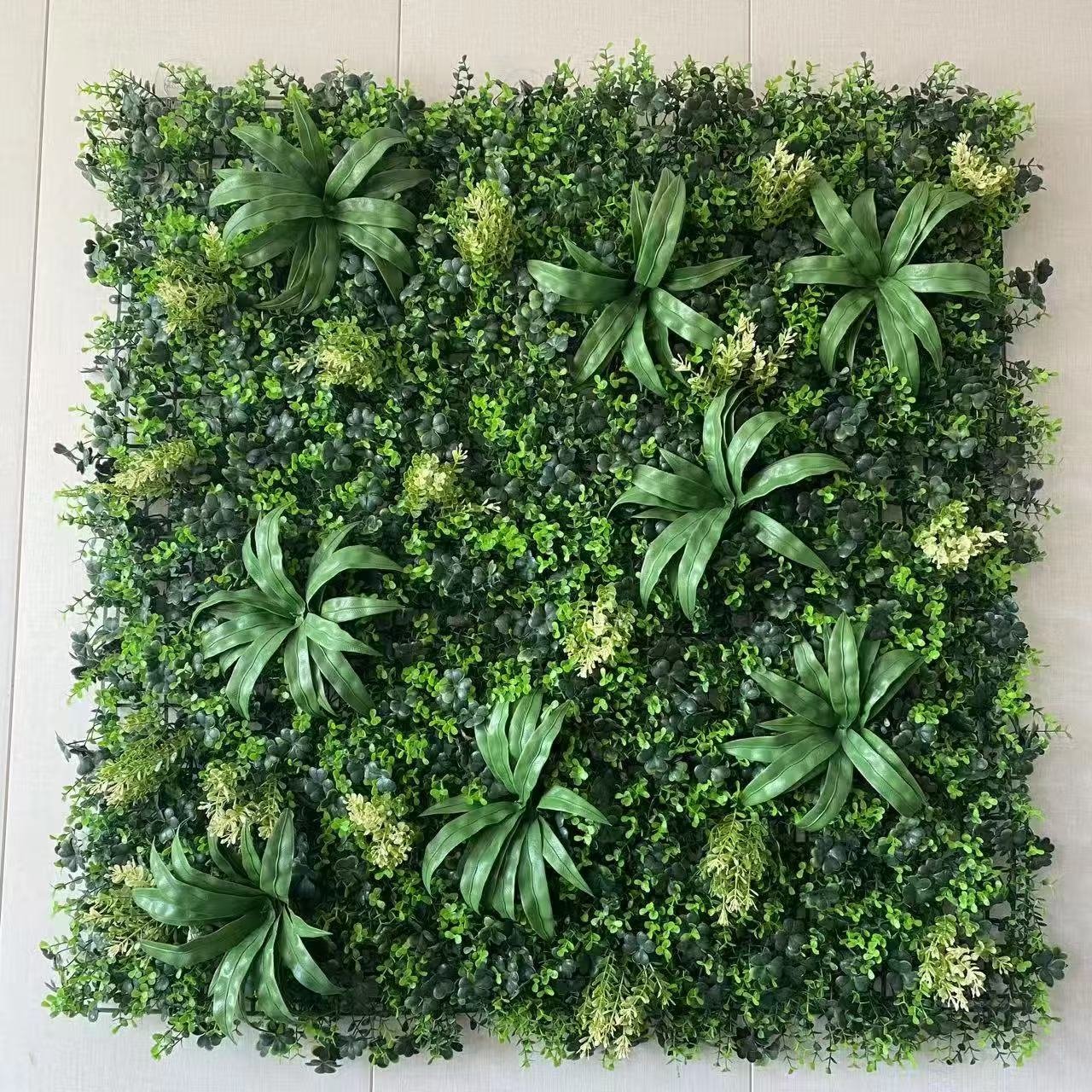
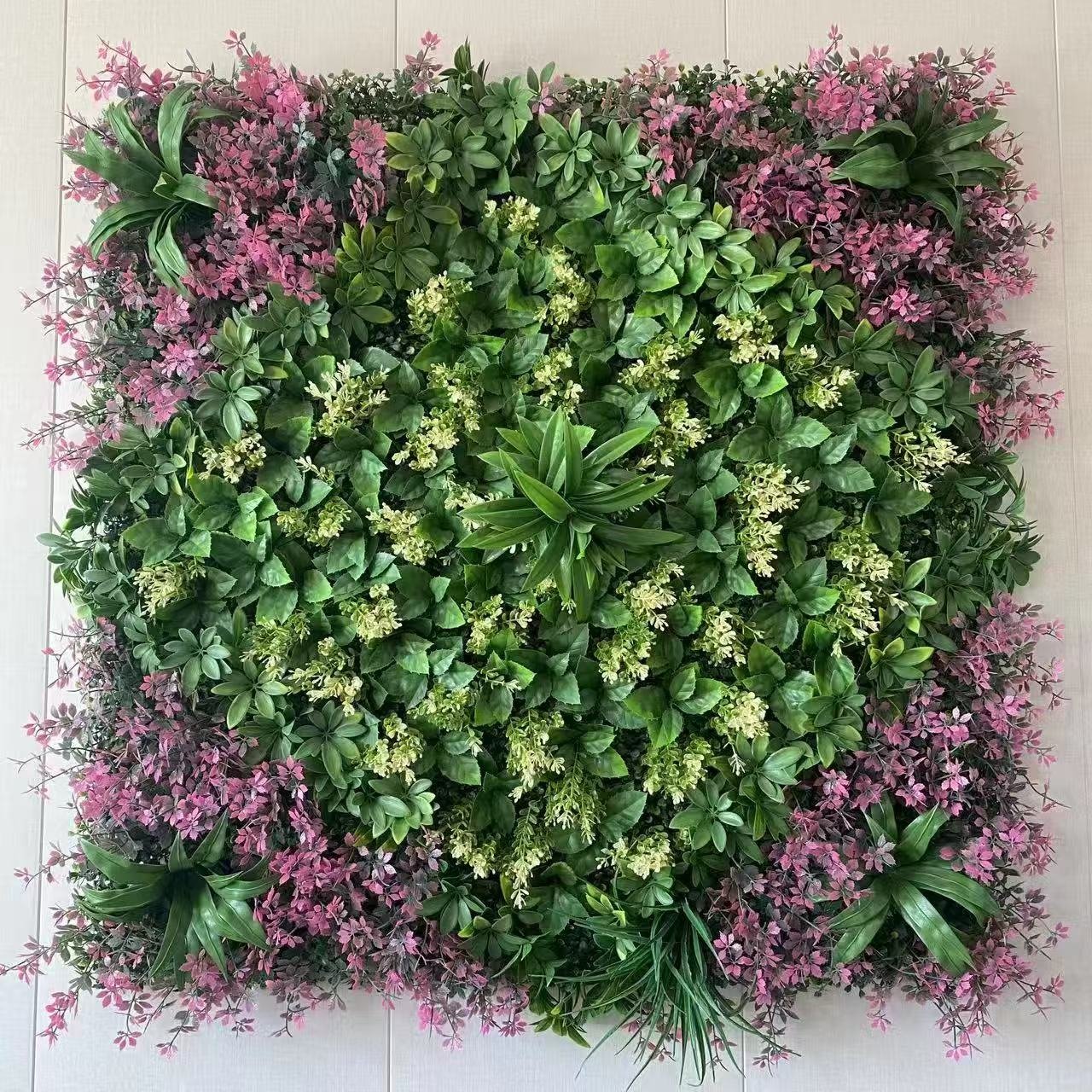
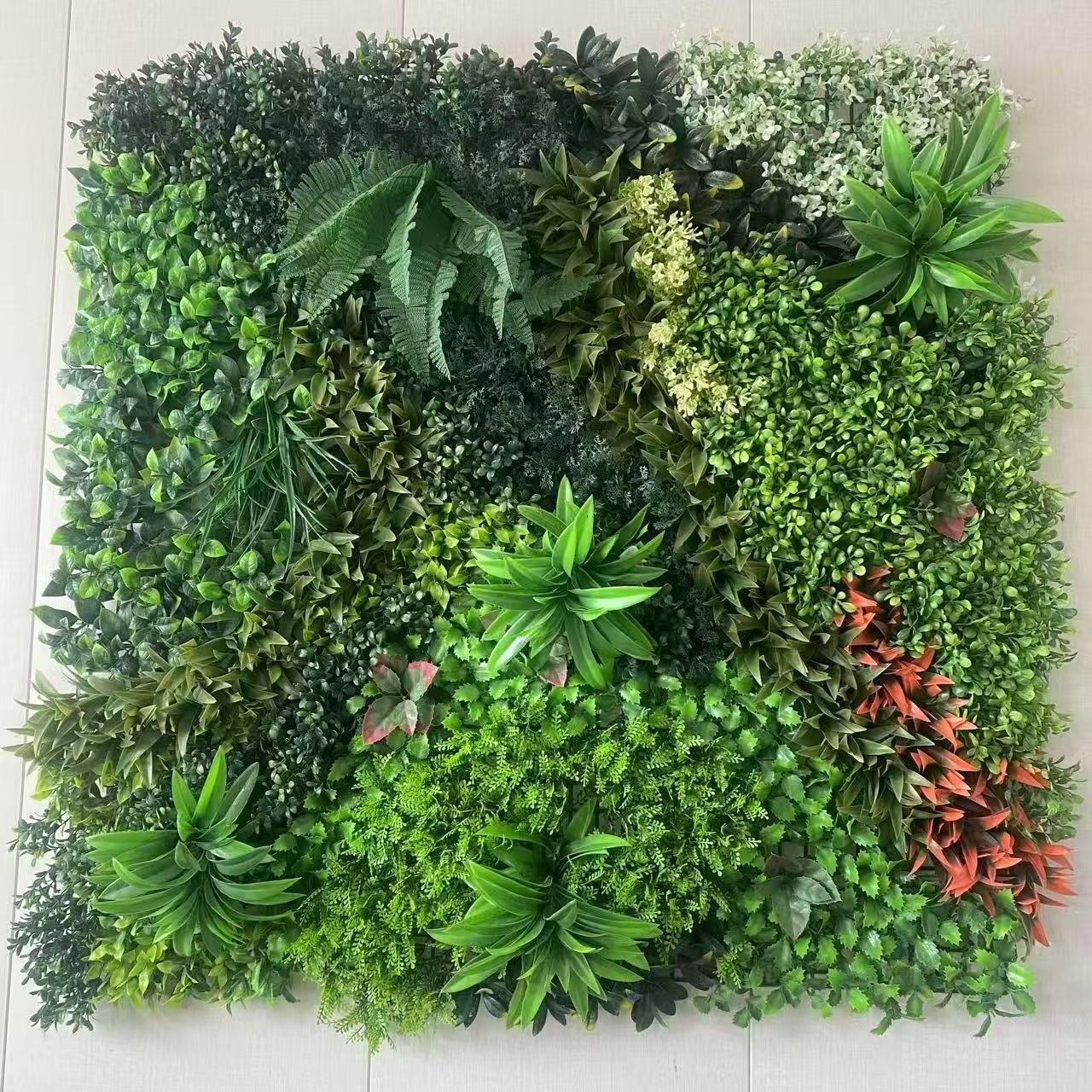
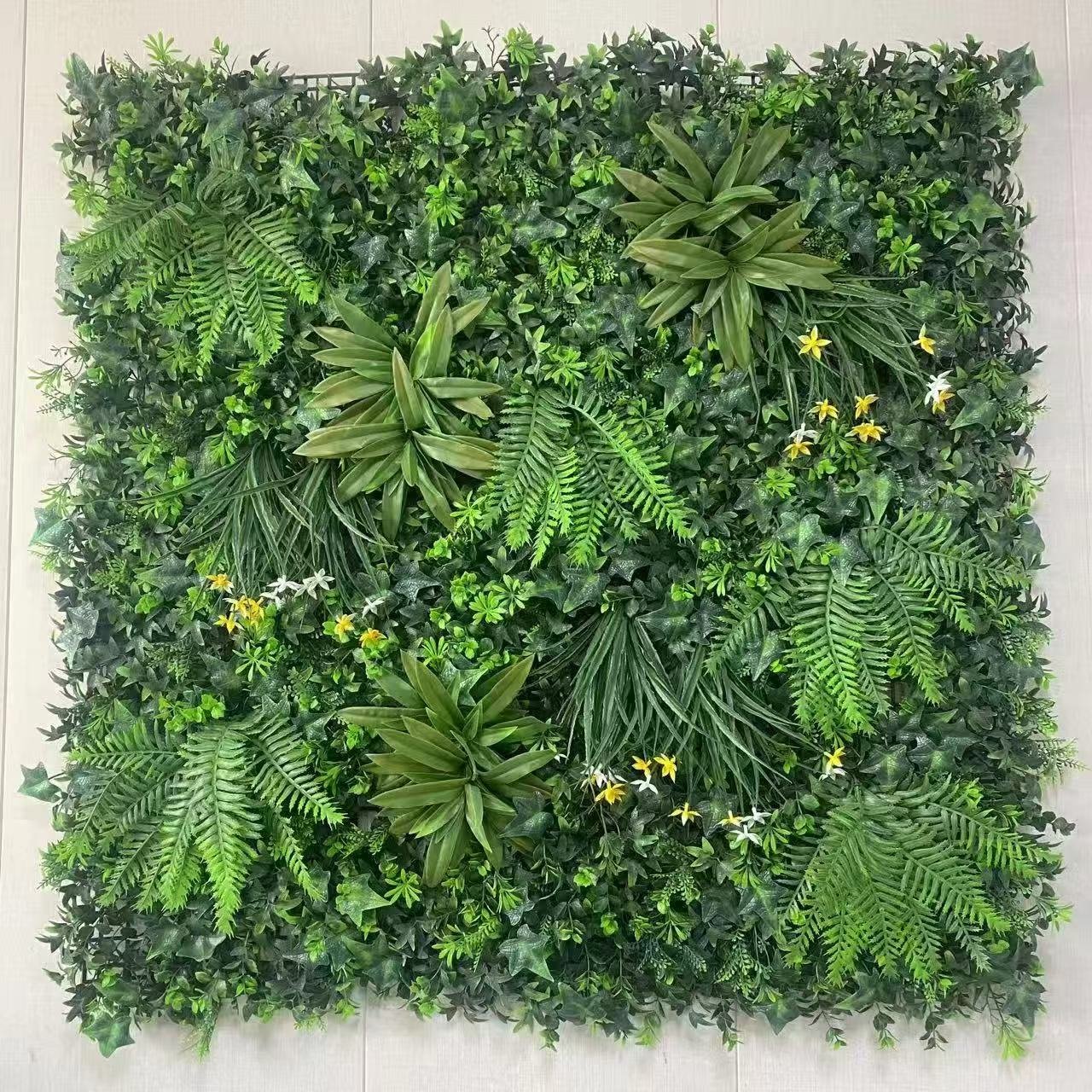
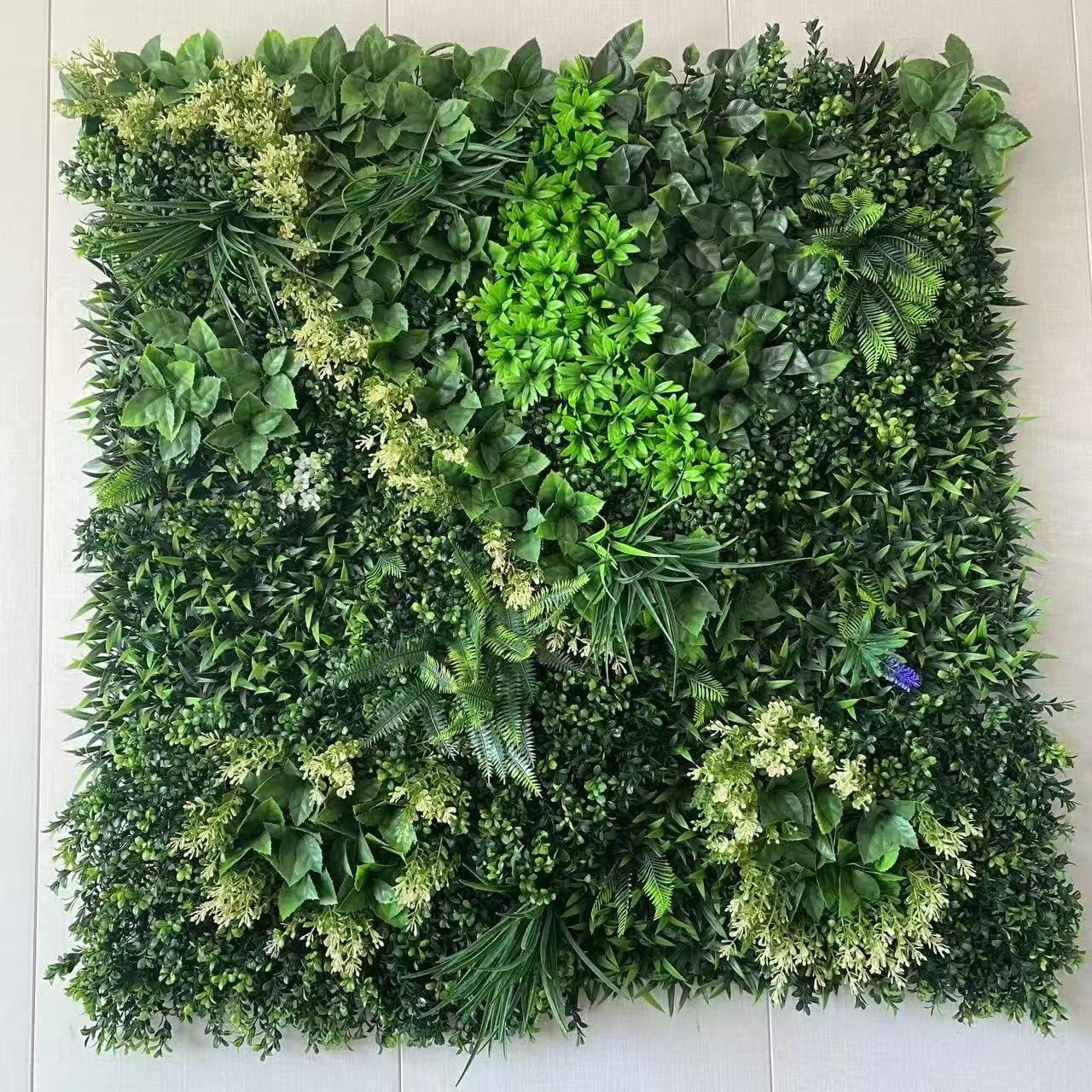
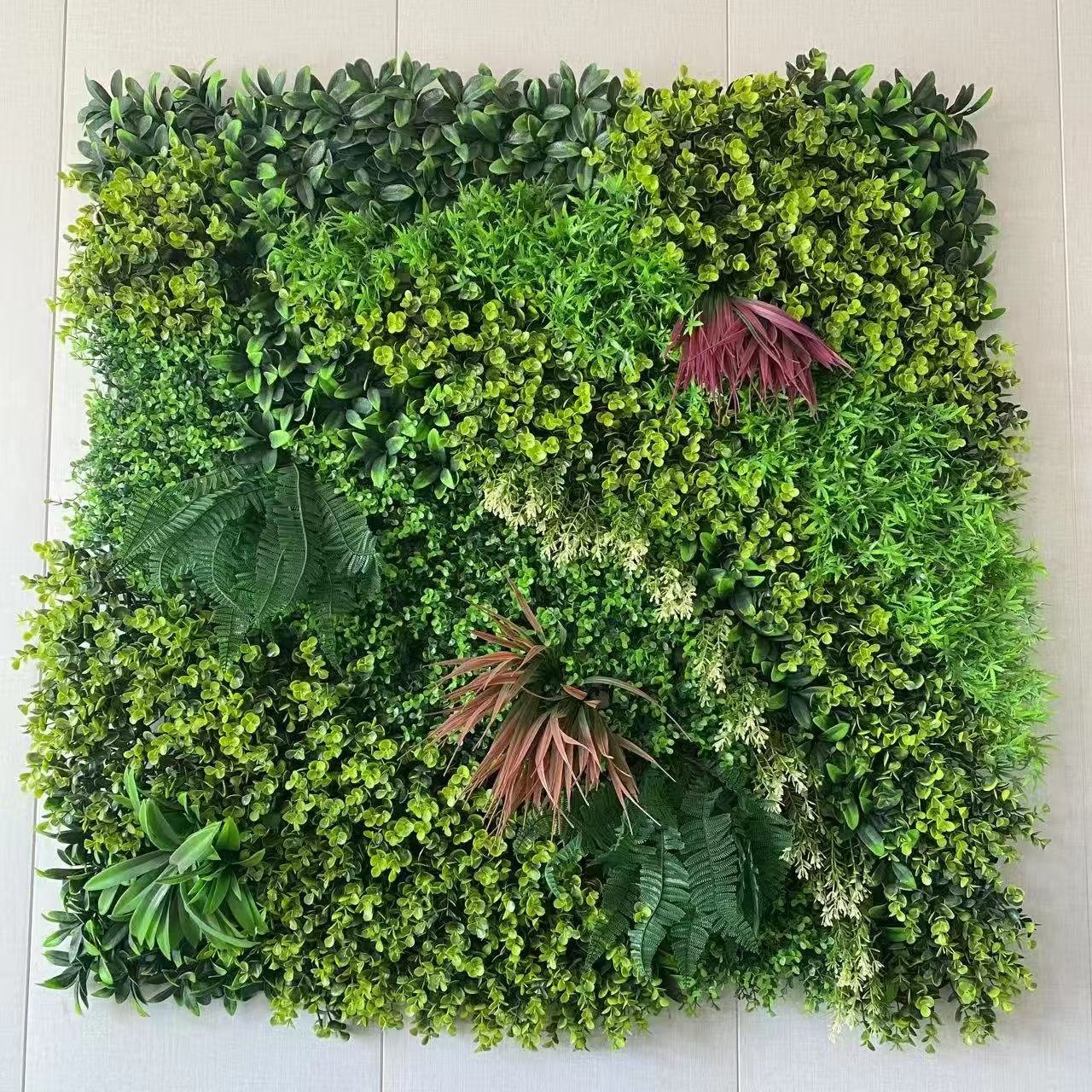
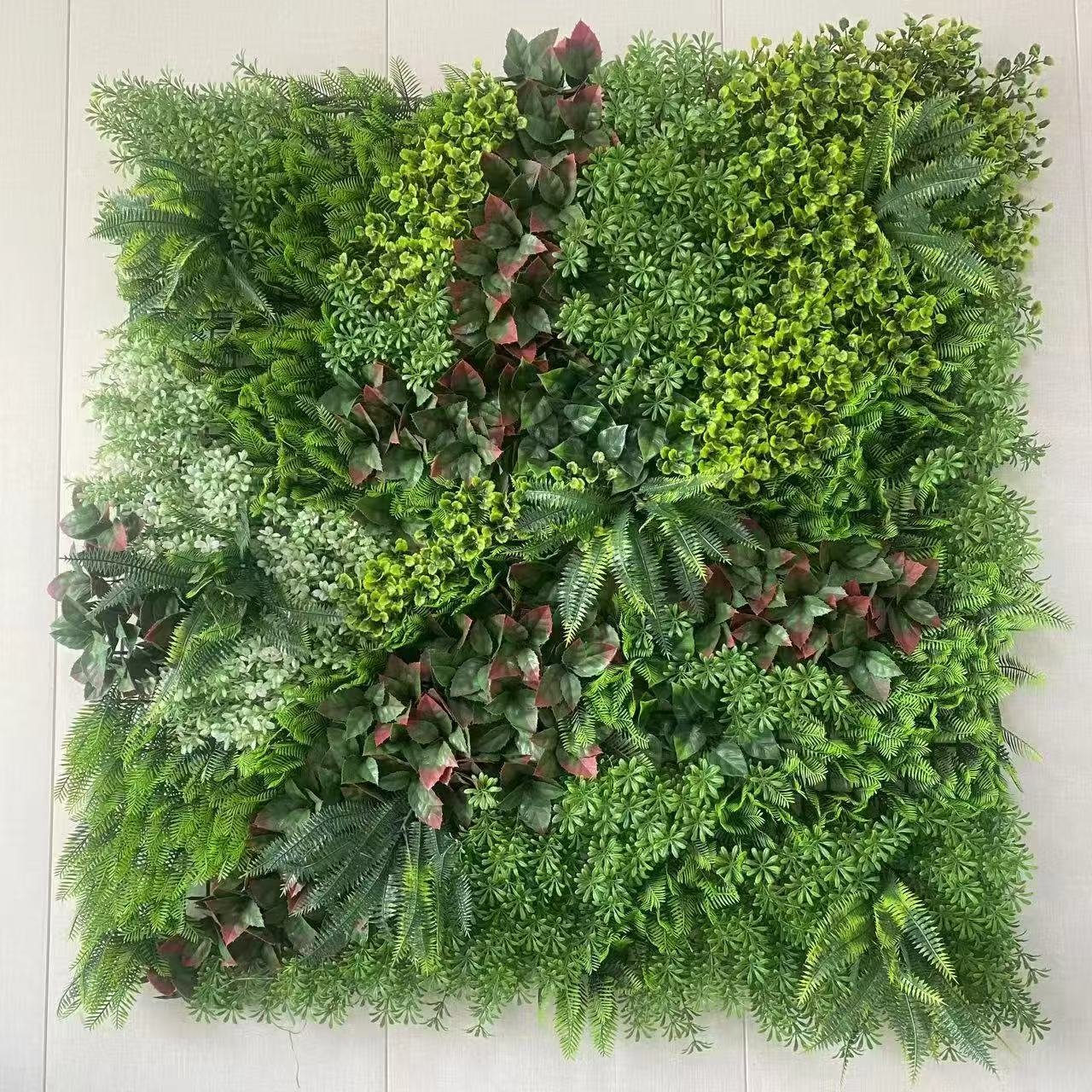
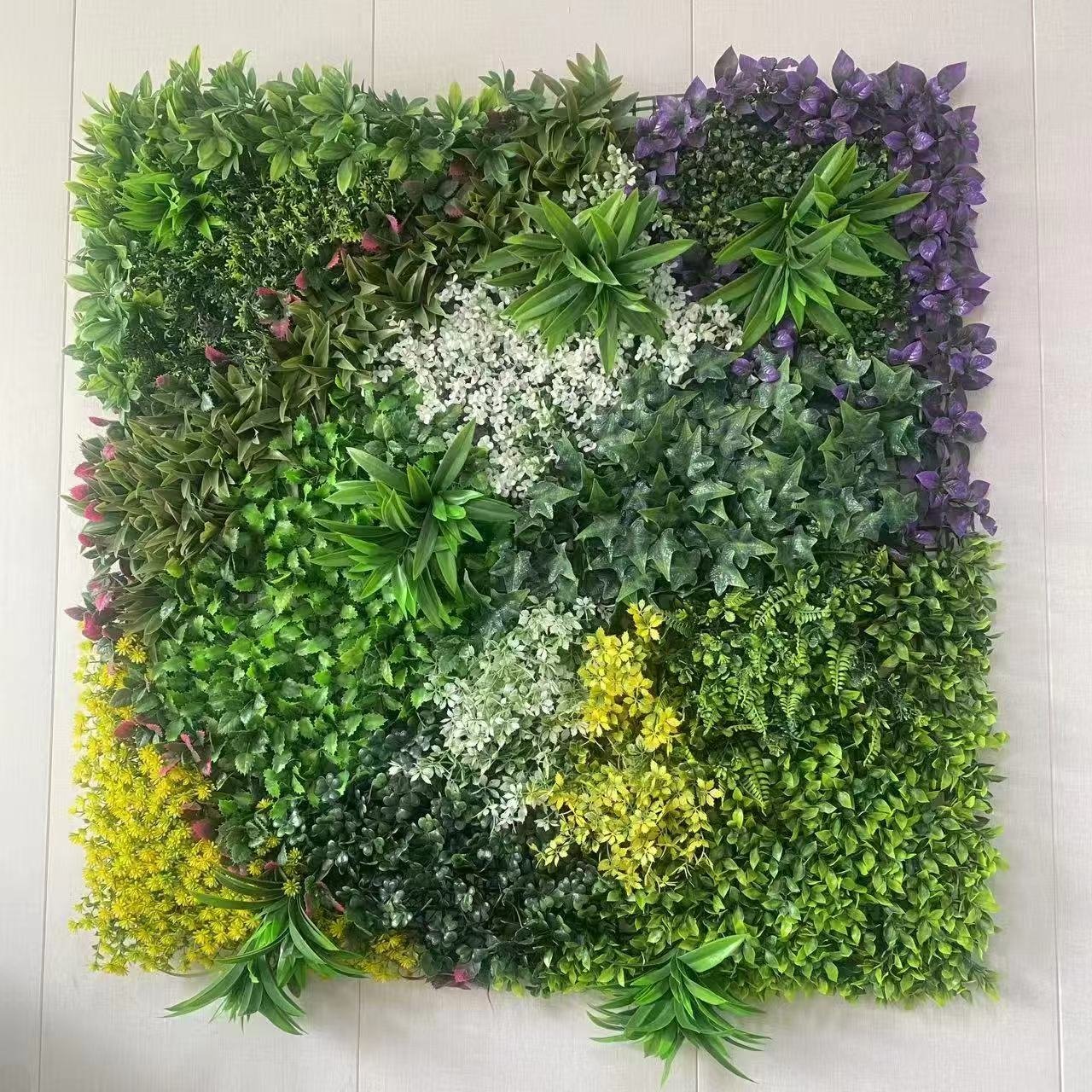
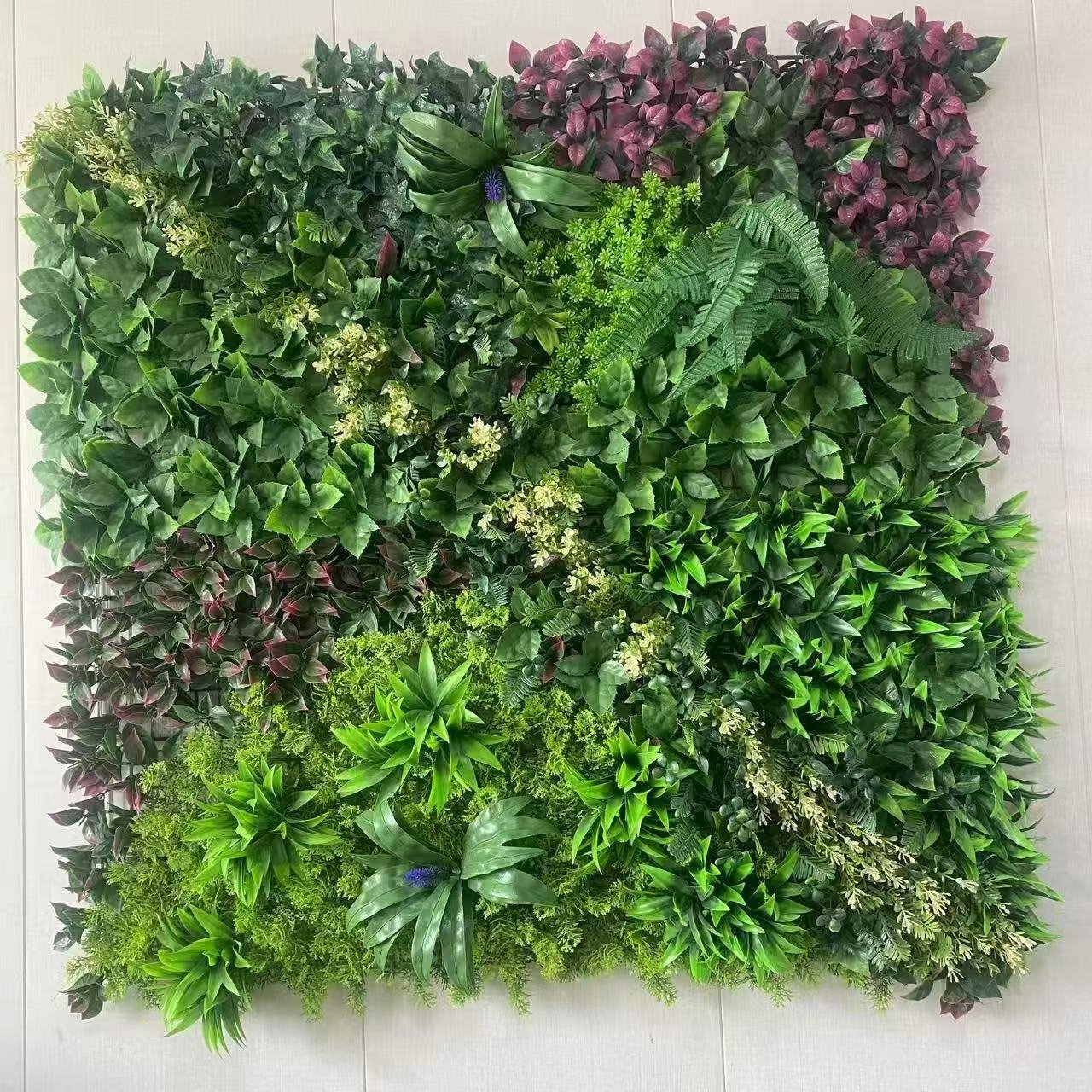
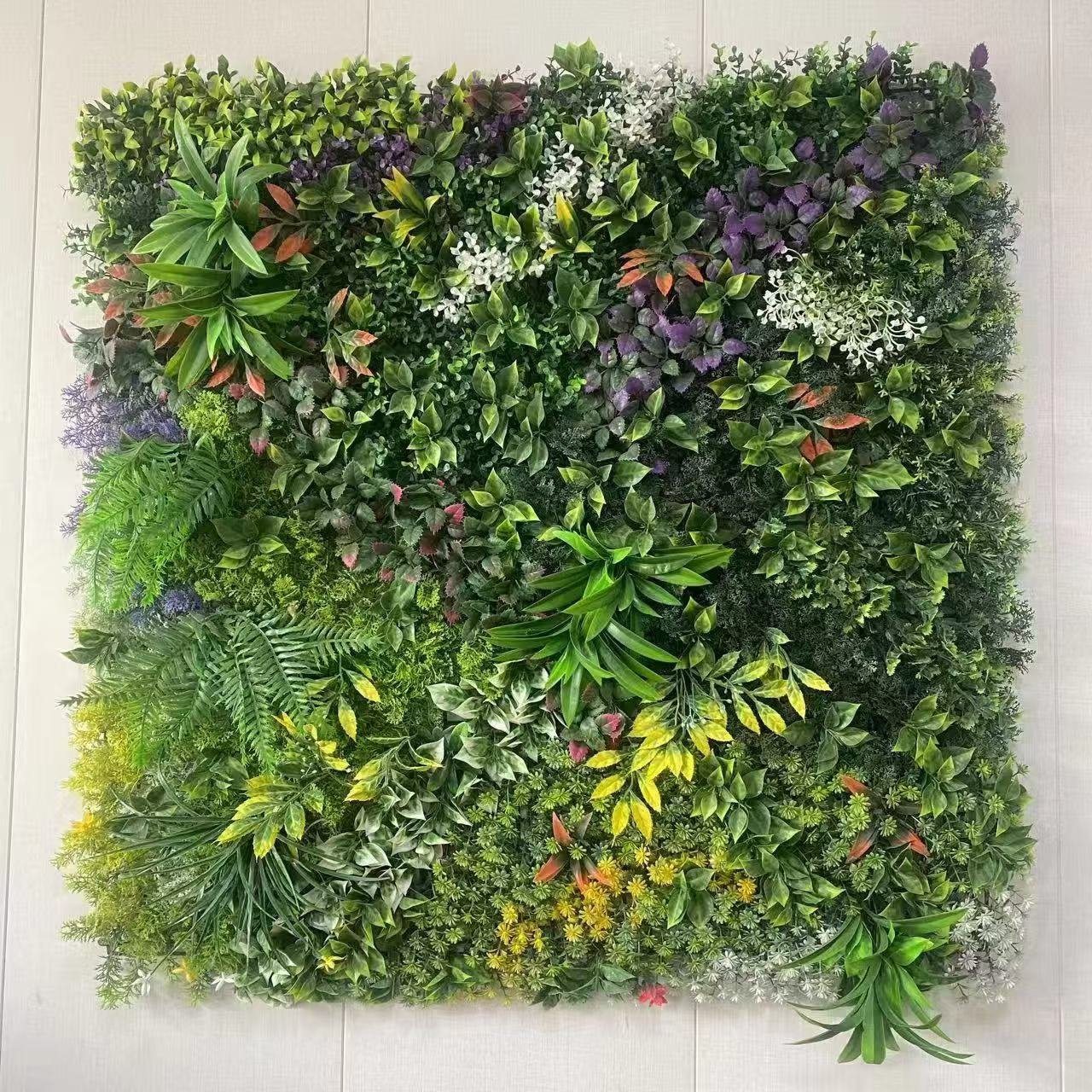
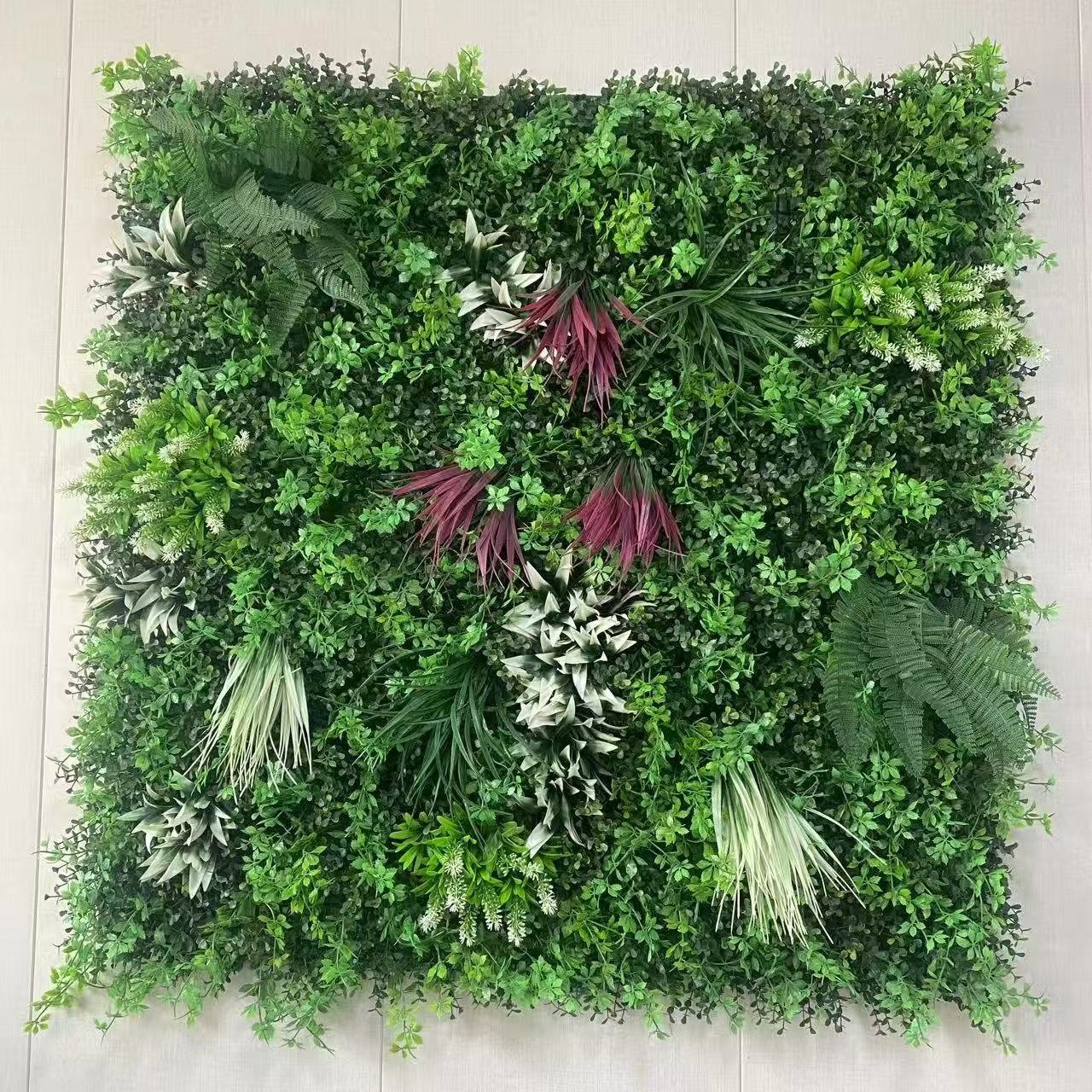
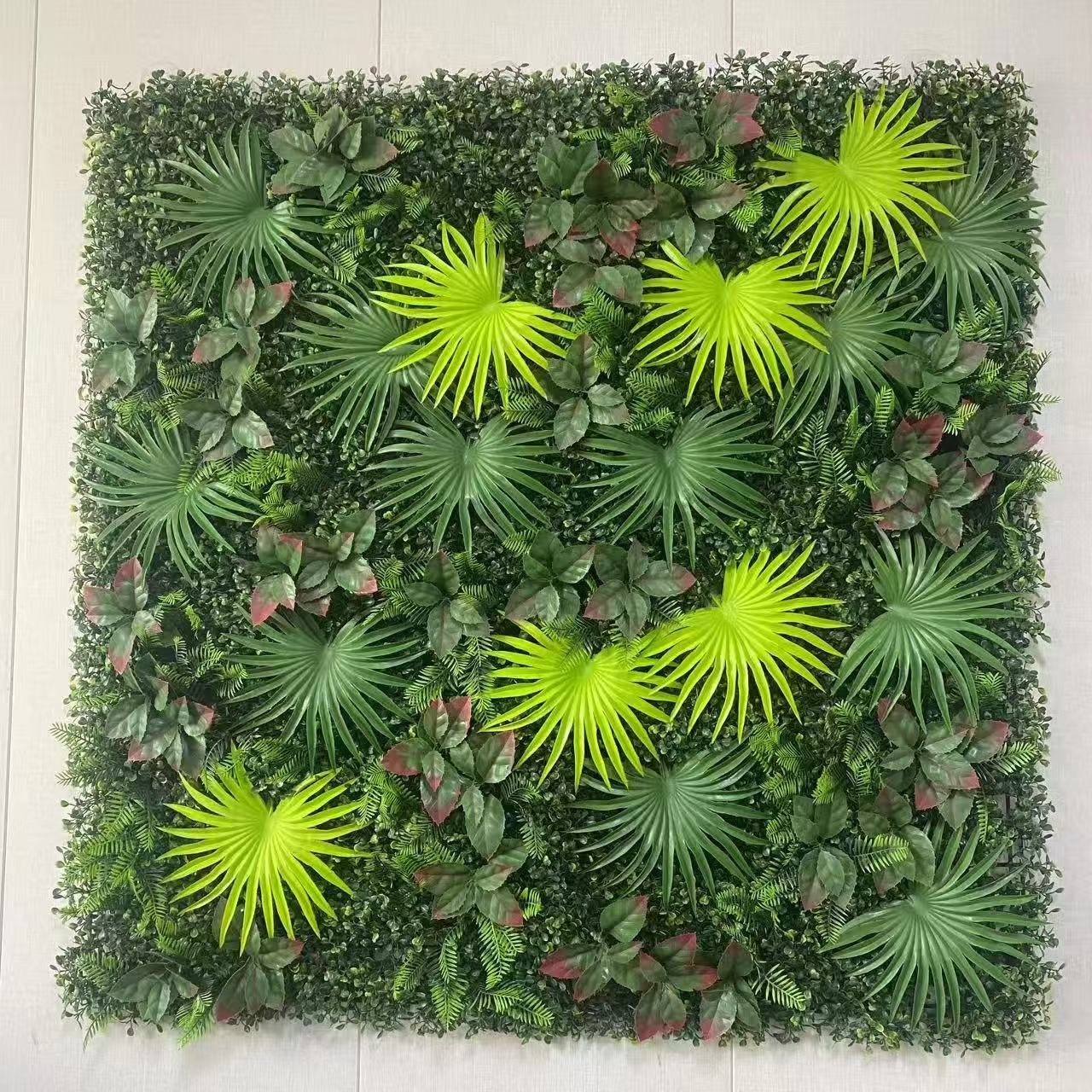
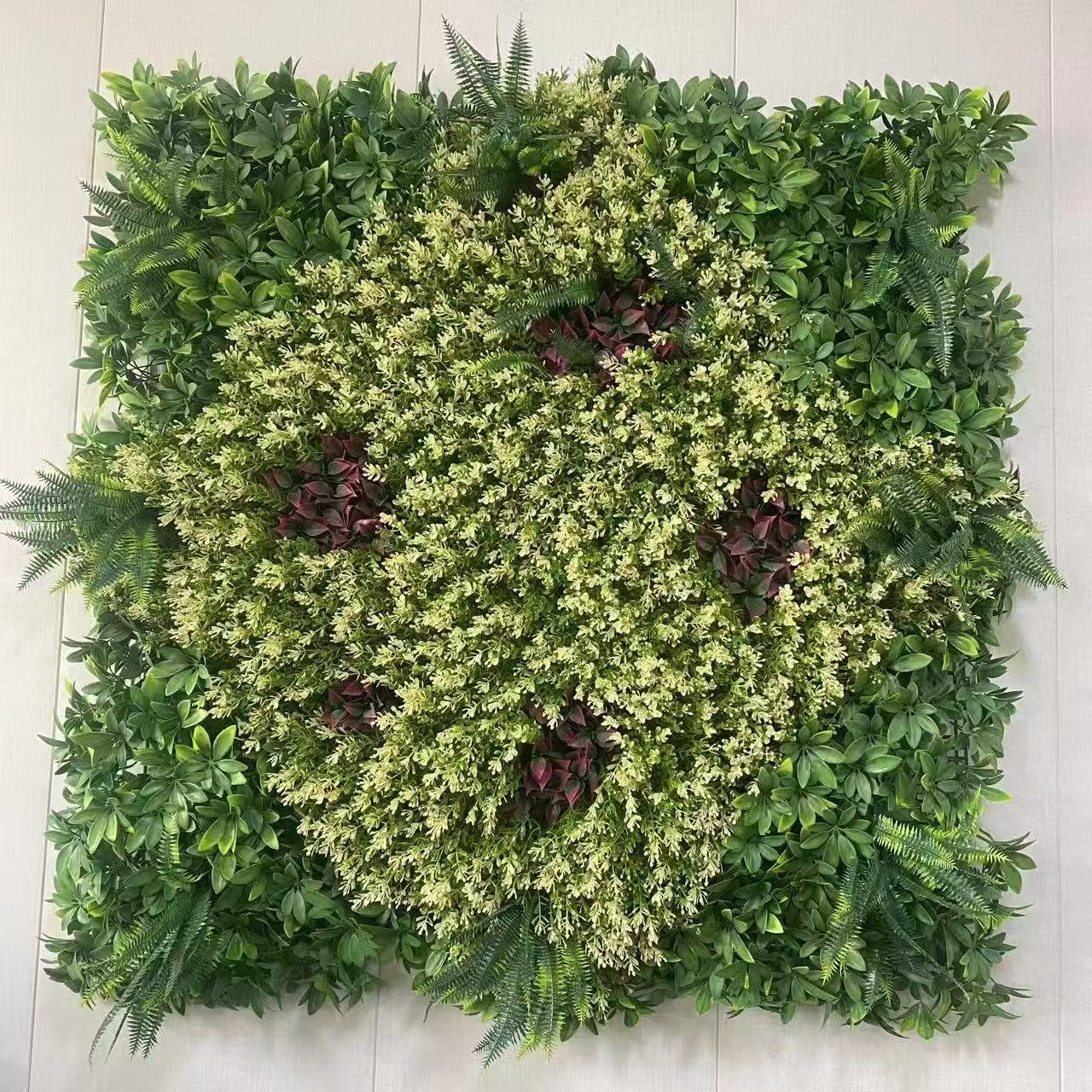
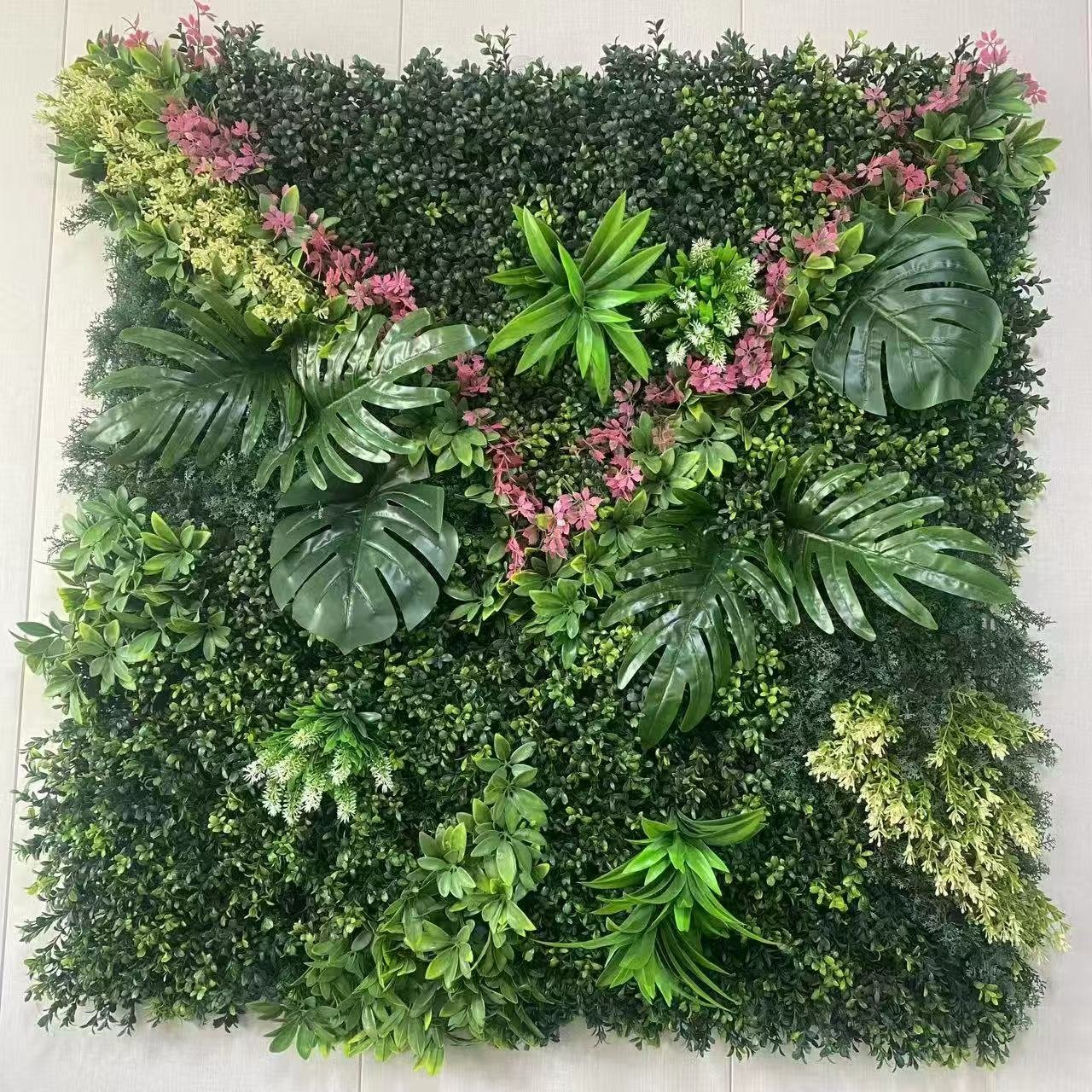
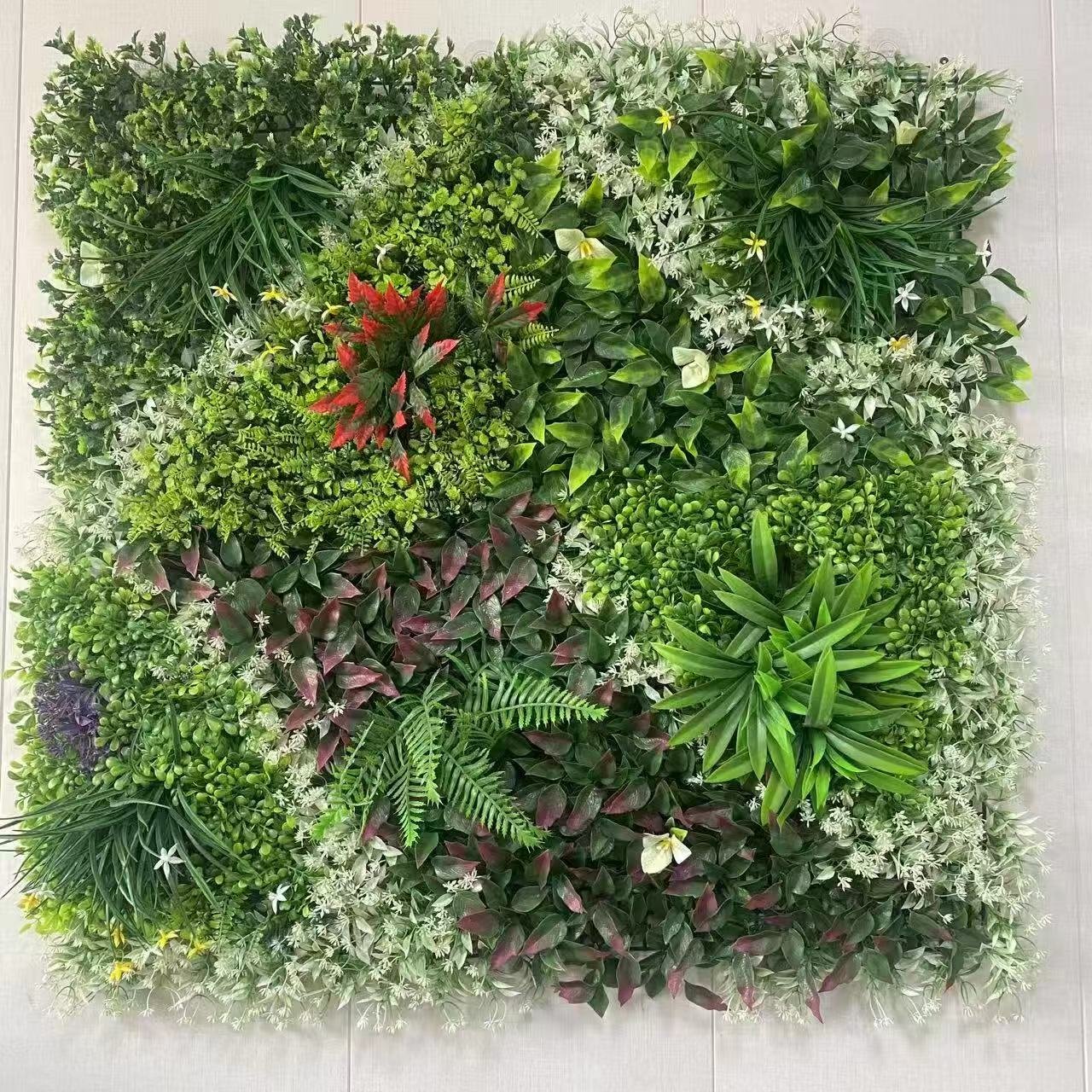
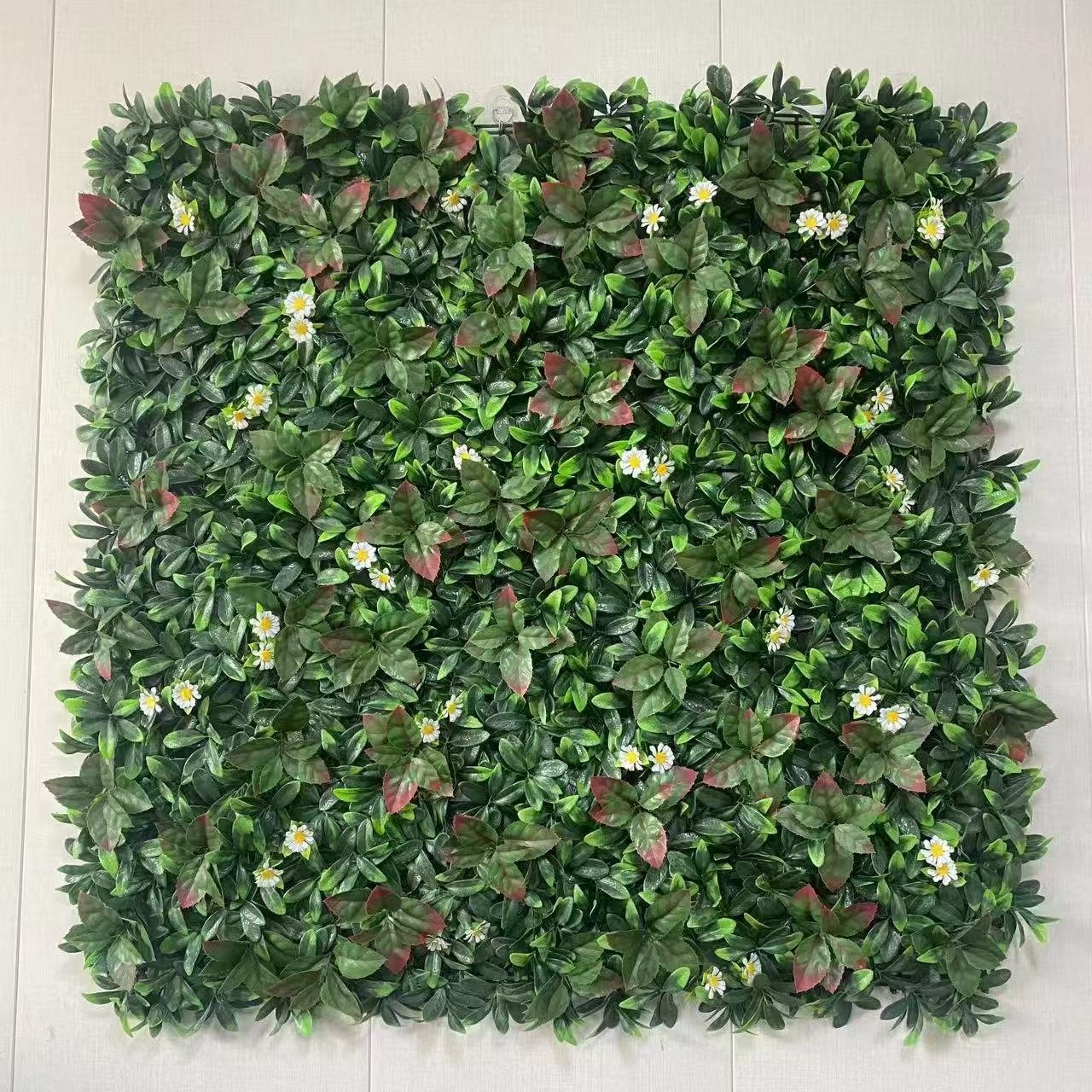
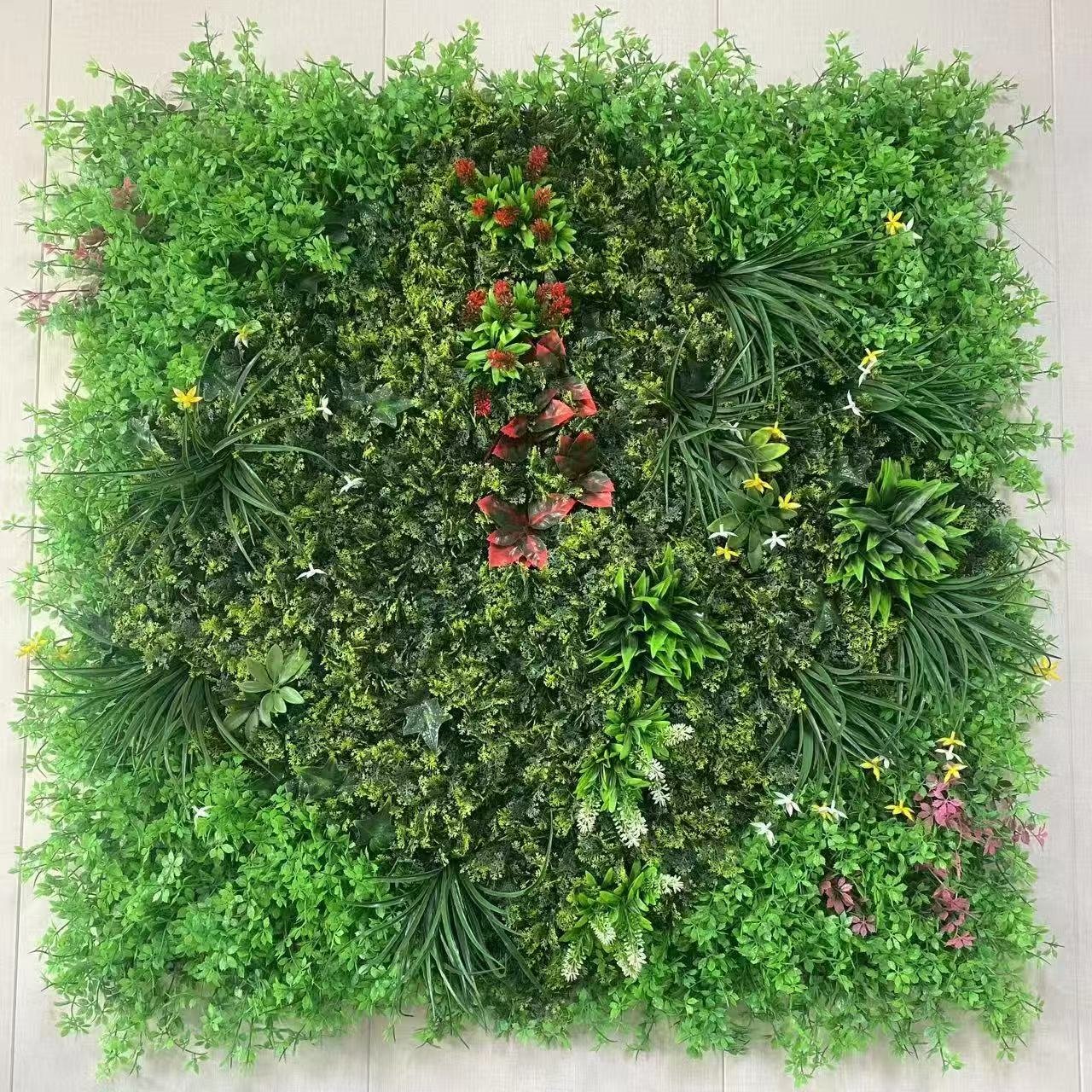
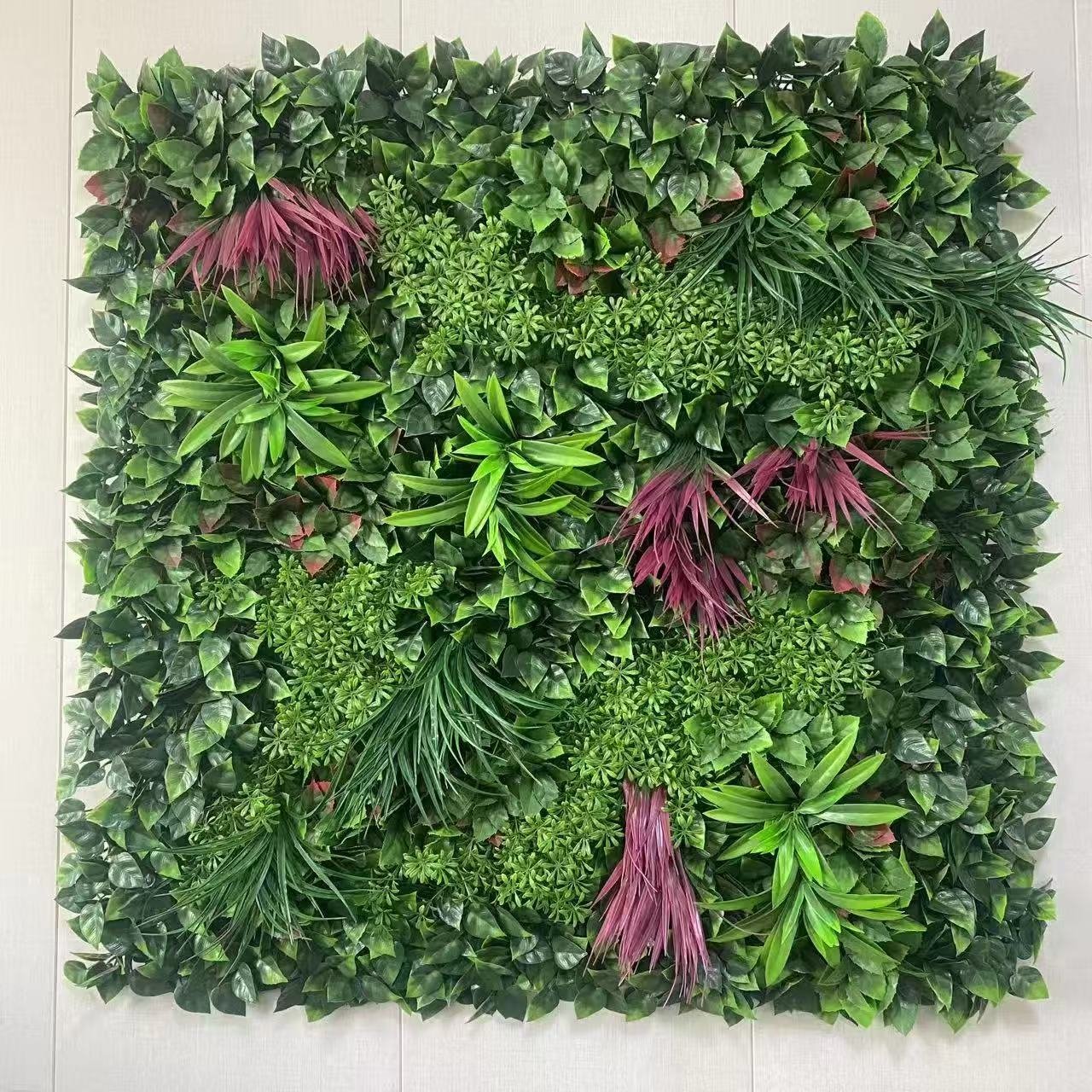
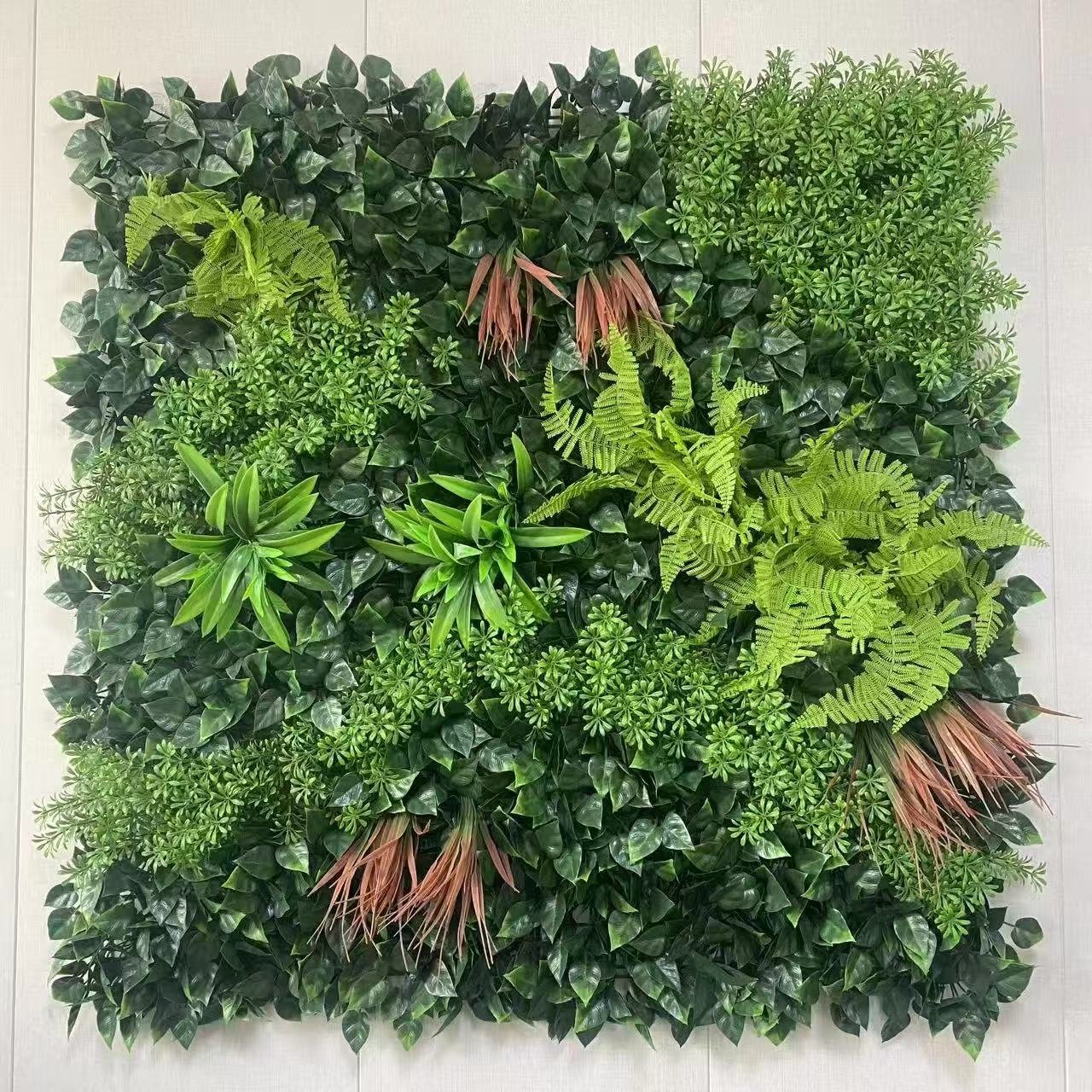
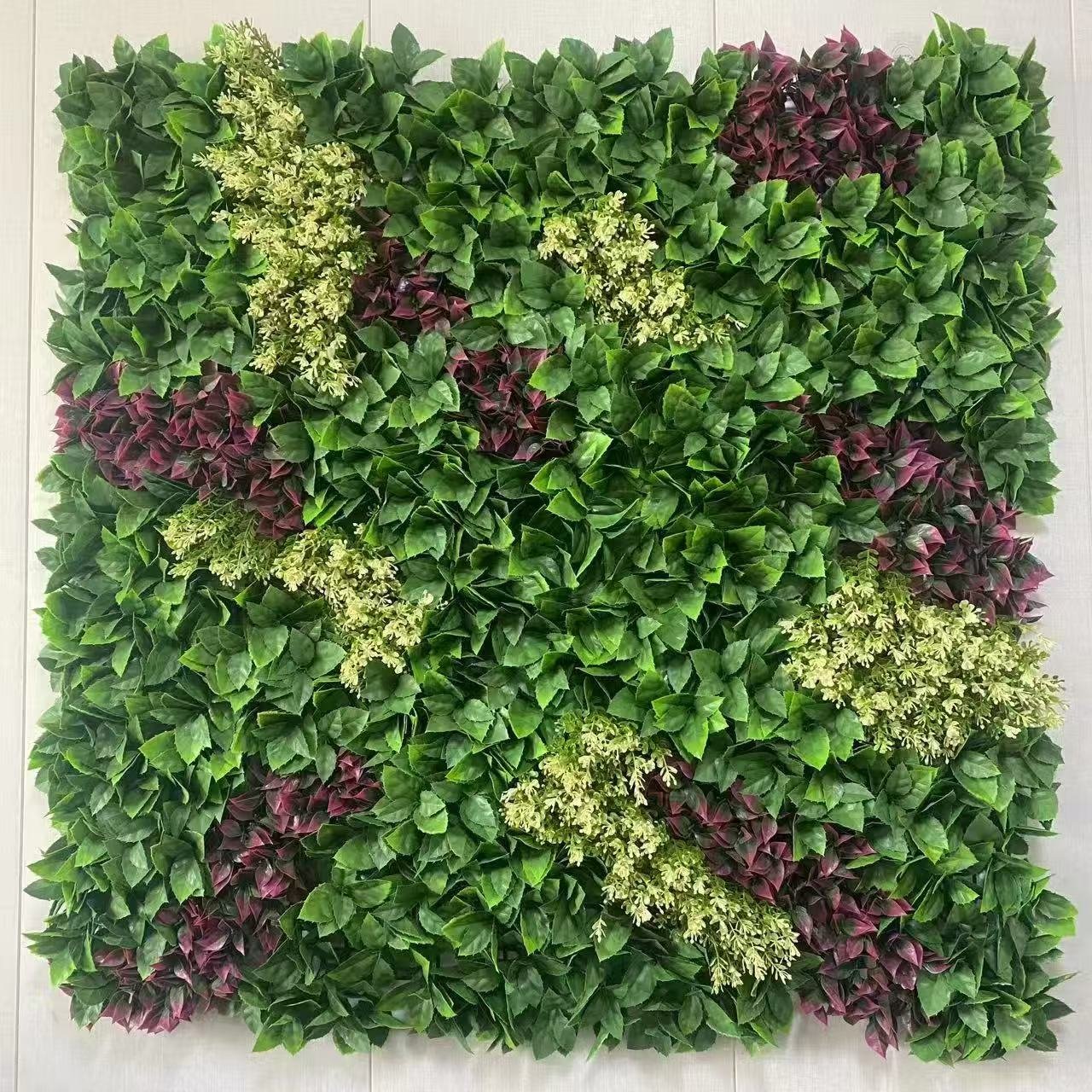
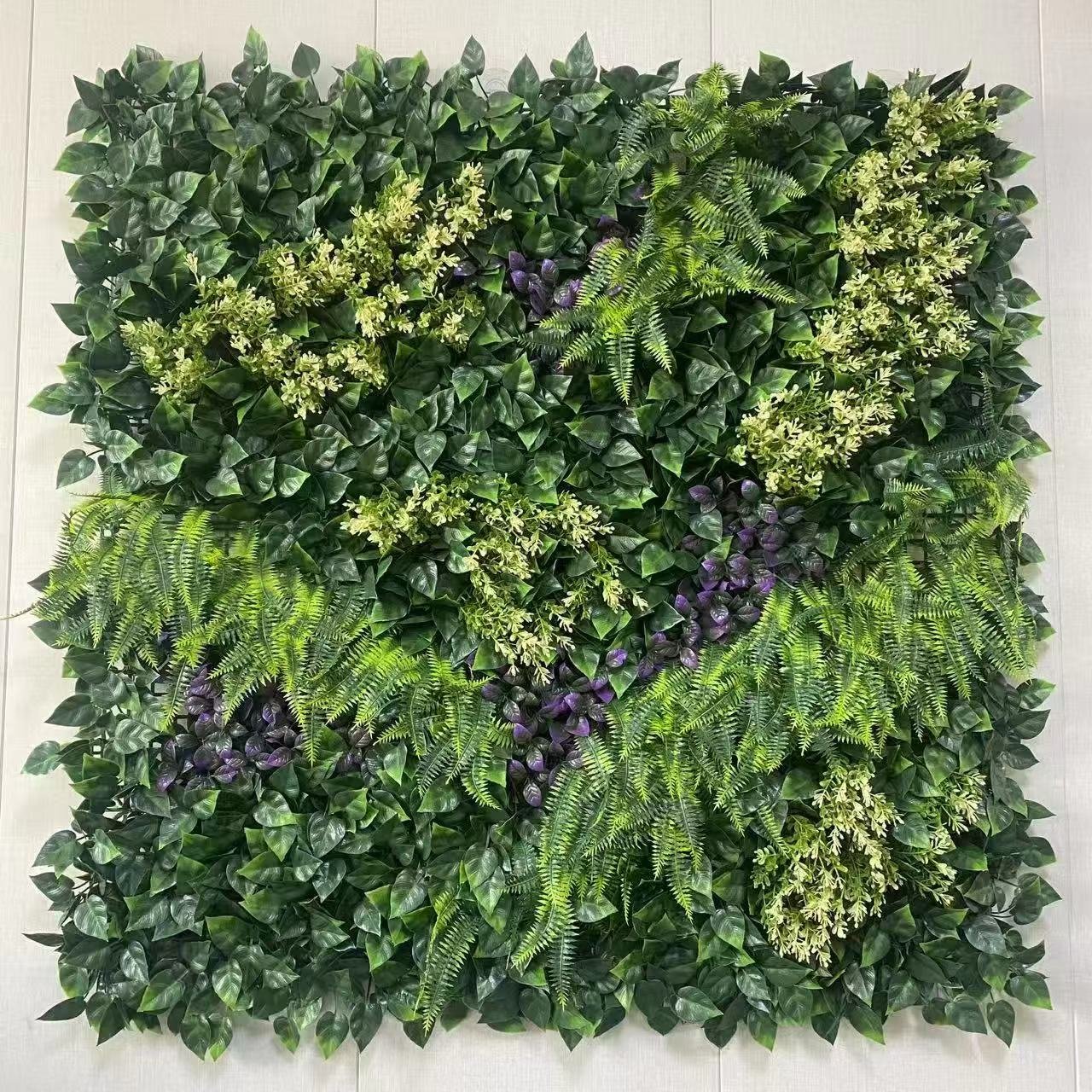
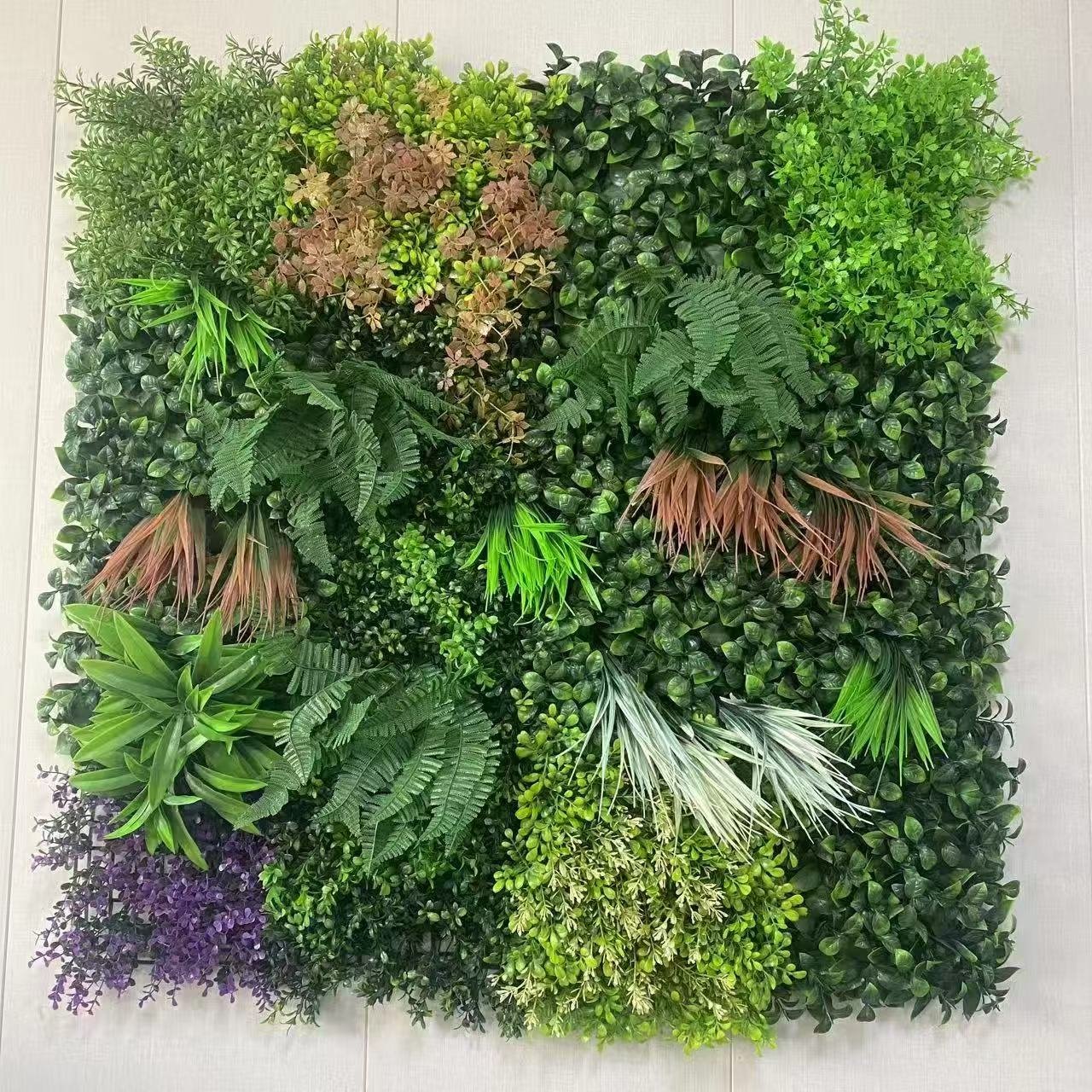
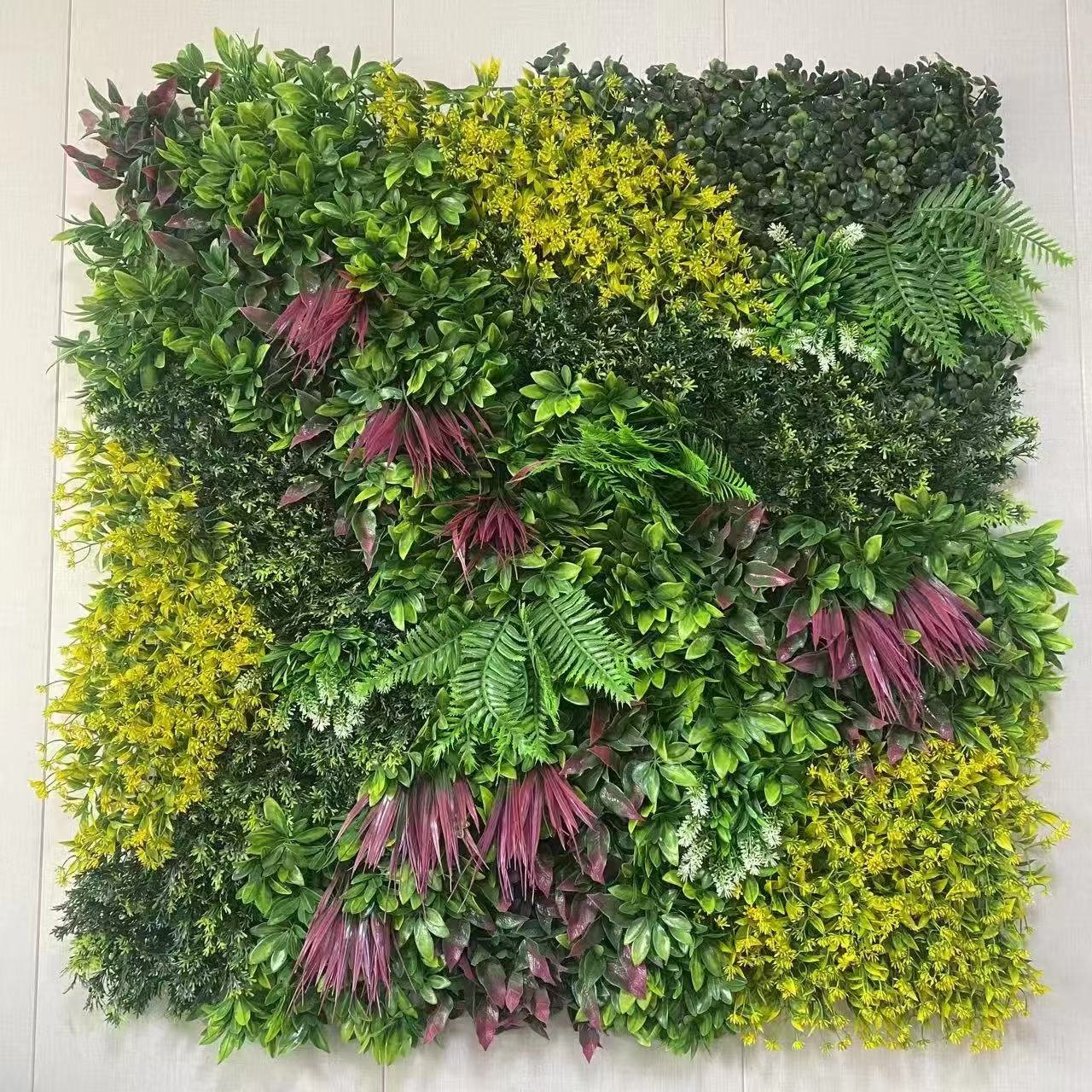
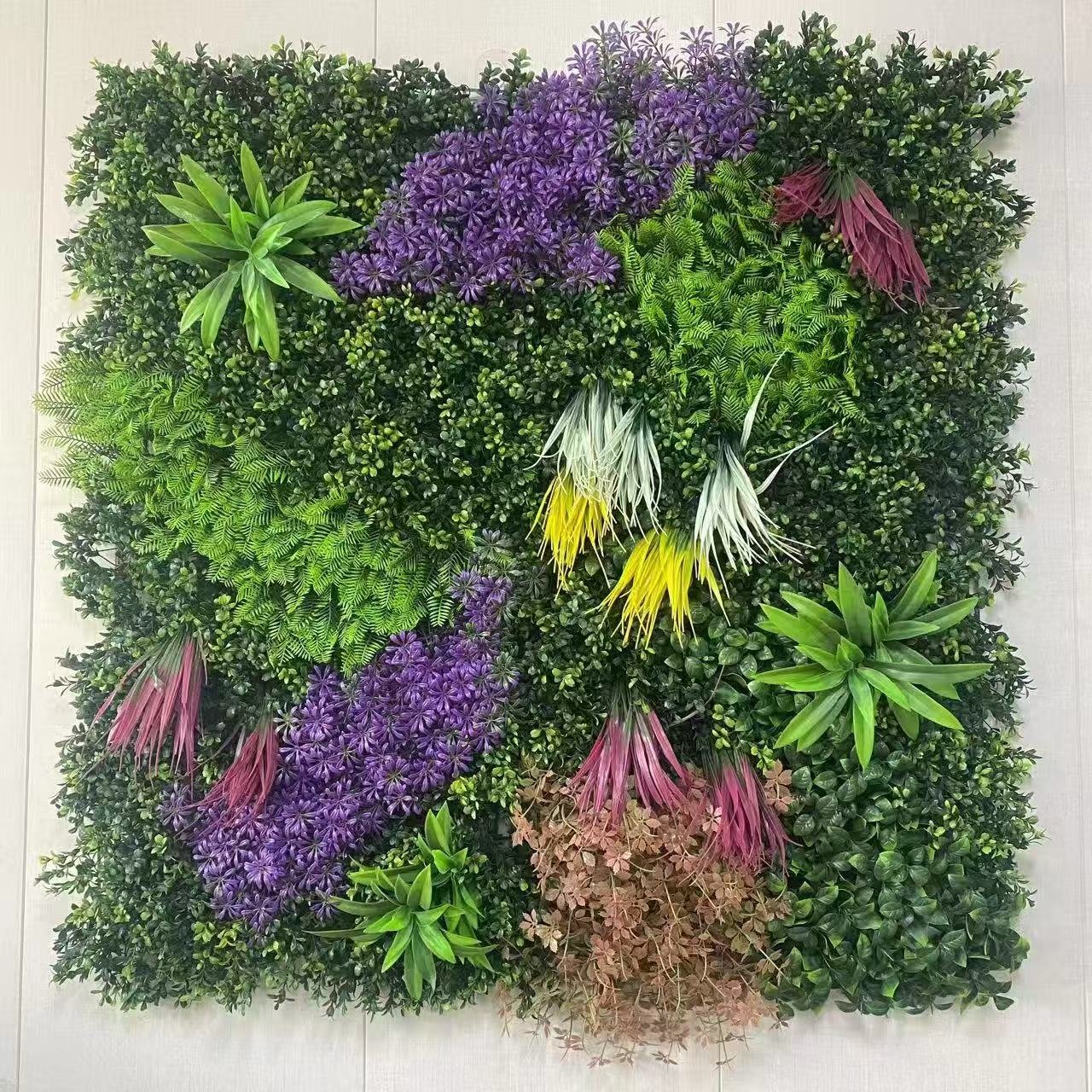
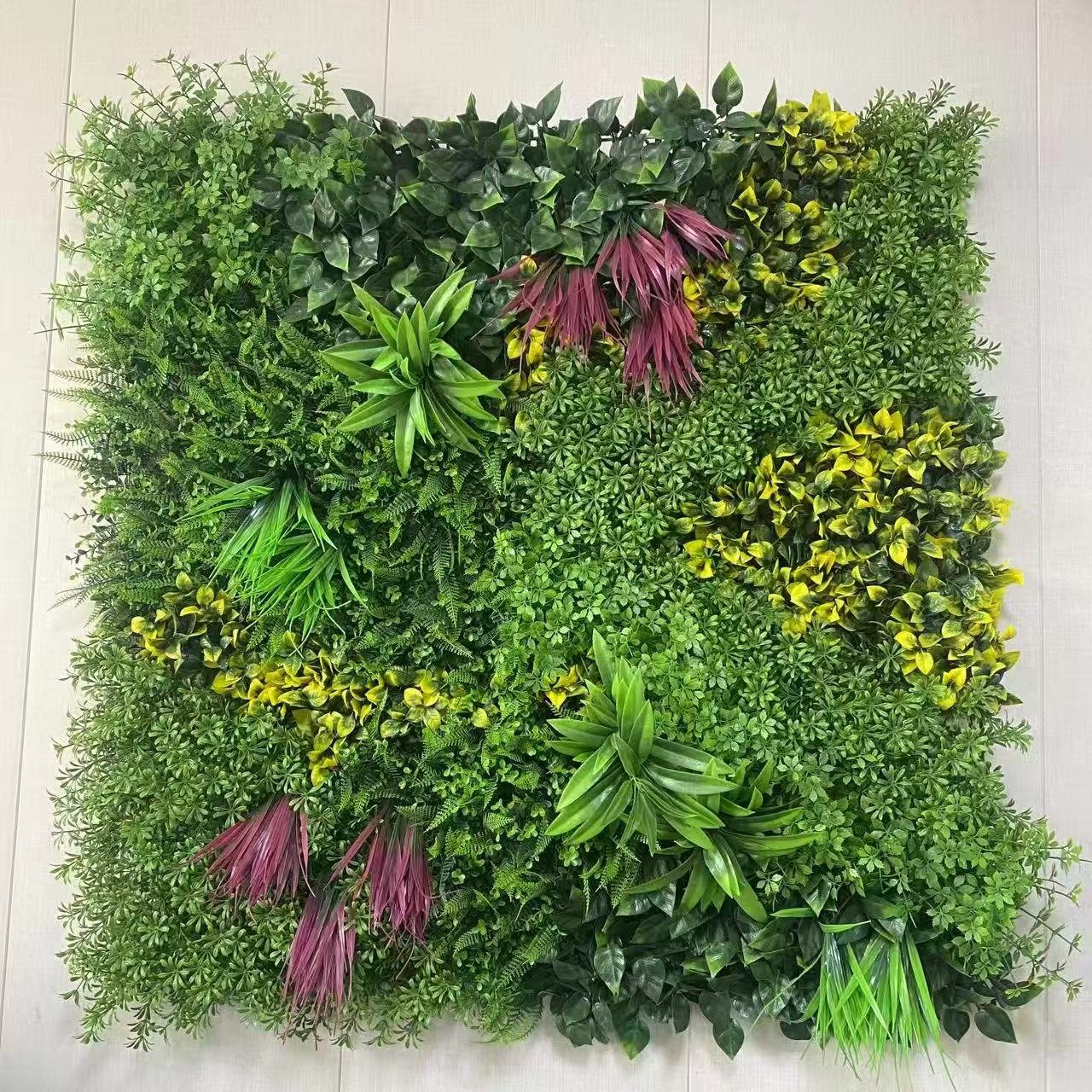
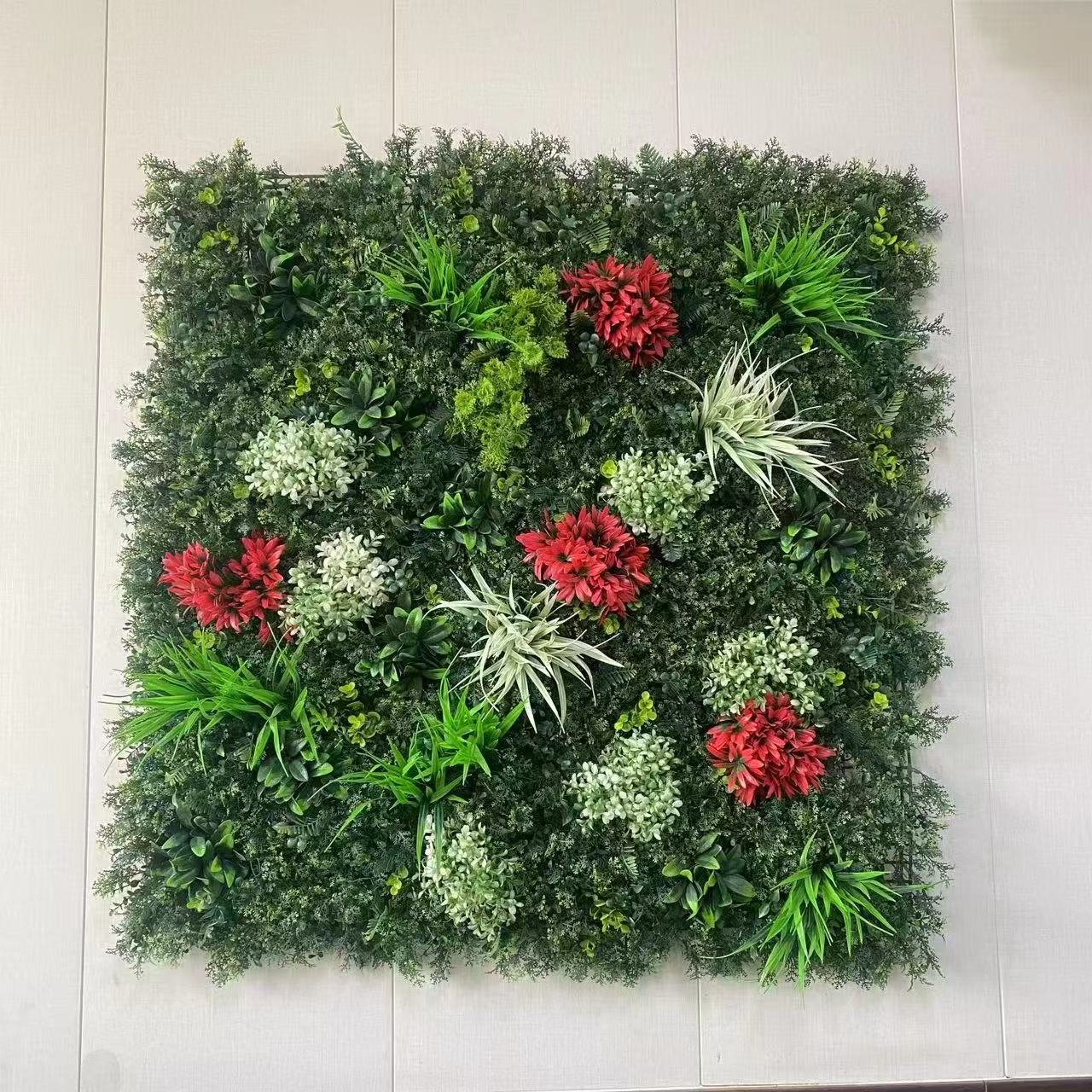
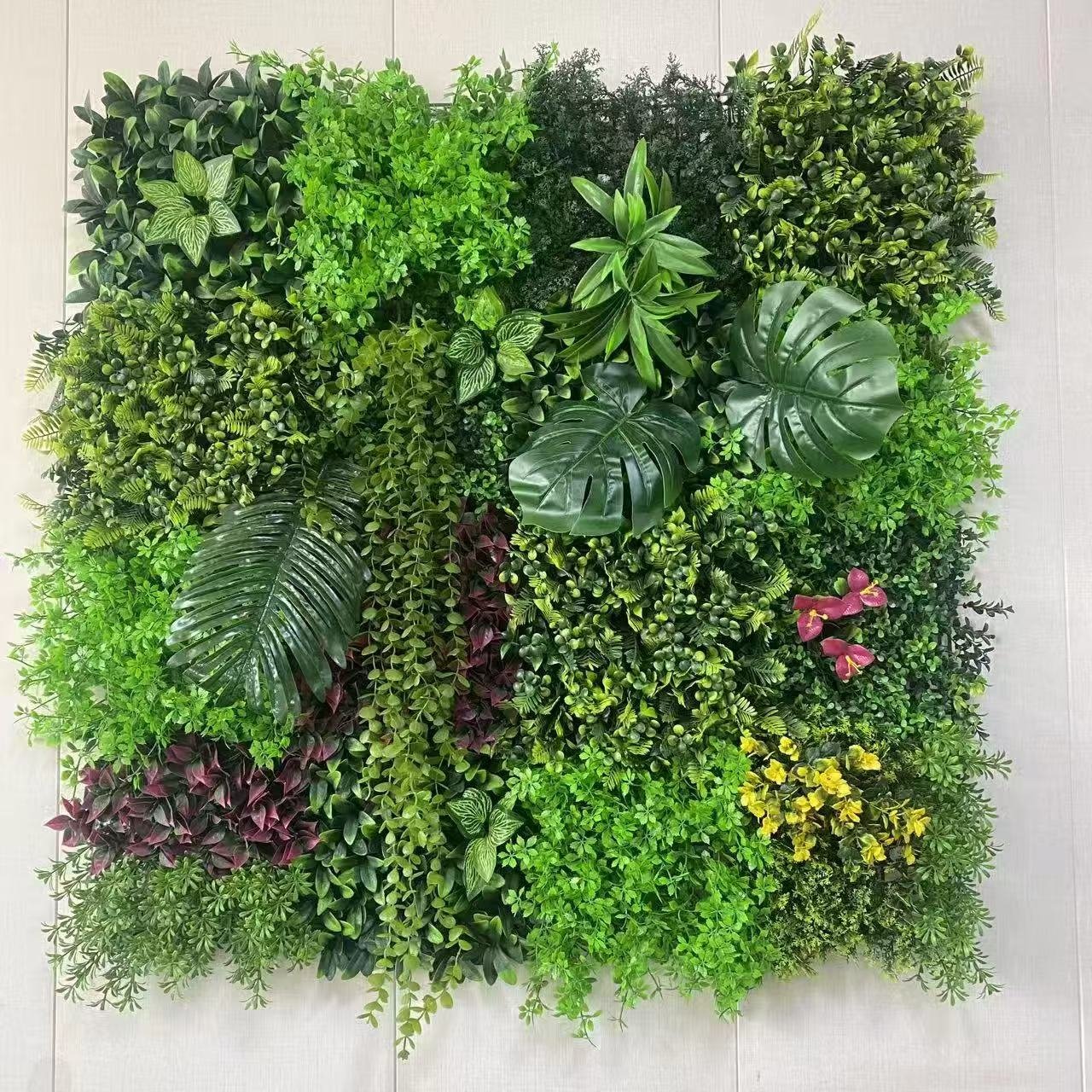
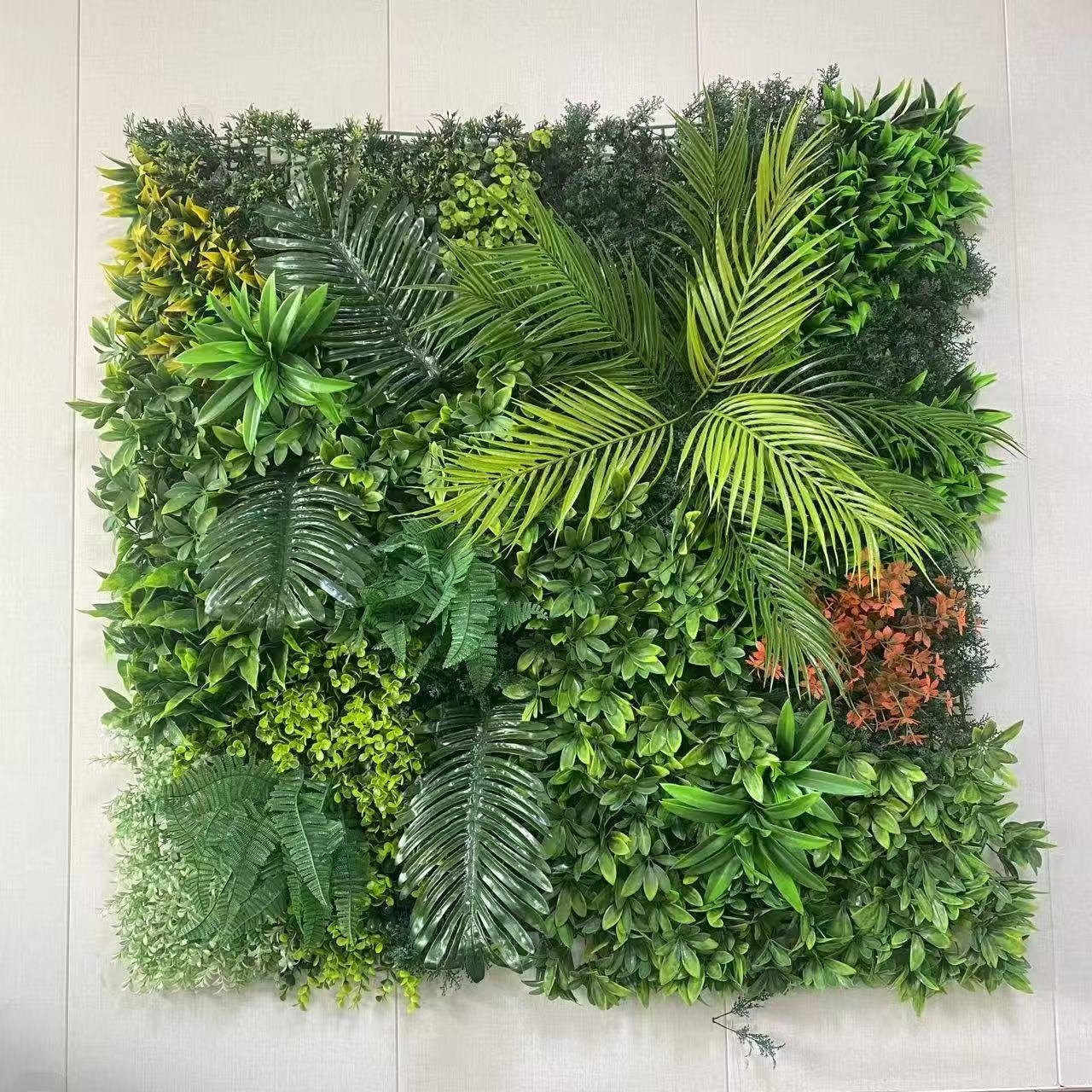
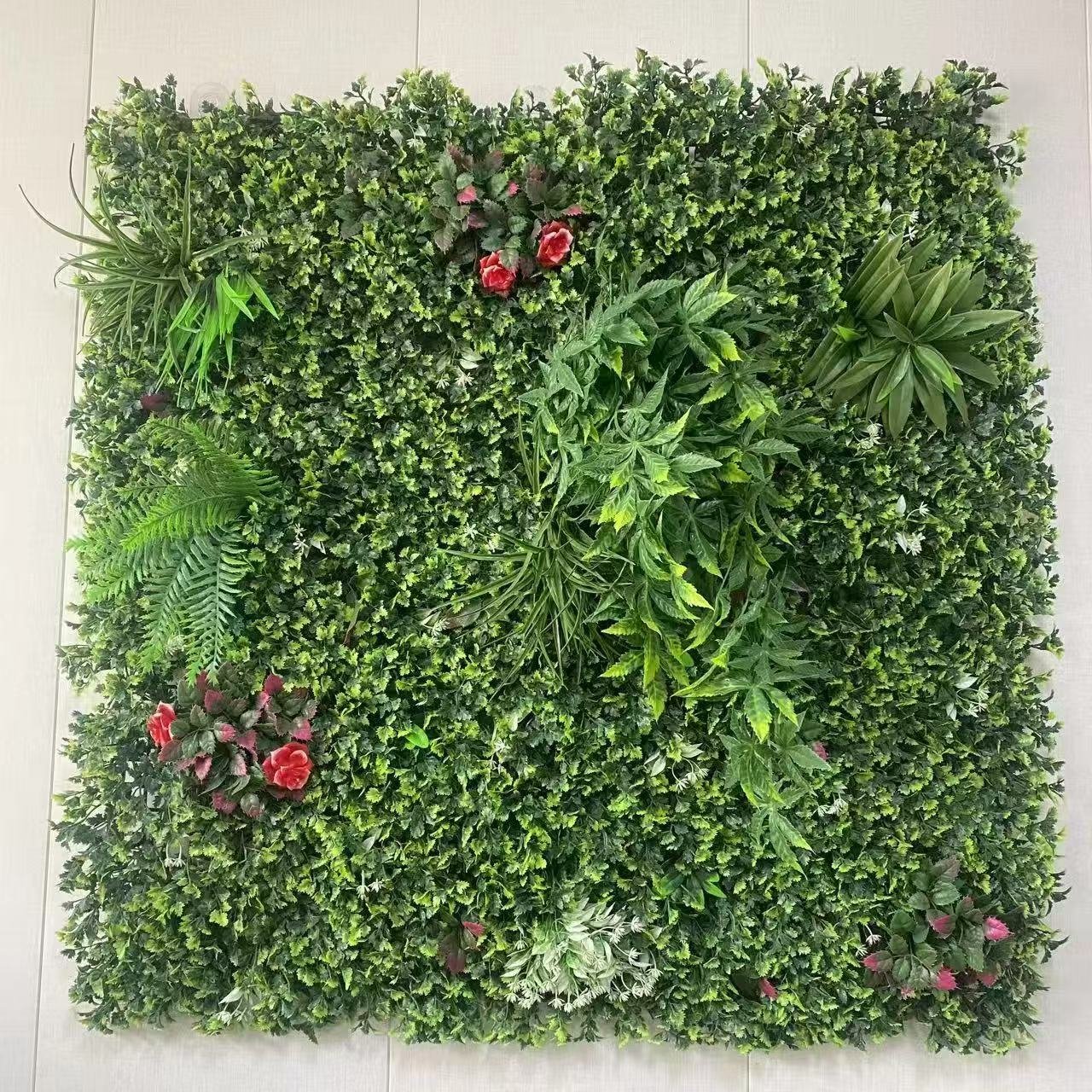
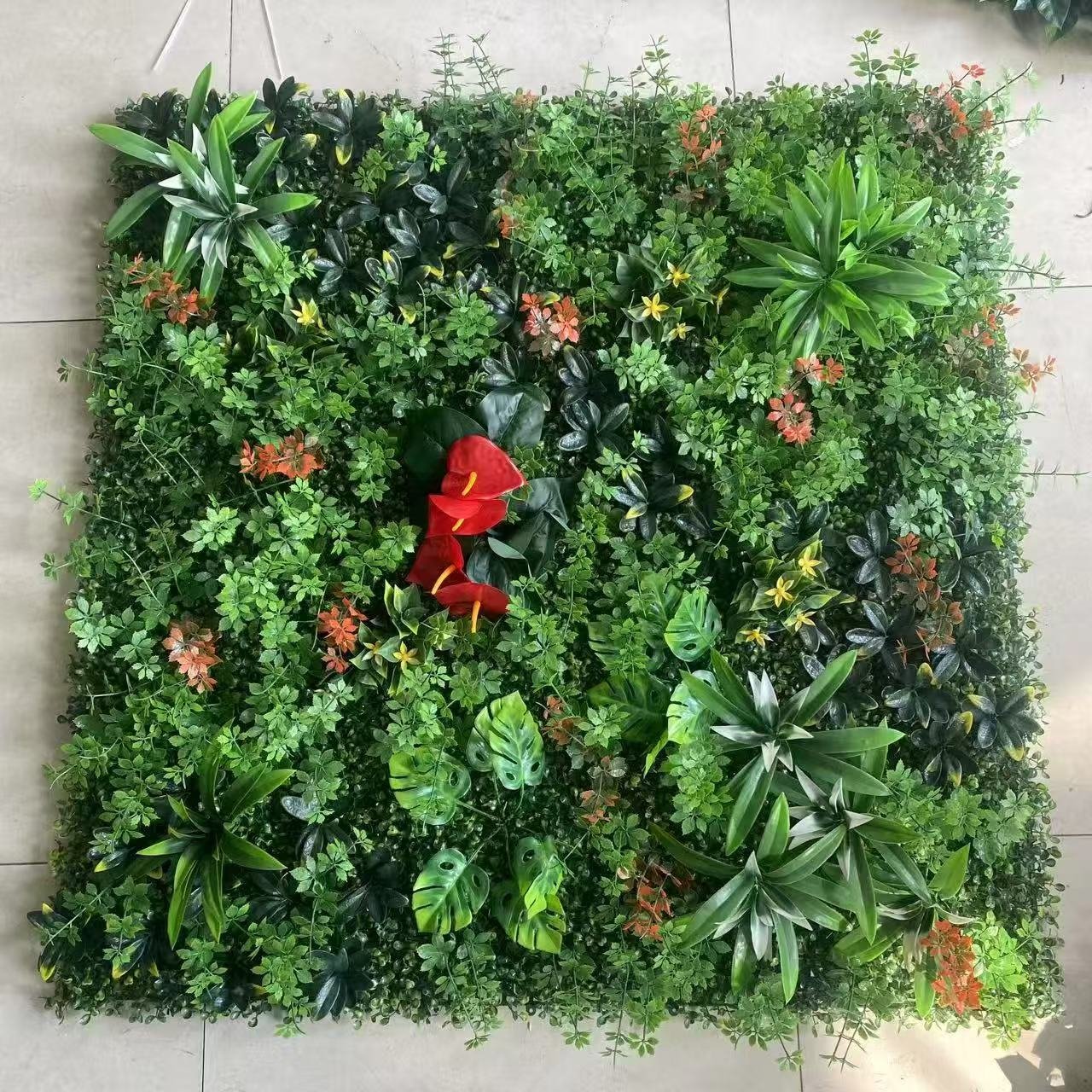
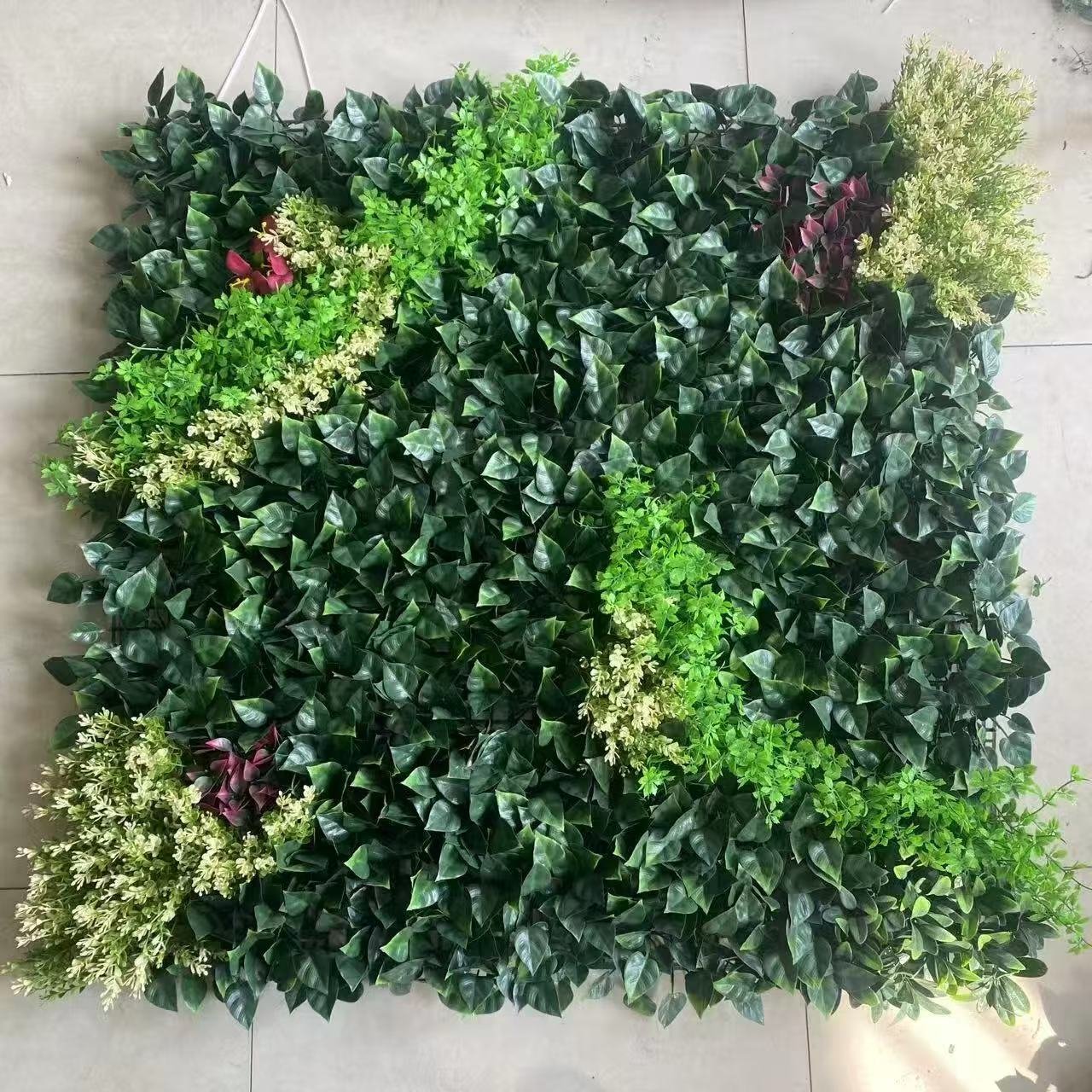
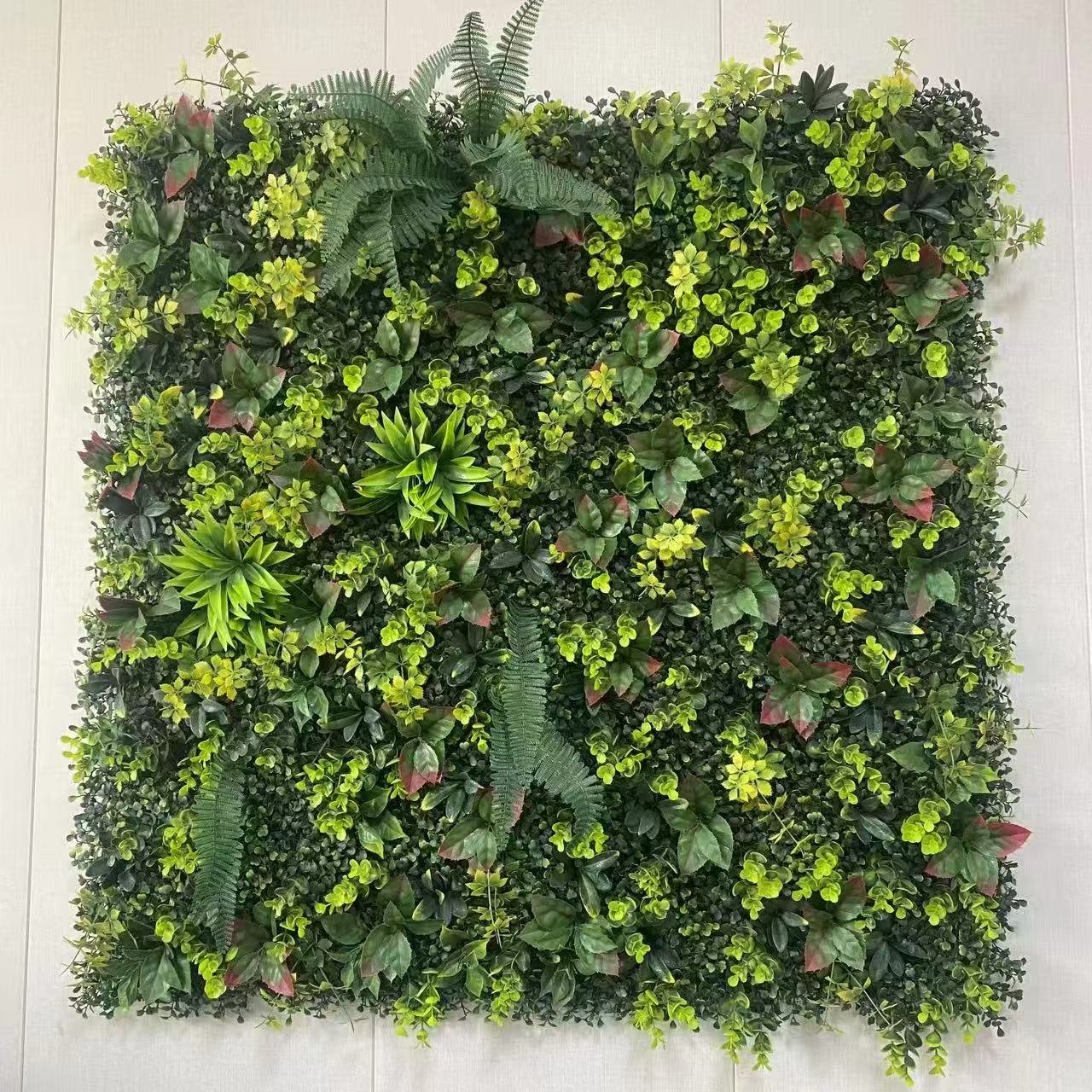
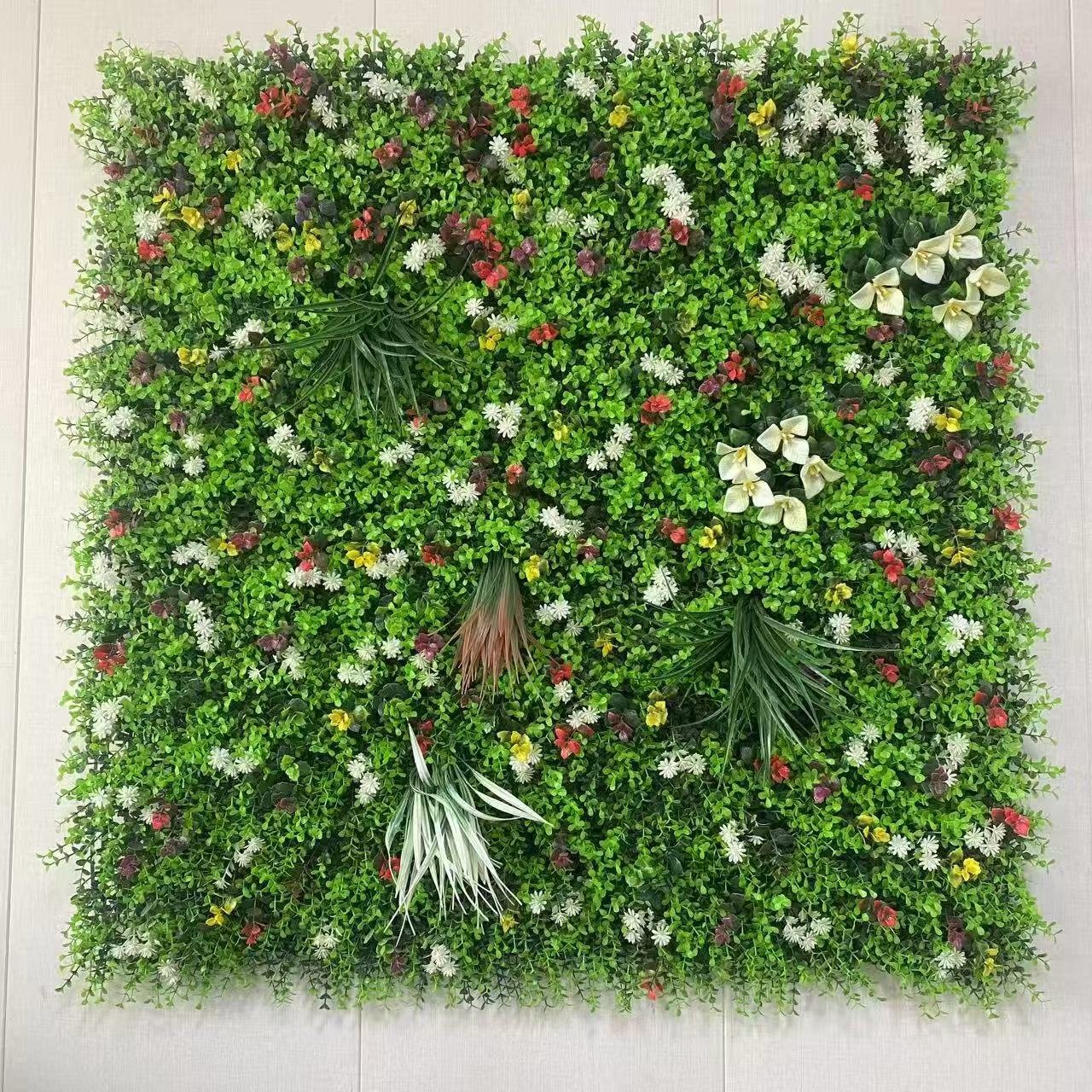
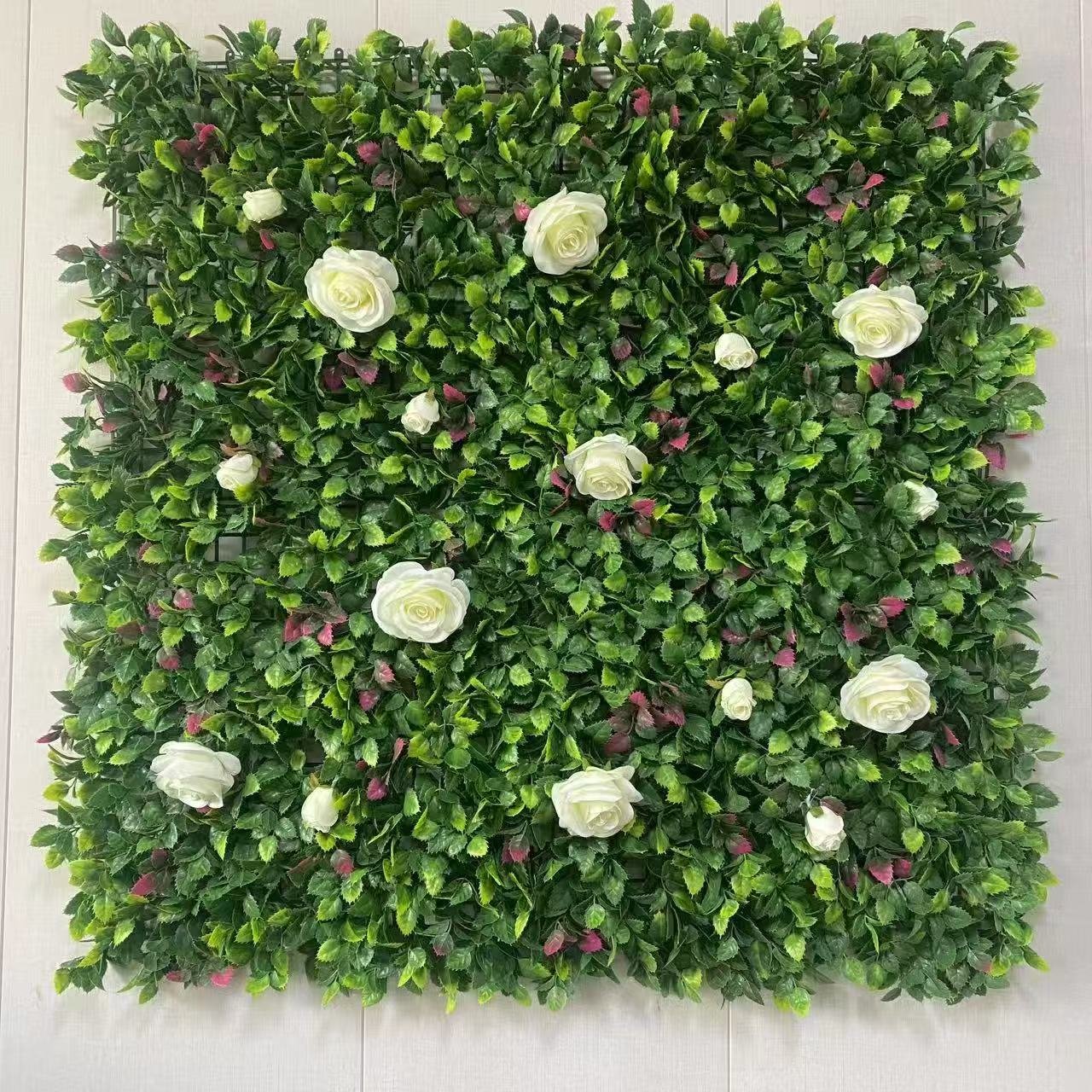
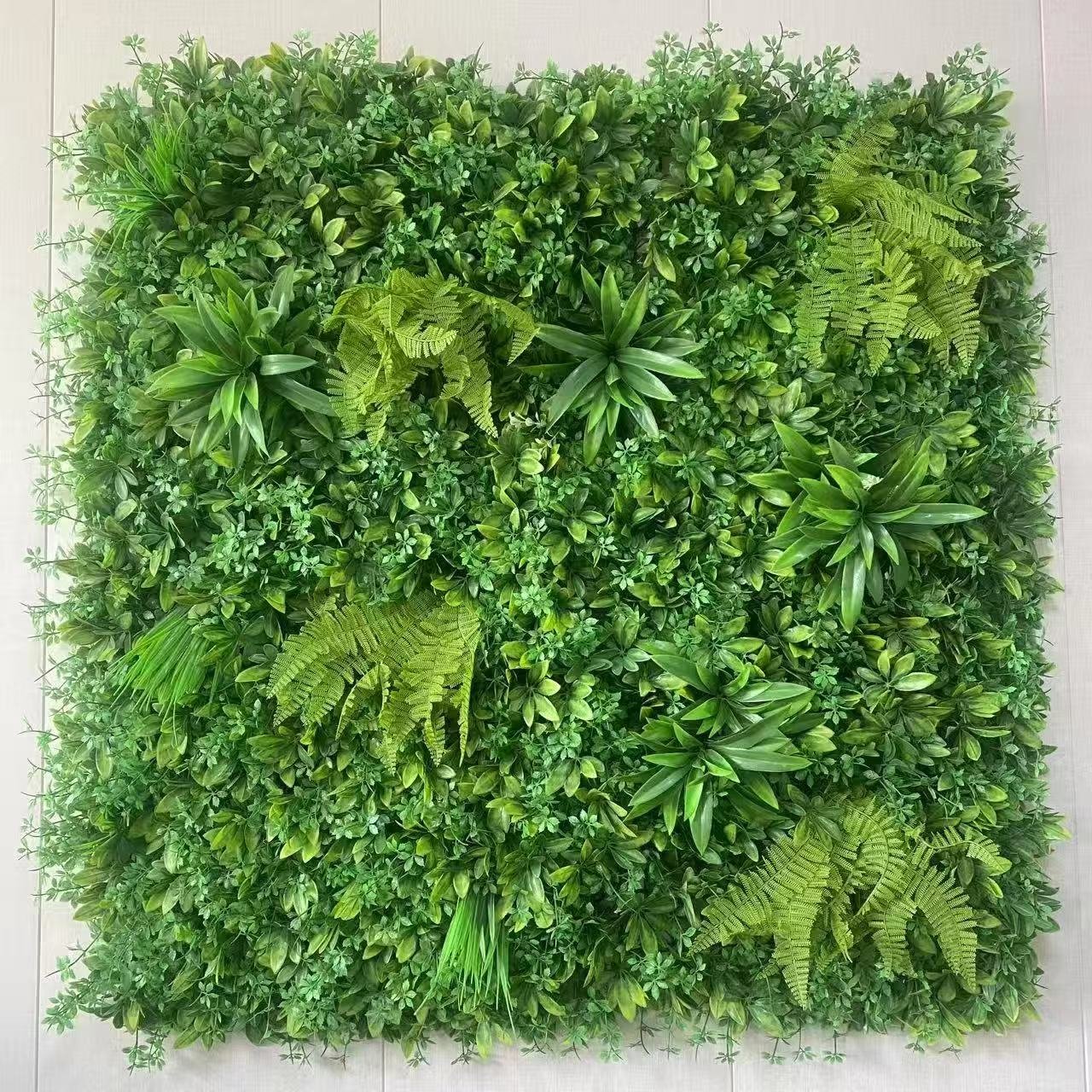
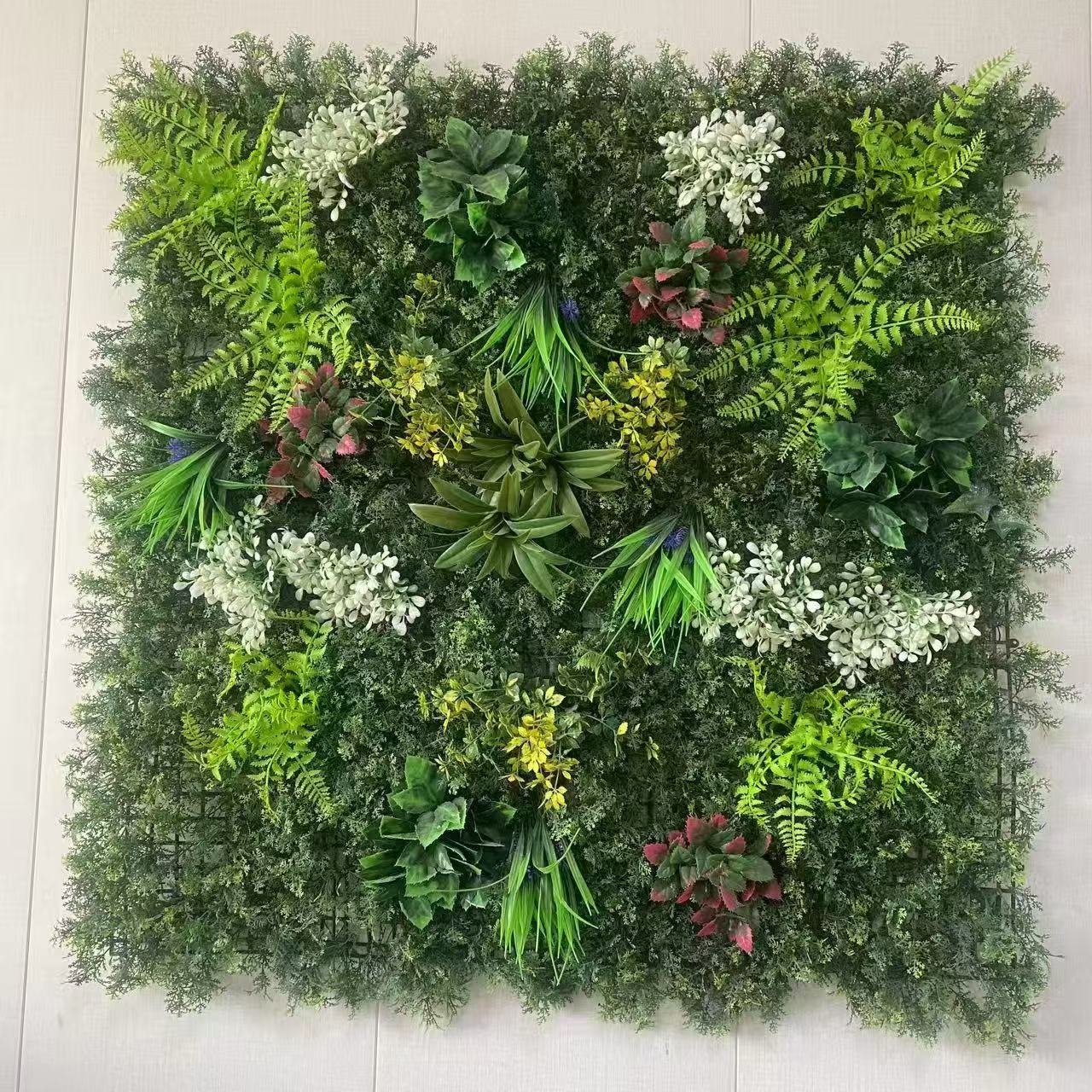
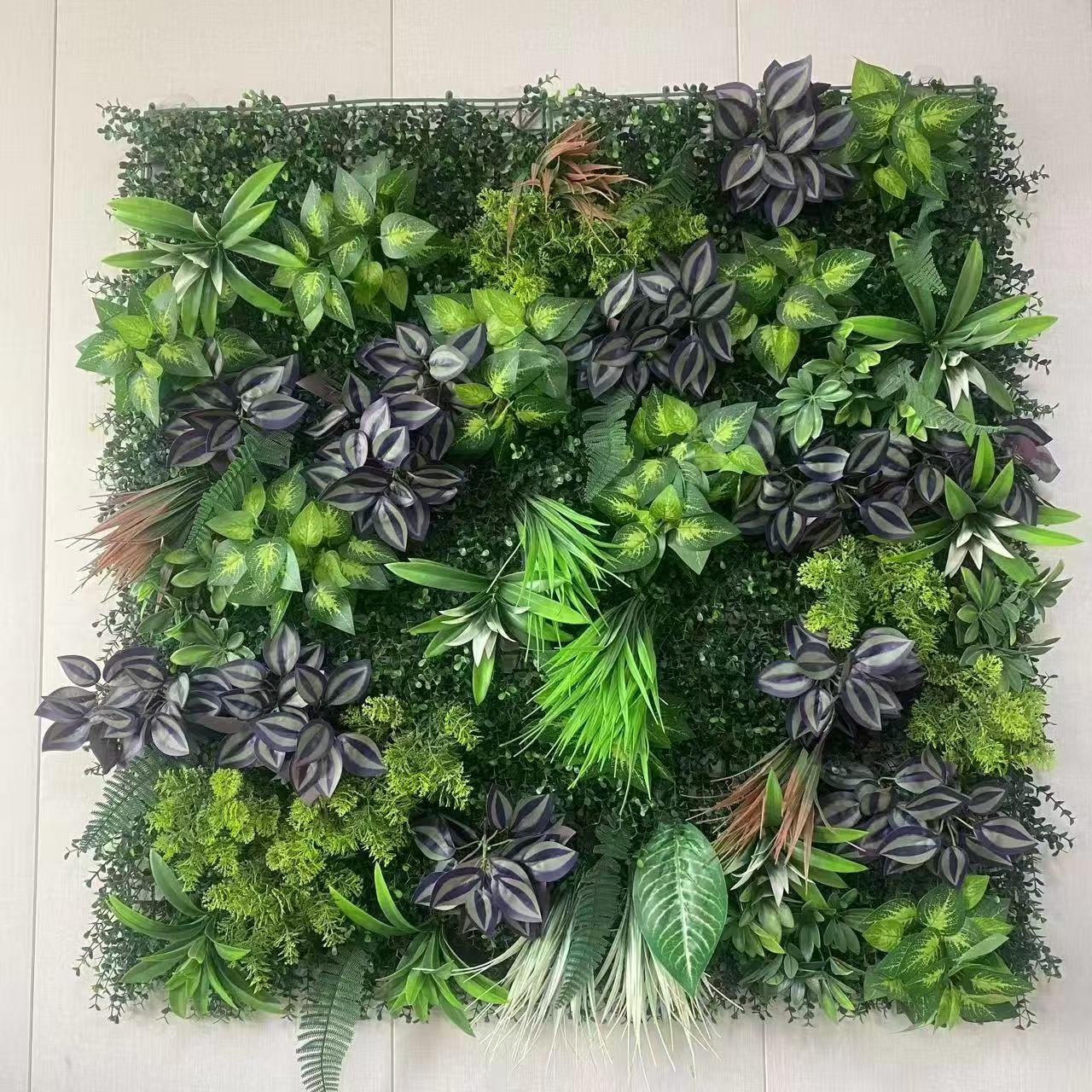
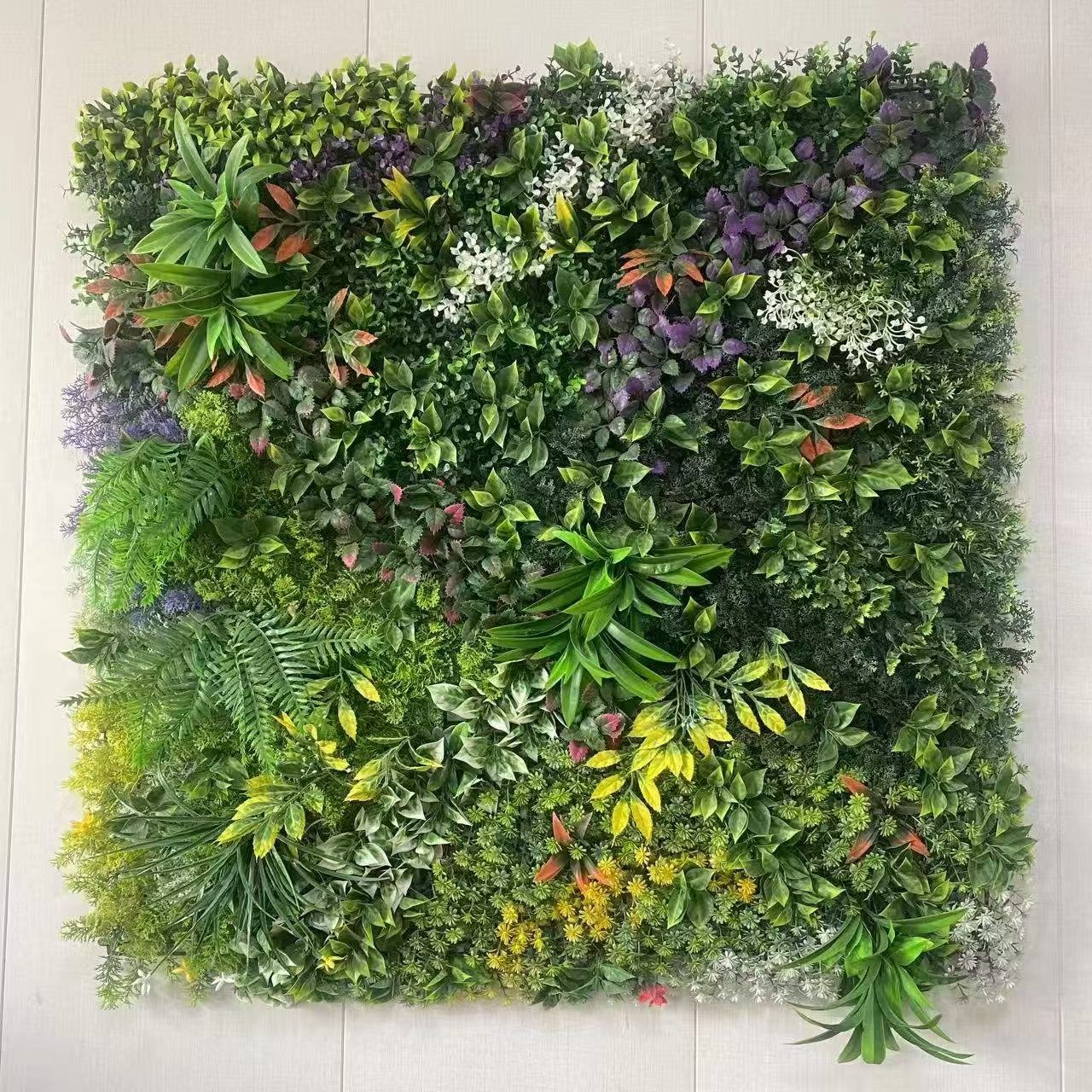
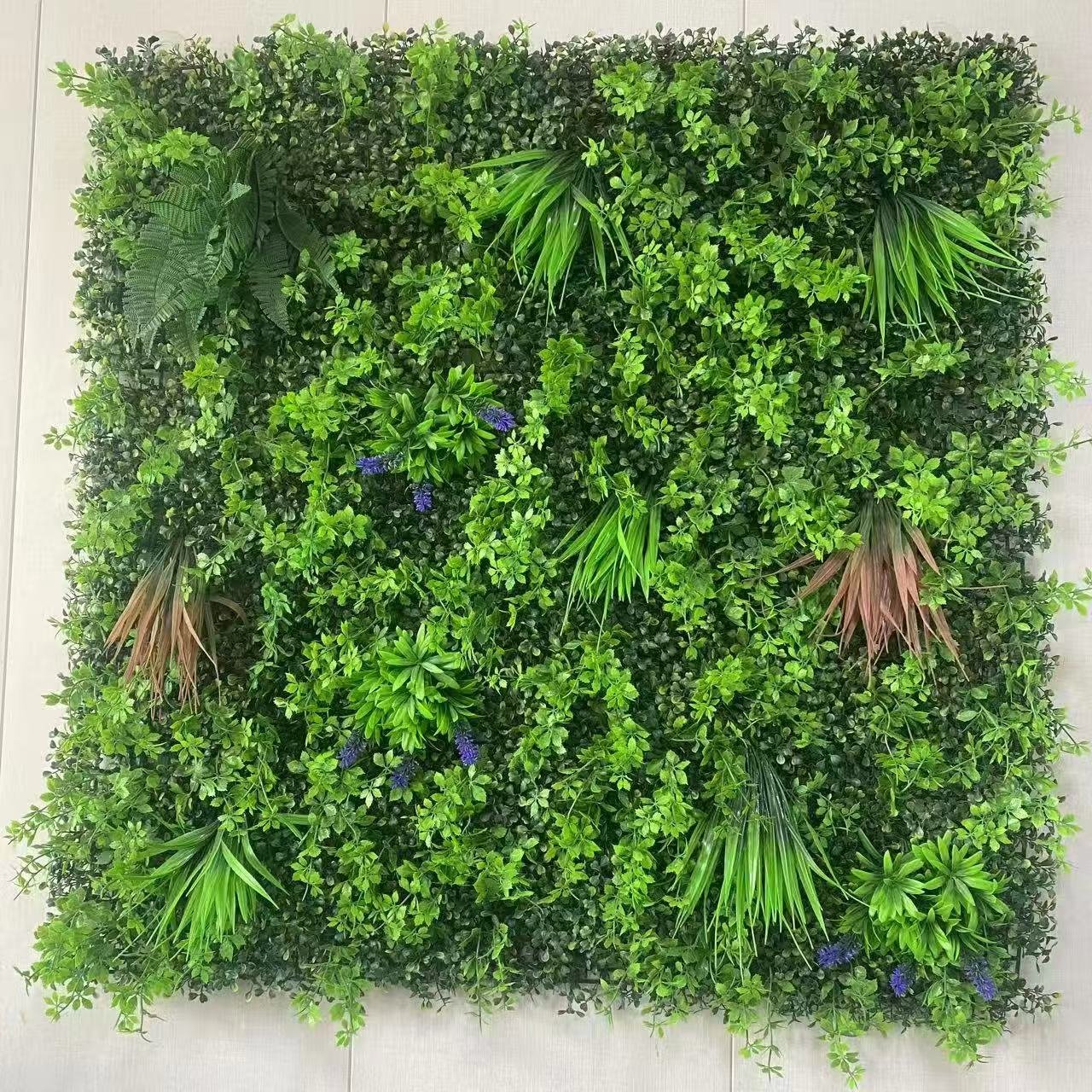
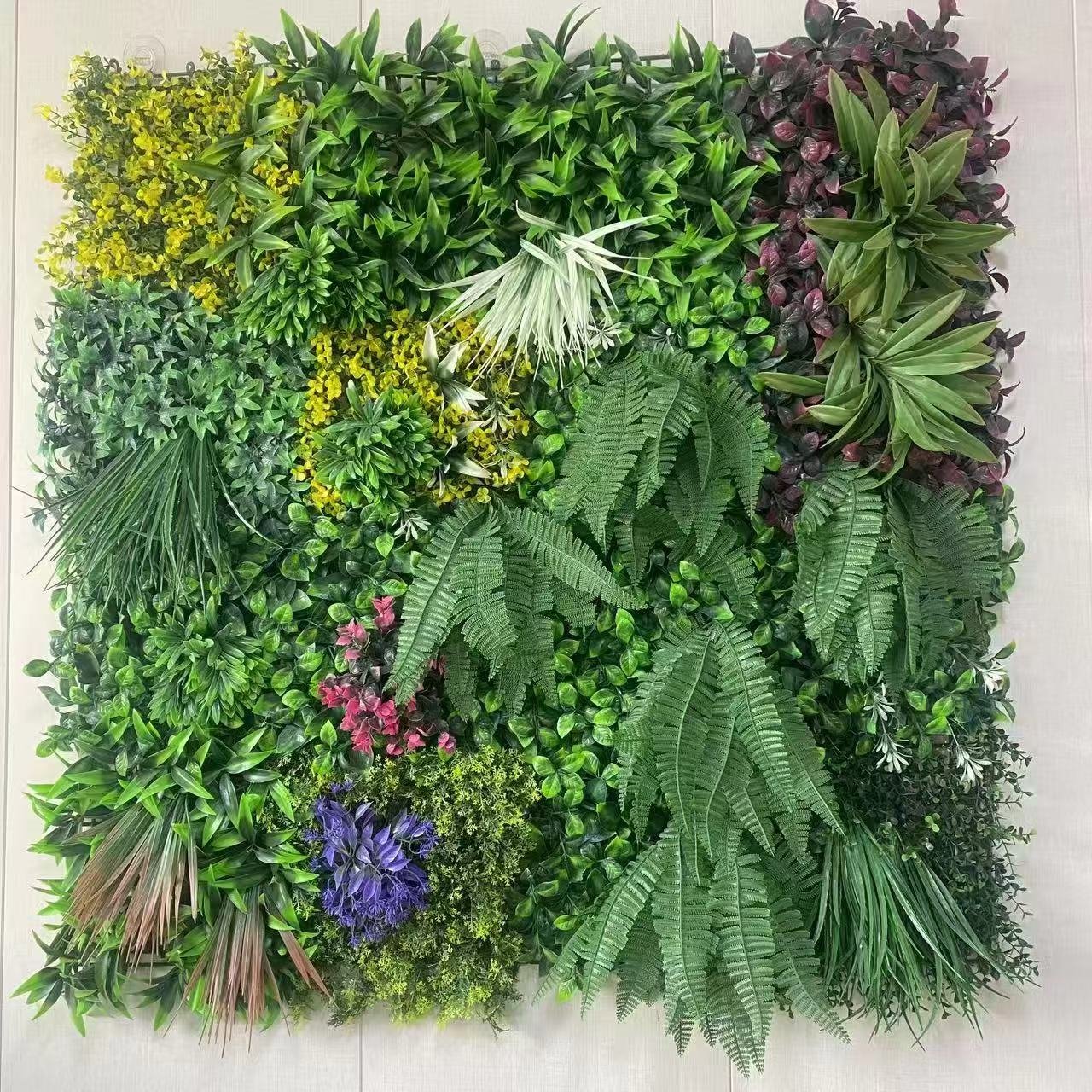
A: Our walls are constructed with high-quality, UV-stabilized Polyethylene (PE) or a silk/PET blend for foliage, supported by flexible stems and a durable HDPE modular panel base. We utilize botanically accurate designs, varied leaf colors, and high-density clustering to achieve an extremely lifelike and lush appearance that closely mimics natural living walls. Samples are available to judge the realism firsthand.
Q2: What are the main advantages over a live plant wall?
A: The key advantages are zero maintenance and consistent perfection:
No Maintenance: Requires no watering, irrigation systems, soil, fertilizers, pruning, or specialized lighting.
Always Perfect: Remains uniformly green and full regardless of season, light conditions, or climate.
Lower Lifetime Cost: Eliminates ongoing horticultural care, irrigation system maintenance, and plant replacement costs.
Installation Flexibility: Can be installed anywhere, including low-light indoor areas, high-traffic zones, or exterior walls with harsh sun, without survival concerns.
Q3: Is it suitable for outdoor use? Will it fade?
A: Yes, we offer specific exterior-grade products. The foliage is manufactured with integrated UV inhibitors, providing a warranty against significant fading for 2-3 years under direct sunlight. For optimal long-term appearance in intense sun, we recommend selecting our highest UV-stabilized series and considering partial shade locations.
Q4: What about fire safety?
A: Our standard materials are treated with flame retardants to achieve a Class B1 / B-s2, d0 fire rating (EN13501), which is suitable for most commercial interior applications. For projects requiring the highest safety standard (e.g., large atriums, escape routes), we can provide Class A non-combustible options using mineral-based materials.
Q5: How is it installed? Can it be installed on any wall?
A: Installation is simple and versatile. Our modular panel system can be mounted on virtually any solid surface (concrete, drywall, wood, metal):
Direct Mount: Screw or adhere panels directly to the wall.
Frame System (Recommended for large areas): Attach panels to a lightweight aluminum grid first, then mount the entire grid to the wall. This method is faster, allows for easy future panel replacement, and creates a critical air gap for wall ventilation.
We provide detailed installation guides and CAD mounting details.
Q6: How do you clean and maintain it?
A: Maintenance is minimal. Simply dust periodically with a feather duster or use a low-pressure air blower. For occasional deeper cleaning, you can rinse it lightly with a hose or damp cloth. It is waterproof and will not mold or rot.
Q7: Can you create custom designs?
A: Absolutely. Customization is a key service. We can work with you to:
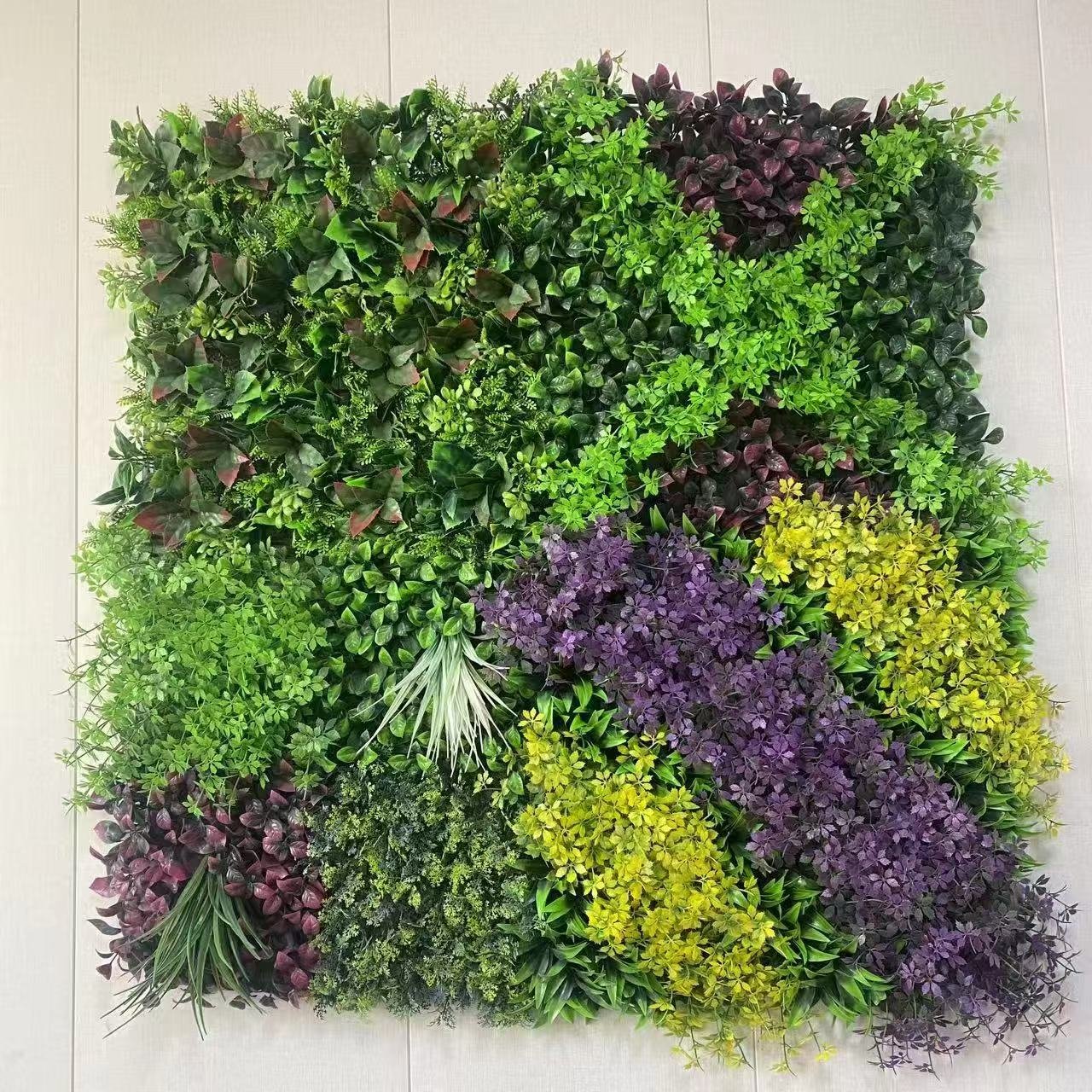
Create custom layouts and plant mixes (specific species, colors, flowering accents).
Integrate logos, text, or artistic patterns using different colored foliage.
Produce custom panel sizes and shapes to fit unique architectural features.
Match specific brand colors or design themes.