Flooring is one of the most demanding surfaces in any building. It endures foot traffic, furniture weight, spills, humidity, temperature swings, and—in commercial settings—rolling loads and heavy equipment. For decades, specifiers had to compromise: natural wood for warmth but not water, ceramic tile for durability but not comfort, laminate for affordability but not moisture resistance.
Stone Plastic Composite (SPC) flooring has fundamentally rewritten those trade-offs. With a dense limestone-based core that delivers 100% waterproof performance, dimensional stability across temperature extremes, and dent resistance that outperforms conventional vinyl, SPC has become the fastest-growing rigid core flooring category globally.
At Green City Decor, we source and supply premium SPC flooring solutions engineered to meet international standards for commercial and residential applications alike. Whether you are an architect specifying a hotel renovation, a contractor outfitting multi-family housing, or a homeowner upgrading a moisture-prone basement, our SPC collection combines technical rigor with design versatility. Browse our full range of decorative flooring solutions at Green City Decor.
What Is SPC Flooring?
SPC stands for Stone Plastic Composite (or Stone Polymer Composite). At its core, SPC flooring is an engineered multi-layer rigid plank constructed around a dense limestone-polymer core—typically 60–70% calcium carbonate (limestone) bound with polyvinyl chloride resin and stabilizers.
A typical SPC plank consists of four functional layers:
- Wear Layer: A transparent, UV-cured urethane topcoat (measured in mils) providing scratch, stain, and scuff resistance.
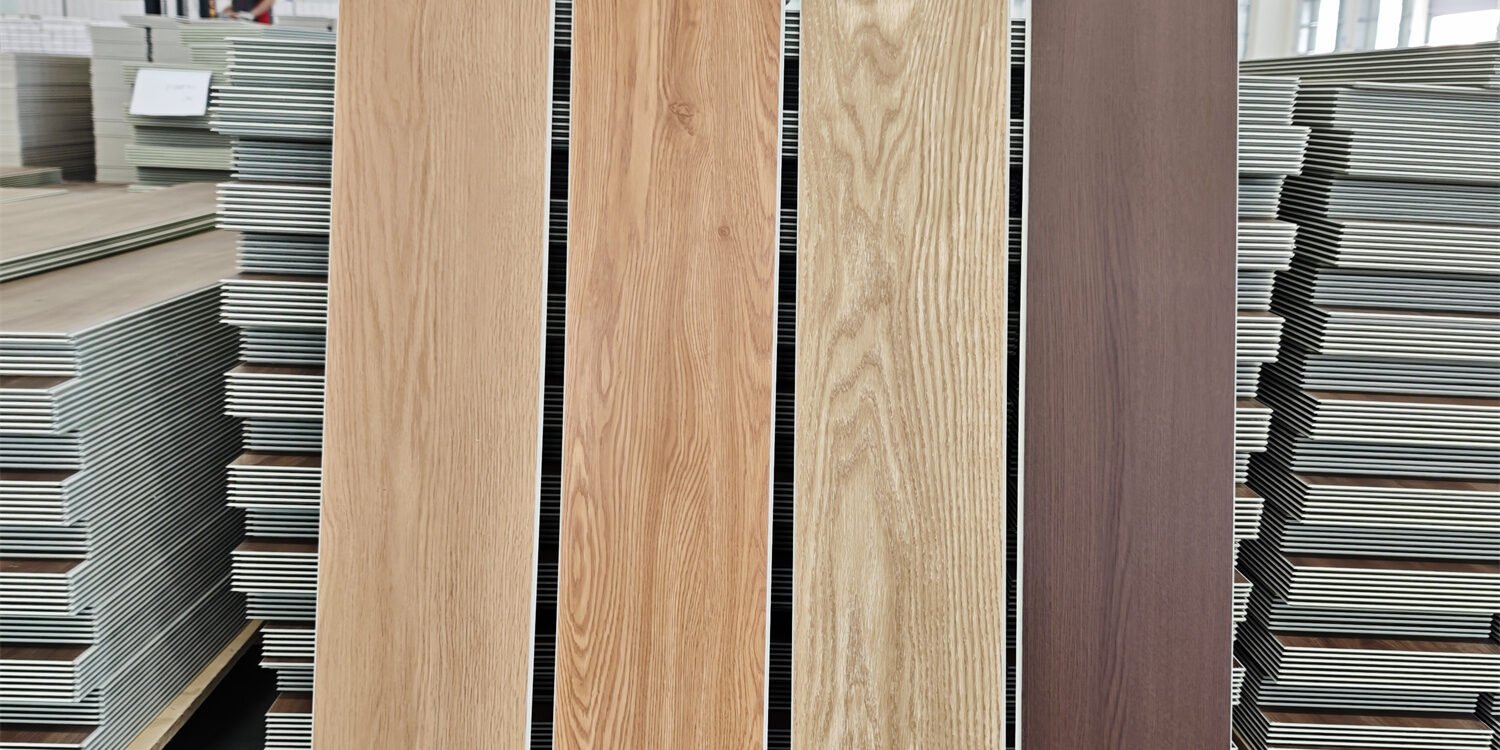
- Decorative Film Layer: A high-resolution printed layer using advanced 3D printing and embossing technologies to reproduce wood grain, stone texture, or abstract patterns with remarkable fidelity.
- SPC Core Layer: The defining component—a dense, rigid limestone-PVC composite that gives the plank its structural integrity, dimensional stability, and impact resistance.
- Underlayment Layer: An attached IXPE, EVA, or cork backing providing sound absorption, minor subfloor imperfection compensation, and underfoot comfort.
This layered construction distinguishes SPC from traditional luxury vinyl tile (LVT) and from its cousin, WPC (Wood Plastic Composite) flooring. While both SPC and WPC are rigid core vinyl products, SPC’s stone-based core delivers superior density, dent resistance, and thermal stability—making it the preferred specification for demanding environments.
For a broader view of how SPC fits within our complete wall and flooring ecosystem, visit our Product Center.
The Global SPC Flooring Market: Growth Trajectory and Demand Drivers
The SPC flooring market is expanding at a pace that signals structural adoption, not temporary trend. Multiple independent research firms have sized and forecast the market, and while absolute figures vary by methodology and scope, the direction is consistent:
- Mordor Intelligence estimates the global stone plastic composite flooring market was USD 16.49 billion in 2026, up from USD 15.94 billion in 2025, with a projected 6.33% CAGR through 2031.
- GII Research reports the market at USD 5.93 billion in 2025, projected to reach USD 10.34 billion by 2033 at a 7.2% CAGR.
- In China specifically, SPC flooring’s domestic market is expected to reach ¥47 billion (approximately USD 6.4 billion) in 2026, accounting for 24.3% of total flooring material share, with export growth forecast to exceed 20%.
What’s driving this sustained growth? Several convergent tailwinds:
Residential Renovation Cycle: Post-pandemic renovations continue driving demand for flooring that combines aesthetics with functional performance. Homeowners increasingly prioritize waterproof, low-maintenance solutions for kitchens, bathrooms, basements, and open-plan living areas.
Commercial Value Engineering: Property developers and hospitality operators are adopting SPC for its lifecycle cost advantages. Faster installation (click-lock floating systems) and minimal subfloor preparation reduce labor costs and project timelines, while durability lowers long-term maintenance expenses.
Regulatory Shift Toward Low-VOC Materials: Tightening indoor air quality regulations across North America (CARB), Europe (EN 16516), and Asia (GB standards) favor SPC products certified to FloorScore and GREENGUARD Gold standards, which emit negligible VOCs compared to some traditional flooring materials.
E-Commerce Penetration: SPC’s dimensional stability and click-lock format make it uniquely suited to direct-to-consumer shipping, with planks arriving dimensionally accurate and ready for DIY installation—a significant channel advantage over heavier, more fragile materials.
6 Key Advantages Making SPC Flooring the Dominant Rigid Core Choice
1. 100% Waterproof: The Defining Performance Benchmark
SPC flooring is engineered to be fully waterproof throughout its entire thickness—not merely water-resistant on the surface. The limestone-polymer core is inherently impervious to water, meaning planks won’t swell, cup, or delaminate when exposed to standing water, high humidity, or frequent wet-mopping. This makes SPC the flooring of choice for bathrooms, kitchens, laundry rooms, basements, and commercial wet zones where hardwood warps and laminate disintegrates.
2. Exceptional Dimensional Stability Across Temperature Extremes
Unlike traditional vinyl or laminate, SPC flooring exhibits negligible expansion and contraction across wide temperature ranges. The dense limestone core anchors the plank geometry, making SPC suitable for environments with significant temperature swings, sunroom applications with direct solar gain, and installations over radiant underfloor heating systems. Where WPC floors can gap or buckle under thermal stress, properly installed SPC maintains joint integrity.
3. Superior Dent and Impact Resistance
SPC’s high-density stone-composite core (typically 1,900–2,100 kg/m³) provides substantially greater indentation resistance than WPC or conventional LVT. Heavy furniture legs, dropped objects, and rolling office chairs leave far less permanent marking on SPC versus competing resilient flooring. This dent resistance is a primary reason SPC has overtaken WPC in the rigid core segment: “SPC is the leading volume core technology in rigid core due to its affordability, high dimensional stability, waterproof properties and high indentation resistance”.
4. Realistic Aesthetics Enabled by Advanced Printing
SPC flooring is a chameleon. Advanced 3D printing and synchronized embossing (embossed-in-register, or EIR) technologies create visuals “nearly indistinguishable from real hardwood or stone”. Available in an extensive spectrum of wood species, stone looks, and contemporary abstract designs, SPC planks deliver the visual warmth of natural materials without their maintenance demands.
5. Click-Lock Installation: Fast, Clean, DIY-Friendly
Most SPC flooring utilizes a precision-milled click-lock system that enables floating floor installation—no adhesives, nails, or specialized tools required. Planks click together at the edges, allowing a single room to be floored in hours by a competent DIY installer or a professional crew. The floating method also simplifies replacement: individual damaged planks can be removed and swapped without disturbing adjacent flooring.
6. Cost-Effectiveness Across the Project Lifecycle
SPC flooring delivers a compelling total-cost-of-ownership equation. Material costs are significantly lower than hardwood, engineered wood, or large-format porcelain tile. Combined with faster installation (reducing skilled labor hours), minimal subfloor preparation requirements, and near-zero long-term maintenance costs, SPC emerges as the budget-conscious specifier’s high-performance option.
For insights on how SPC compares with other flooring categories in your specific project context, contact our product specialists through our Technical Support page.
SPC vs. WPC Flooring: Which Rigid Core Should You Specify?
SPC and WPC are the two dominant rigid core vinyl flooring technologies, and they are frequently compared. While both deliver waterproof performance and easy click-lock installation, their core composition creates distinct performance profiles:
| Feature | SPC Flooring | WPC Flooring |
|---|---|---|
| Core Composition | Limestone + PVC (60–70% mineral) | Wood flour/polymer foam + PVC |
| Core Density | 1,900–2,100 kg/m³ | 700–1,100 kg/m³ |
| Dent Resistance | Superior—resists heavy furniture and rolling loads | Good, but less resistant to point loading |
| Plank Thickness | 3.2–7 mm | 5.5–8 mm |
| Underfoot Comfort | Firmer, less forgiving on feet | Softer, warmer, better sound absorption |
| Thermal Stability | Excellent—minimal expansion across temperature range | Moderate—more expansion in extreme conditions |
| Best Applications | Kitchens, bathrooms, basements, commercial, high-traffic | Bedrooms, family rooms, upstairs living |
| Relative Cost | Generally more affordable | Slightly higher material cost |
As one industry resource summarizes, SPC floors “may not be as thick, but they are considerably denser than WPC floors”. The same analysis recommends SPC for maximum durability and dent resistance, while WPC wins on softness and comfort underfoot—leading some homeowners to “mix the two, using SPC in moisture-prone rooms and WPC in bedrooms”.
For commercial specifiers, the choice tilts decisively toward SPC: “SPC is generally considered more durable in terms of dent resistance, while WPC offers better resistance to sound transmission”.
SPC Grade Selection: Matching the Product to the Project
Not all SPC flooring is created equal. Selecting the right specification involves evaluating several key parameters:
Wear Layer Thickness (Measured in Mils)
The wear layer is measured in mils (1 mil = 0.0254 mm) and directly determines scratch, scuff, and stain resistance over time:
- 6–12 mil: Light residential use—appropriate for low-traffic bedrooms and guest rooms
- 12–20 mil: Active households—suitable for kitchens, living rooms, and corridors with pets and children
- 20 mil and above: Commercial-grade—designed for retail, hospitality, healthcare, and office environments
Total Plank Thickness
SPC plank thickness typically ranges from 3.2 mm to 8 mm. Thicker planks (5–8 mm) offer improved sound absorption and better accommodation of minor subfloor irregularities, while thinner options (3.2–4.5 mm) are budget-friendly, lighter, and often sufficient when installed over a well-prepared subfloor with appropriate underlayment.
Click-Lock System Quality
Precision-milled locking mechanisms from established technology providers (e.g., Unilin, Välinge) ensure tight, gap-free joints that maintain waterproof integrity across the floor plane. Inferior locking systems can lead to joint separation, peaking, or gapping over time—a common failure mode in budget SPC products.
For personalized guidance on product selection, reach out through our Technical Support page.
Installation Essentials for Lasting Performance
SPC flooring’s installation simplicity is one of its strongest selling points, but skimping on proper preparation compromises long-term results. Key installation protocols include:
1. Acclimation: Allow SPC planks to acclimate within the installation space for a minimum of 48 hours at normal room temperature and humidity before installation. This allows the core and wear layer to stabilize dimensionally.
2. Subfloor Preparation: The subfloor must be clean, dry, flat, and structurally sound. Industry guidelines specify flatness tolerance of 3/16 inch over 10 feet or 1/8 inch over 6 feet. For concrete subfloors, moisture content should not exceed 2% (or 1.5% if radiant heating is installed below).
3. Moisture Management: On concrete slabs—particularly below-grade installations—a polyethylene moisture barrier (minimum 6-mil) should be laid before SPC planks are installed. While SPC itself is waterproof, prolonged moisture vapor transmission through the substrate can cause issues over time.
4. Expansion Gaps: SPC flooring installed via the floating method requires a perimeter expansion gap of 1/4 inch (6.35 mm) to accommodate minimal thermal movement. Doorjambs should be undercut so flooring can slide beneath them, maintaining the required gap at the door frame.
5. Post-Installation Protection: Avoid prolonged direct sunlight exposure to prevent UV-induced color shift. Use felt pads under furniture legs, and employ protective mats at exterior entrances to capture abrasive grit.
Certifications That Matter: What B2B Buyers Should Demand
For procurement professionals, property developers, and specification writers, third-party certifications provide independent verification of product quality, safety, and environmental performance. When evaluating SPC suppliers, the following certifications carry weight:
- FloorScore (SGS): The most widely recognized indoor air quality certification for hard-surface flooring. FloorScore-certified products have been independently tested and verified to meet stringent VOC emission criteria, contributing to LEED v4.1 EQ credits and other green building standards.
- GREENGUARD Gold (UL Environment): Certifies ultra-low chemical emissions, specifically addressing sensitive environments such as schools, healthcare facilities, and residential interiors. GREENGUARD Gold criteria are among the strictest in the building materials sector.
- CE Marking (EN 14041): Required for resilient floor coverings sold in the European Economic Area, confirming compliance with health, safety, and environmental protection standards.
- ASTM F-1700: The standard specification for solid vinyl floor tile, used as a reference benchmark for SPC product testing in North America.
At Green City Decor, we maintain full traceability on all product lines, with certifications available for client review. Learn more on our Certifications page.
Applications Across Sectors
SPC flooring’s unique combination of waterproof integrity, dent resistance, and design versatility positions it for applications across the built environment:
Residential
From kitchen remodels to full-home new construction, SPC has become the default premium vinyl flooring specification. Multi-family housing developers favor SPC for its combination of upscale aesthetics, minimal maintenance demands, and rapid installation that accelerates unit turnover. In single-family homes, SPC is specified for bathrooms, kitchens, laundry rooms, mudrooms, and basement finishing—anywhere moisture is a concern.
Hospitality
Hotels, resorts, and short-term rental properties value SPC for guest-facing spaces where both visual appeal and operational durability matter. SPC planks withstand rolling luggage, housekeeping equipment, and frequent wet-cleaning protocols while maintaining their appearance through high occupancy cycles.
Commercial Office and Retail
SPC’s dent resistance makes it suitable for office environments with rolling chairs and heavy furniture, while its acoustic underlayment options address open-plan office sound transmission concerns. Retail spaces benefit from waterproof performance (simplifying spill management) and a wide design palette that accommodates brand-specific interior aesthetics.
Healthcare and Education
FloorScore and GREENGUARD Gold-certified SPC products are increasingly specified for healthcare and education interiors, where indoor air quality protocols are strict and flooring must withstand frequent cleaning with hospital-grade disinfectants without degradation.
Radiant Heating Environments
SPC’s thin profile and thermal conductivity make it an excellent flooring material over hydronic or electric underfloor heating systems, delivering comfortable surface temperatures without the insulating effect of thicker floor assemblies.
For curated project photography and design inspiration, explore our Project Gallery.
Maintenance: Keeping SPC Flooring Performing for Decades
One of SPC’s most practical advantages is its low maintenance burden. Routine care involves:
- Daily: Dry cleaning via vacuum (hard floor setting) or electrostatic dust mop to remove abrasive grit and pet hair. Avoid vacuum cleaners with rotating brush bars that can micro-scuff the wear layer.
- Weekly: Damp mopping using a pH-neutral, vinyl-safe floor cleaner diluted according to manufacturer instructions. The mop should be thoroughly wrung—damp, not wet—to avoid water pooling at joints.
- Spills: Promptly wiped with an absorbent cloth. While SPC is waterproof, leaving water standing for extended periods is unnecessary and increases slip risk.
What to Avoid
- Bleach, ammonia-based cleaners, and abrasive cleaning agents can degrade the wear layer’s UV-cured urethane finish over time.
- Wax, floor polish, and oil-based cleaning products leave residues that dull the surface and compromise slip resistance.
- Steam mops: The high heat and moisture penetration can stress click-lock joints and potentially affect core integrity over repeated cycles.
- Dragging heavy furniture without protection—always lift or use felt pads.
Design Trends Shaping SPC Flooring in 2026
Several design movements are influencing SPC product development and specification:
Wider, Longer Plank Formats: The market is trending toward plank dimensions of 7+ inches wide and 60+ inches long, creating fewer joint lines and a more expansive visual field that better emulates wide-plank hardwood flooring.
Authentic Embossing: Embossed-in-register (EIR) technology synchronizes surface texture with the printed grain pattern, creating the tactile feel of real wood—knots, grain checks, and saw marks included.
European Oak Dominance: Light to medium-toned European white oak visuals, often wire-brushed or cerused in appearance, continue to dominate both residential and commercial specifications. Greige (gray-beige hybrid) tones remain strong alongside warming trends toward honey and natural oak.
Stone and Concrete Visuals: Beyond wood-look planks, SPC is increasingly offered in stone, travertine, and polished concrete aesthetics, opening applications in contemporary commercial interiors that previously defaulted to large-format ceramic tile.
Why Partner with Green City Decor for Your SPC Flooring Needs
Green City Decor is more than a supplier of innovative decorative materials—we are a strategic manufacturing and sourcing partner dedicated to your project’s success from specification through delivery.
Comprehensive Product Portfolio: Our SPC flooring collection spans a broad spectrum of wood-look, stone-look, and contemporary abstract designs, in multiple plank formats, wear layer options, and thicknesses to match project-specific performance requirements.
Quality Assurance: Every product batch undergoes rigorous quality control inspection, including dimensional tolerance verification, wear-layer thickness measurement, click-lock joint integrity testing, and formaldehyde/VOC emission screening.
Global Logistics: We manage export documentation, freight coordination, and customs clearance to ensure reliable, on-schedule delivery to project sites worldwide. Shipment tracking and proactive communication are standard throughout the logistics timeline.
Technical Partnership: From product selection and sample provision to installation guidance and after-sales support, our technical team is available to support your project at every stage.
Request product samples, discuss volume pricing, or start a project consultation through our Contact Page.
Frequently Asked Questions
1. Is SPC flooring really 100% waterproof?
Yes. SPC flooring’s limestone-polymer core is inherently waterproof throughout its entire thickness. Unlike laminate (which swells when moisture penetrates joints) or engineered hardwood (which warps), SPC planks do not absorb water. However, while the flooring itself is waterproof, prolonged standing water should still be cleaned up, and moisture vapor from the subfloor should be managed with appropriate underlayment in below-grade installations.
2. Can SPC flooring be installed over existing tile or vinyl?
In many cases, yes—provided the existing floor is sound, flat, and properly adhered to the subfloor. Floating SPC over existing ceramic or porcelain tile can be a “smart, low-disruption upgrade”. The existing floor must meet flatness tolerances, and the added height (typically 4–8 mm for SPC) must not interfere with doors, cabinets, or transitions.
3. How long does SPC flooring last?
With appropriate specification and maintenance, SPC flooring can deliver 15–25 years of residential service life. Commercial-grade products with 20+ mil wear layers are engineered for 10–15 years in commercial environments. Warranty periods vary by manufacturer, with premium residential warranties extending to 30 years and light commercial warranties to 5–10 years.
4. Is SPC flooring suitable for radiant underfloor heating?
Yes. SPC’s thin profile and high mineral content provide good thermal conductivity, allowing heat to transfer efficiently from the heating system to the floor surface. However, surface temperature should not exceed 85°F (29°C), and the heating system should be gradually brought to operating temperature over several days to allow the flooring to acclimate thermally.
5. Does SPC flooring off-gas or emit VOCs?
Premium SPC products certified to FloorScore and GREENGUARD Gold standards have been independently tested and verified to meet some of the most stringent indoor air quality criteria in the building materials industry. These certifications benchmark against health-based exposure limits for hundreds of individual VOCs, making certified SPC suitable for sensitive environments including schools, healthcare facilities, and residential interiors.
6. What is the difference between SPC and LVT?
Luxury Vinyl Tile (LVT) is a broad category that includes both flexible glue-down vinyl tiles and rigid core planks. SPC is a subset of the rigid core category, distinguished by its dense stone-polymer composite core. Traditional flexible LVT is thinner, requires full-spread adhesive installation, and can telegraph subfloor imperfections—issues that SPC’s rigid click-lock format effectively solves.
7. Can SPC flooring be refinished?
No. SPC flooring’s decorative layer and wear layer are printed and coated, not solid wood. Damaged planks cannot be sanded and refinished, but they can be individually replaced by disassembling the floating floor from the nearest wall to the damaged plank—a straightforward process that does not disturb the broader installation.
8. What wear layer thickness do I need?
This depends on traffic intensity. For light residential use, 12 mil is a common minimum. Active households with pets and children benefit from 20 mil. Commercial spaces—retail, hospitality, offices—should specify 20 mil or above to withstand rolling loads, frequent cleaning, and high foot traffic over the intended service life.
9. Does SPC flooring require an underlayment?
Many SPC products ship with an integrated underlayment (typically IXPE, EVA, or cork) pre-attached to the plank underside. If the product does not include integrated underlayment, a separate underlayment should be installed to provide sound absorption, minor subfloor imperfection compensation, and a moisture barrier where needed. On concrete subfloors, a 6-mil polyethylene moisture barrier is standard practice regardless of attached underlayment.
10. How do I choose between SPC and WPC?
The decision hinges on your priorities. If maximum dent resistance, thermal stability, and value are primary concerns, SPC is the stronger performer. If underfoot comfort, warmth, and sound absorption are critical—such as in bedrooms or upstairs living spaces—WPC’s thicker, softer profile may be more suitable. Many specifiers use SPC in wet zones and high-traffic areas, and WPC in comfort-focused spaces within the same project.